//


Island and region of Japan
Photo: 四万十人, CC BY-SA 3.0 via Wikimedia Commons
Shikoku (四国) is an oft-forgotten island in Japan. The smallest of Japan's Big Four with around four million inhabitants, it lies to the south of Honshu. The island is thought of as a rural backwater, with few must-see attractions, but a visit there can wash away those doubts; the mountainous inner regions offer some good hiking. It is also the home of the 88 Temple Pilgrimage of the Shingon sect of Buddhism.
From the travel guide. Select a place for details, a map and what is nearby.
The 88 Temple Pilgrimage is a famous but grueling 1,647-km hike around the entire island.
The rafting in the Yoshinogawa River near Oboke and Koboke is said to be quite good.
By plane
Prefectural capitals Takamatsu, Matsuyama, Kochi and Tokushima all have small regional airports. Matsuyama has flights to Seoul and Shanghai, while Takamatsu fields a few flights a week to Seoul.
By train
Shikoku is not connected to the Shinkansen network, but there are frequent connections from Okayama on Honshu to Takamatsu and from there on throughout the island.
By bus
If you are coming from Kansai or eastern parts of Japan, buses through Awaji Island are the fastest way of getting to Shikoku.
By boat
There are numerous ferries that run to Shikoku that can be taken from major cities like Kobe and Hiroshima.5 hours) from Hiroshima to Matsuyama.
By bicycle
The Shimanami Kaido is a very popular cycling trail that hops across various bridges in the Seto Inland Sea from Onomichi (Honshu) to Imabari (Shikoku).
By train
The JR train network connects the larger towns together fairly well, but regular trains are slow and expresses are expensive. The main lines are:
By bus
Buses fill in the gaps in the train network and are the only means of transport in areas like Cape Ashizuri and the Iya Valley. Schedules are sparse and prices are high.
On foot
Serious pilgrims may choose to complete the 88 Temple Circuit (see Do) on foot.
Choose an airport to see hotels, stations, taxi ranks and car rental desks around it.
Nankoku · International · KCZ
Loading places around the airport…

famous for its towels and half of the Shimanami Kaido

Home of Anpanman Museum and one of the nation's top three caves

Kōchi (高知) is the eponymous capital of Kochi prefecture on the Japanese island of Shikoku.

One of the island's famous castle towns

Matsuyama (松山), meaning "pine mountain", is the homely capital of Ehime prefecture. Quite provincial yet hospitable to travelers, and a hub of business and shopping amongst the lazy calm of the countryside, Matsuyama has much to offer in the way of curious literary and cultural assets.

This article refers to the Naruto in Tokushima Prefecture. For the Naruto (成東) in Chiba Prefecture, click here.

Takamatsu (高松) is the largest city in Kagawa Prefecture on the island of Shikoku, Japan.

Tokushima (徳島) is the capital of the prefecture and main transport hub of eastern Shikoku. It has only a few famous attractions, but its palm-lined boulevards are pleasant enough to pass through on your way to more interesting places.

Uwajima (宇和島) is a slice of small town life on the west coast of Shikoku — nothing much out of the ordinary, if you don't count an ancient fertility shrine and the occasional sumo match between two bulls.

Cape Ashizuri (足摺岬 Ashizuri-misaki) is the southernmost point of the island of Shikoku, Japan.

Iya Valley (祖谷 Iya) is a remote mountain valley deep in the heart of Shikoku. One of Japan's Three Hidden Valleys, Iya has dramatic mountain scenery, traditional thatched roof homes, and historic vine bridges.

Kotohira (琴平) is a one-horse town known solely as the site of Kompira-san, a large shrine complex.
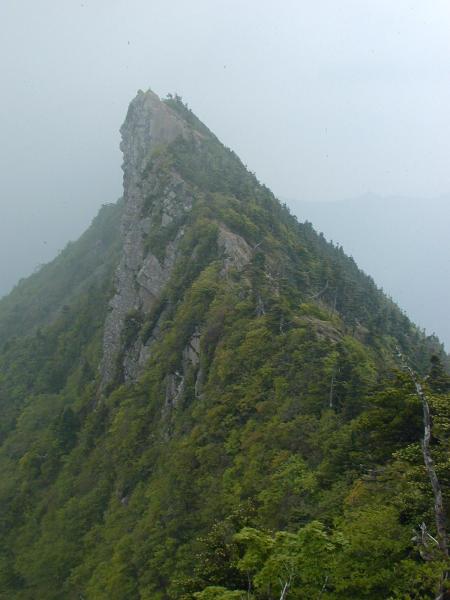
Mount Ishizuchi (石鎚山 Ishizuchi-san, 1982 m) is the tallest mountain on Shikoku. The name means Stone Hammer, a suitably awe-inspiring moniker for one of Japan's 7 Holy Mountains.
Naoshima (直島) is an island and town in the Seto Inland Sea of Japan. Naoshima is famous for its contemporary art museums as well as outdoor contemporary art installations throughout the island.

Ōboke (大歩危) and Koboke (小歩危) mean, respectively, "big steps dangerous" and "small steps dangerous" — an apt description of the perils of traversing on foot through these steep gorges in Shikoku. The river views and awesome white water rafting are the big draws here.

Home to "The Last Pristine River in Japan" and the famous submersible bridges that cross it.

Largest island in Shikoku, known for its art, soy sauce, and its striking gorge.
Articles and travel topics about Shikoku and Japan.
 Travel tips
Check if you need a visa for Japan in 2026. Discover visa-exempt nationalities, eVisa eligibility, stay durations, and how to use Visit Japan Web QR codes.
7 min read
 Travel tips
Plan for Japan's new travel costs in 2026. Learn about the ¥3,000 international departure tax, tiered hotel taxes in Kyoto, and Mt Fuji trail fees.
8 min read
 Travel tips
Complete 2026 guide to global tourist taxes and access fees. Compare entry fees in Venice, Bali, Bhutan, Kyoto, and Edinburgh, and learn how to pay them.
8 min read


 Itineraries
Plan a trip to Japan with kids in 2026. Discover a family-tested 10-day itinerary with theme parks, bullet trains, and practical parenting tips.
8 min read
Every section of the guide. Open one to read it in full.