//


City in Dzūkija, Lithuania
Photo: Scotch Mist, CC BY-SA 4.0 via Wikimedia Commons
Trakai is a city in the Dzūkija region of Lithuania, 28 km west of the capital Vilnius. It's on the shores of Lake Galvė and its star attraction is the Island Castle - this and the Peninsula Castle are from the 14th century, when the capital moved here and was fortified against attack. In 2020 Trakai had a population of 4141.
From the travel guide. Select a place for details, a map and what is nearby.
Trakų salos pilis
This is the one in all the tourist brochures, a redbrick Gothic mirage suspended between blue sky and lake, a seat of the medieval Duchy of Lithuania and nowadays a national symbol. It was built from the 14th century on the largest of the lake islands - all of them smaller than today as the water level was higher. The external enemy were the Teutonic Knights, but almost as damaging was the fratricidal conflict for the dukedom. After the Knights were crushed in 1410 the castle had less defensive value and was converted to a plush residence. It was later used as a prison for wicked nobles, fell derelict in the 17th century, and was part-restored in the 20th - much of what you see is more recent than the castle at Disneyland! The main attraction is the view from outside. If you pay to go in, there is a small museum in the outer works containing things like porcelain or glass that have no connection to the castle and very few labels. Another room has furniture from the 18th century, when the castle was uninhabitable. The inner tower has a little on the reconstruction that began at the start of the 20th century, paused for both world wars, and was finished in the 1960s, plus something on the nobles and ethnic groups that lived in and around the castle. There is no access to the highest parts and very few views to the outside. Approach by footbridge from the north end of town, you can visit by guided tour or just look around yourself. There is an audioguide app, but on Android phones at least, it only installs on older (32-bit?) versions of the OS. Check ahead as it's often used a venue for plays and concerts: the blast of sound from a rock band within these echoing walls would send even the Teutonic Knights scuttling back to Malbork.
Trakų piliakalnis
This followed a similar timeline to the island castle, raised against the Teutonic Knights, converted to a residence (where the Grand Duke was murdered in 1440, just to keep up the tradition) then to a nobles' prison before becoming derelict. However Dominican monks settled here and built a monastery and church in 1770. There's a small museum (just a few religious relics) but the castles' admin is also based here, so beware online maps that direct you here for the Island Castle. Most of the area is free to stroll 24 hours.
This is within the kenesa (synagogue) of the local Karaite Jews. Theirs is a bizarre story played out over 800 years, none of which you will glean from this museum, even if it hadn't been closed since 2020. The Karaites emerged as a community in Crimea and spoke Kipchak, a Turkic language. They define themselves by patrilineal descent (Jewish identity is traditionally matrilineal) and recognise only the Torah as scripture, rejecting Talmud the compendium of rabbinical commentary and interpretation. Over the centuries, they persuaded a series of anti-semitic rulers that they weren't truly Jewish (subtext "we had nothing to do with the killing of Jesus") and shouldn't be treated as such. Thus they were not required to re-locate to the Pale of Settlement, though many did so, and especially to medieval Lithuania. They also largely escaped the Holocaust. However modern genetics such as mitochondrial DNA points to kinship with the Ashkenazi and Sephardi Jews, and Israel has deemed the Karaites eligible for citizenship under the Law of Return. There are nowadays perhaps 200 Karaites in Lithuania, mostly in Vilnius.
Neoclassical mansion completed in 1895 in a lakeside farm estate. It's sometimes called Tyszkiewicz Palace for its owners, but that name also applies to their stately pile in Vilnius. They fled the Soviet invasion and it was turned into a sanatorium for communist security officials, who presumably were delighted if their sputum persisted red. The mansion decayed and its valuables were stripped. From 1995 it was restored and this is still a work in progress, but several French classical rooms are on display.
Karaite restaurant, lukewarm reviews.
Restaurant serving the kybyn, classical Karaite fare. Their van also supplies takeaways on the lakeshore by Peninsula Castle.
Pleasant clean place south end of town.
Upscale hotel with restaurant on lakeside near the castle footbridge.
Mixed reviews, most visitors are here for the Georgian restaurant.
Smart clean small hotel, not really a hostel and it doesn't have a dorm.
Campsite on north lakeshore, idyllic setting but it's 5 km from the bus station, and in summer the mozzies are pesky.
60 each way in 2023. Most are direct buses terminating here (run by Trakų Autobusai), though an occasional bus takes 40-50 min via the back lanes.
Read in the guideThe town is small enough for everything to be reached on foot. Footbridges link town, Island Castle and nearby peninsulas.
Read in the guideChoose an airport to see hotels, stations, taxi ranks and car rental desks around it.
Vilnius · International · VNO
Loading places around the airport…
Articles and travel topics about Trakai and Lithuania.
 Culture & history
Gothic architecture is a type of architecture of medieval Europe, that is very striking and a major reason for tourism and pilgrimage to and within Europe.
Wikivoyage
 Travel tips
The Polish–Lithuanian Commonwealth was a union of Poland and Lithuania which controlled much of Eastern Central Europe from 1569 to 1795.
Wikivoyage
 Itineraries
Via Baltica is a road leading through the Baltic States and Poland in Northern Europe.
Wikivoyage
 Travel tips
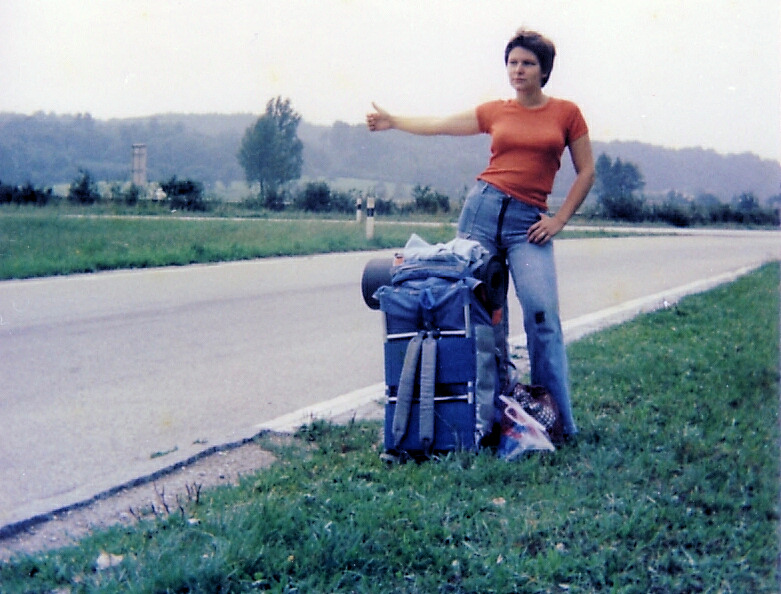
Hitchhiking is one of the cheapest ways of traveling. By tradition, hitchhiking is defined as soliciting a ride by standing at the edge of a road, facing traffic, with one's thumb extended/upwards.
Wikivoyage
Every section of the guide. Open one to read it in full.