//


Urban area in North Rhine-Westphalia, Germany
Photo: Tbachner, Public domain via Wikimedia Commons
The Ruhr (German: Ruhrgebiet) is a region in North Rhine-Westphalia, Germany. Once the uncontested heart of Germany's economy, the region was formed during the 19th and 20th century by the coal and steel industries and is going through a structural transformation, which makes it one of the most dynamic regions in Europe. Its borders are defined by the Ruhr River in the south, the Lippe in the north, the Rhine in the west and the city of Hamm in the east. That makes the region about 100 km from west to east and about 40 km from north to south. A "city of cities" as the marketing campaign would have it, the Ruhr area is one of Europe's most densely populated areas with both a strong regional identity and strong identities of many component cities and neighborhoods. About 5.3 million people live in the Ruhr, the third-most-populous metropolitan region in Western Europe after greater London and Ile de France (Paris) - ahead of greater Berlin. The Ruhr area lies in the center of the so called "Blue Banana", an area of high population density and industrial activity extending from northern Italy to the Netherlands and beyond the North Sea to England.
By train
The cities of Duisburg, Mülheim (not all trains stop here), Essen, Bochum, Dortmund and Hamm are at the main south-north route and therefore many long-distance trains stop there.
By bus
Flixbus has all but cornered the domestic market and also runs several international routes.
By car
Highways lead to the Ruhr from all directions. In the north-south direction, the A1 (Hamburg-Cologne) leads through the eastern Ruhr area.
Public transport
Since most cities have their separate transport association, coordination is not always the best.
Regional transport
Regional trains may be used with tickets of VRR within the VRR-area.
By taxi
Going by taxi is quite expensive.60/km plus a onetime charge from the approach.
By car
As some things aren't really close to each other, you might wish to take a car. You can do so, the road network is consistently good if sometimes congested.
By bicycle
The Ruhr has not historically been a good spot for cyclists.
Choose an airport to see hotels, stations, taxi ranks and car rental desks around it.
Dortmund · International · DTM
Loading places around the airport…

the region's cultural hub.
at the junction of four canals.

the most populous city in the region, famous for beer, industry, its football team and Europe's most attended and Germany's largest stadium.

the world's largest inland harbour
hosts the UNESCO World Heritage former industrial complex of Zollverein.

has a number of parks.

home to an open-air museum dedicated to early industry.

with an impressive railway station building.

Mülheim an der Ruhr is in the Ruhr area. With more than 50% covered by greenery and forest, the city is an attractive place between Düsseldorf and the rest of the Ruhr.

famous for the CentrO multi-functional centre incorporating shopping, culture and tourist attractions.
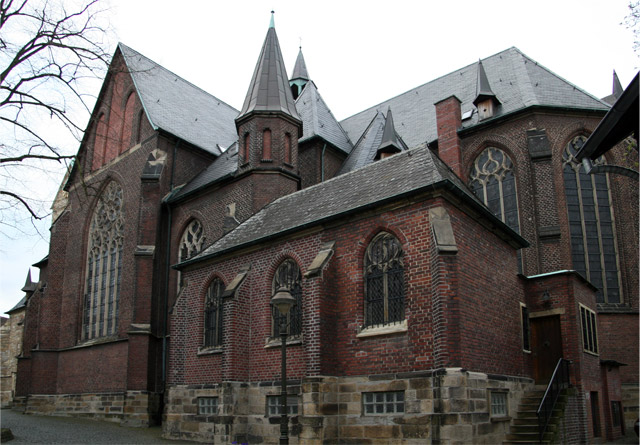
home to the Lock Park, preserving several heritage canal structures.

birthplace of coal mining in the Ruhr.

medieval and industrial heritage
Articles and travel topics about Ruhr and Germany.
 Travel tips
Understand travel insurance for a Schengen visa in 2026. Learn mandatory €30,000 medical coverage, zero deductible rules, and embassy-approved policies.
7 min read


 Travel tips
Estimate your Europe trip cost for 2 weeks in 2026. Compare realistic budgets for lodging, Eurail trains, dining, and sightseeing across three styles.
8 min read
 Travel tips
Plan your trip with our Oktoberfest 2027 guide. Learn how to reserve beer tent tables, understand Munich hotel booking windows, and budget daily costs.
8 min read
 Inspiration
Explore the best castle and gothic hotel stays in Europe. Discover historic fortresses, medieval estates, luxury châteaux, and Spanish parador hotels.
6 min read

Every section of the guide. Open one to read it in full.