Money and payments
Cards and cash
Credit card and ATM card use are charged at the Sayrafa rate.


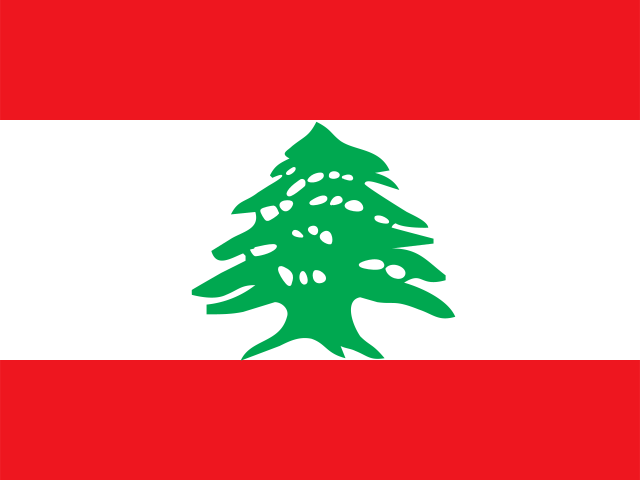 Asia · Western AsiaOutline guide
Country in West Asia
Photo: Vyacheslav Argenberg, CC BY 4.0 via Wikimedia Commons
Lebanon (Arabic: لبنان, French: Liban) is a country in the Middle East, on the Mediterranean Sea. Rich in diversity and history, Lebanon has hosted the Roman Empire, the Crusades, the Ottoman Empire, and was, for a period of time, controlled by France. The majority of Lebanese are Arabs, as are most of the Palestinians and Syrians living there, but there are also small communities of Assyrians, Armenians and Kurds. Lebanese cuisine is among the most famous of all Middle Eastern cuisines.
Answers to what travellers most often look up about Lebanon.
Cards and cash
Credit card and ATM card use are charged at the Sayrafa rate.
Arabic, French
The official and national language of Lebanon is Arabic. The local vernacular is Lebanese Arabic, which is closely related to the Arabic spoken in Syria, Jordan, among Israeli Arabs, and in Palestine.
Touch: Advertised as the Visitor Line, Touch offers an exlusive plan for tourists including a SIM card containing 10GB of Mobile Internet, 100 minutes of talk and 100 SMS messages with a 14 days validity, with an initial price of 19$(This plan can be renewed…
It's recommended to drink bottled water rather than tap water.
As a key destination for health tourism in the region, Lebanon has a professional and private healthcare system. Located mainly in Beirut, key hospitals include:
Lebanon is a country of many different religious sects, so it is wise to respect the religious differences of the Lebanese population.) and when visiting rural towns and villages.
Covered in the guide
Attractions, food, stays and travel essentials, with ratings, reviews, opening hours and directions.

Beirut (Arabic: بيروت Bayrūt, French: Beyrouth) is the capital city of Lebanon with a population of approximately 2.1 million people in its metropolitan area. The city is on a relatively small headland jutting into the east Mediterranean.

the second-largest city in the country and the ‘capital of the North’, this port city was heavily built by the Islamic Mamluk dynasty, holding the second highest amount of Mamluk architecture after Cairo, giving the city a ‘medieval Islamic feel’. It is also home to the major Crusader site of “Citadel of Raymond de Saint-Gilles”. The city was deeply scarred and almost completely destroyed by the Lebanese Civil War, and as such the city has never really recovered; it is nowadays extremely impoverished, with architecture that is severely crumbling and destroyed from the war. However, it is also unspoilt by mass-tourism.

The third-largest city in the country. The city is known for its beautiful view of the Mediterranean, as well as being home to a lot of historic Crusader and Ottoman architecture, including the “Khan al-Franj” (“Caravanserai of the French”) caravanserai (Ottoman guest house). It is also home to plenty of other medieval remains, as well as a fascinating museum about the local soap industry here and the art of Levantine soapmaking.

a medium-sized, ancient city, famed for its strong Phoenician heritage, with many Phoenician sites and a rich history of being a Phoenician cultural centre. The city is also famed for its beautiful coastline, with wide expanses of sandy beaches that saw a mass-scale construction boom of luxury resorts during the “Golden Age” years of the 1960s and early-1970s. It is home to many ancient Roman and Phoenician sites, including its Roman Hippodrome which is a UNESCO World Heritage Site

one of the oldest continually-inhabited cities in the world, believed to have been first occupied between 8800 and 7000 BC, this historic city is home to dozens of historic Phoenician, Roman, Crusader and Ottoman remains, Crusader castles and culturally rich museums. It is also home to a beautiful harbour and a souk.
known for its seaside resorts and nightclubs

main summer resort and tourist destination of South Lebanon

capital of Bekaa Valley

known for its grotto with spectacular caves
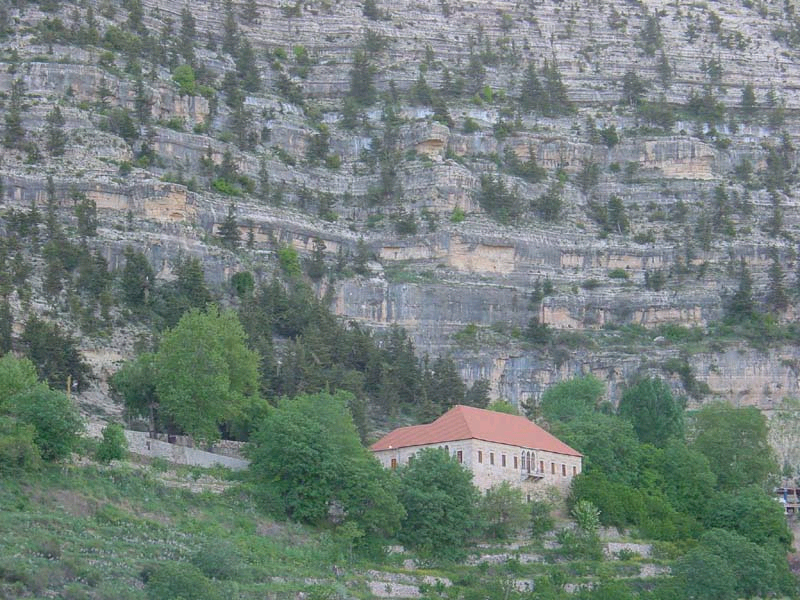
visit the home of the (now deceased) Lebanese poet Khalil Gibran

traditional village in Chouf district.

a Phoenician and Roman archaeological site
Places in Lebanon on the World Heritage List.

Temple of Jupiter

Rachid Karami International Fair
Listed 2023

Tyre
Listed 1984

Mount Amel Castles
Listed 2026

Ouadi Qadisha (the Holy Valley) and the Forest of the Cedars of God (Horsh Arz el-Rab)
Listed 1998
List from Wikidata (CC0). Photos from Wikimedia Commons.
Lebanon's capital.
The area surrounding the city of Baalbek near Lebanon's eastern border (with Syria).
A heavily mountainous area including the cities of Byblos and Jounieh.
On Lebanon's northern coast; its largest city is Tripoli.
An area of Lebanon bordering Israel and containing the cities of Tyre and Sidon.
Public transport and paid services in Lebanon.
By bus
City link bus routes are available and cheap.
By train
There has been no passenger rail service in Lebanon since before the Civil War.
By taxi
The majority of travellers use service taxis to get from place to place.
By car
Car rental is relatively expensive in Lebanon compared to elsewhere in the region.
Apps for booking a taxi or a ride in Lebanon.
Finding apps for Lebanon…
Other ways to travel:By hitchhiking
Operators checked against their official websites in October 2026; services that have stopped running are not listed. Logos and Wikipedia links: Wikidata (CC0)
Choose an airport to see hotels, stations, taxi ranks and car rental desks around it.
Beirut · International · BEY
Loading places around the airport…
Calculated from climate averages: mild daytime highs and lower rainfall. It does not account for festivals, crowds or prices.
Average conditions in Beirut
| Jan | Feb | Mar | Apr | May | Jun | Jul | Aug | Sep | Oct | Nov | Dec | |
|---|---|---|---|---|---|---|---|---|---|---|---|---|
| Avg. high | 14° | 15° | 17° | 20° | 25° | 28° | 30° | 30° | 28° | 25° | 20° | 16° |
| Avg. low | 9° | 9° | 11° | 13° | 17° | 20° | 22° | 23° | 21° | 19° | 15° | 11° |
| Rainfall (mm) | 115 | 82 | 43 | 23 | 9 | 2 | 0 | 1 | 5 | 23 | 56 | 96 |
| Humidity | 72% | 71% | 69% | 65% | 60% | 57% | 59% | 64% | 63% | 62% | 62% | 69% |
Choose your passport and destination to see whether you need a visa.
Budget
$65
Per person, per day
Mid-range
$180
Per person, per day
Luxury
$460
Per person, per day
| Budget | Mid-range | Luxury | |
|---|---|---|---|
| Accommodation | $30 | $100 | $270 |
| Food and drink | $15 | $40 | $90 |
| Local transport | $10 | $15 | $40 |
| Activities | $10 | $25 | $60 |
Estimate from World Bank price levels (2025). Actual costs vary by city and season. World Bank
—
We do not label countries as safe or unsafe. Below is the official advice from two governments, with the date it was last updated. Always read the full advice before you travel.
US Department of State
Level 4 of 4Do not travel
Do not travelto Lebanon due to the risk of crime, terrorism, unrest, kidnapping, landmines, and armed conflict. Do not travel to Lebanon for any reason. The U.S. government has limited ability to offer emergency services to U.S. citizens in Lebanon due to the safety risks. U.S. government employee travel restrictions U.S. Embassy Beirut personnel are restricted from personal travel throughout Lebanon without advance permission. Additional travel restrictions may be imposed on U.S. personnel under Chief of Mission security responsibility, with little to no notice due to increased security issues or threats. The Lebanese government cannot guarantee the safety of U.S. citizens against sudden outbreaks of violence and armed conflict. U.S. citizens in Lebanon are advised to take similar precautions. Due to safety risks, only family members 21 years of age or older may join U.S. government employees who work in Lebanon. Aviation Safety The Federal Aviation Administration (FAA) advises caution for flights operating in the airspace within 200 nautical miles of the Damascus Flight Information Region (FIR) due to heightened military activity in or around Syria. For more information U.S. citizens should consult the Federal Aviation Administration’s Prohibitions, Restrictions and Notices. Crime There is risk of non-violent crime throughout Lebanon. Most crimes against foreigners are crimes of opportunity, like purse snatching and pickpocketing. Terrorism There is risk of terrorist violence, including terrorist attacks and other activity in Lebanon. Visit the U.S. Department of…
UK Foreign, Commonwealth & Development Office
Advises against all travel to parts of the country
Your travel insurance could be invalidated if you travel against advice from the Foreign, Commonwealth & Development Office (FCDO). Consular support is also severely limited where FCDO advises against travel. Areas where FCDO advises against travel Areas in Beirut and Mount Lebanon Governorate FCDO advises against all travel to the following areas of Beirut and its southern suburbs, excluding Route 51 from central Beirut to Rafic Hariri International Airport: Tariq el Jdideh and the area east of Tariq el Jdideh, south of Jalloul Street, west of Hourch and the war cemetery (not including the war cemetery), and south of the Soulieman Bastani Ghobeiry and the area north of Ghobeiry but south of Yarmouk street, the war cemetery and Horsh park (not including Horsh park and the cemetery and Yarmouk street) Chiyah (south and west of the Rizkallah Semaan road) Haret Hraik Burj Al Barajneh Mraije Laylaki Jnah, south of El Imam Mousa El Sader street The Golf Club of Lebanon all other areas west of the Camil Chamoun Boulevard (south of Forn el Chebbak) that becomes the Old Saida Road through Hadath to Beirut airport FCDO advises against all but essential travel to: The area of Mount Lebanon Governorate south of (but excluding) the road from Wadi El Zayni in the west (and extending to the Mediterranean Sea), which travels through the villages of Aanout, Gharifeh, Ainbal, Boqaata, Moukhtara, Maaser El Chouf to the Mount Lebanon-Beqaa Governorate boundary in the east Areas in the South and Nabatiyeh Governorates FCDO advises against all travel to South and Nabatiyeh…
Stories, itineraries and practical advice for travelling in Lebanon.
 Nature & adventure
Every visitor to Lebanon has heard that in this country one can ski on snow in the morning and swim in the waters of the Mediterranean in the afternoon.
Wikivoyage
 Food & drink
While the Middle East is vast and diverse, similar culinary traditions can be found across the region. They have been formed by the Mediterranean climate, commercial routes to Europe, Asia and Africa, and the Abrahamic…
Wikivoyage
 Itineraries
Touring Shaker country takes you to one current and eleven former Shaker communities in the Mid-Atlantic, New England and Midwest regions of the United States.
Wikivoyage
 Itineraries
The geographical and cultural diversity of Asia makes a great number of itineraries across Earth’s largest continent possible, from Marco Polo to the Karakoram Highway.
Wikivoyage
 Culture & history
The Roman Empire was the greatest ancient empire of Europe. At the height of its power in 117 AD, it ruled over considerable parts of Europe, as well as much of North Africa and the Middle East.
Wikivoyage
 Travel tips
This page is about problems that may arise from evidence of travel to or visa for certain territories. For the issue of visas in general, see Visa.
Wikivoyage
Every section of the guide. Open one to read it in full.


