//


Dutch-speaking region of Belgium
Photo: ArneVcrs-FnP, CC BY-SA 4.0 via Wikimedia Commons
Beer is taken seriously in Belgium. There are hundreds of brands to choose from.
Every city or village has a café.
By boat
There are several ports of entry at the coast and on the Schelde you can find several small ports too.
By car
The E19 goes through Flanders, also the E40 crosses the region.
By train
Big cities in neighbouring countries such as Paris, Amsterdam and London have connections to bigger cities in Flanders. From there you can change train and reach every city in Flanders.
Other means
By bicycle or on foot. As we are in the European Union there are no borders and you can travel freely.
By public transport
The national train company is called NMBS but is generally indicated by a blue "B" within an ellipse. Trains will get you to most cities.
By bike
Flanders has a vast network of special roads for bicycles. Get a map in a tourist office, because sometimes they can be hard to find.
By foot
Getting around by foot is by far the easiest inside towns. You don't need to take one-way streets into account, and most streets have raised sidewalks.
Choose an airport to see hotels, stations, taxi ranks and car rental desks around it.
Zaventem · International · BRU
Loading places around the airport…

Flanders' biggest city, with a large cathedral, the second-largest port of Europe, and plenty to see and do.

also known as the "Venice of the north", a very nice medieval town with lots of small canals

the capital city of Limburg, with a lot of greenery and shopping possibilities

an old city with famous medieval towers (Broeltowers) and a big pedestrian shopping district

a more medieval city located approximatively in the centre of Flanders, halfway between Antwerp and Bruges
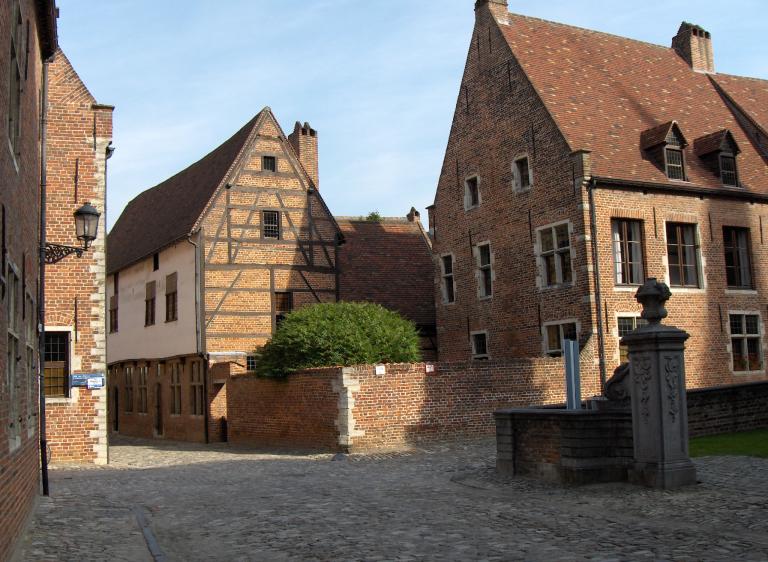
an old town with a very old university and a beautiful town hall

small town with a famous cathedral
offering nice cycling opportunities and boasts Belgium's largest market square
Every section of the guide. Open one to read it in full.
