//

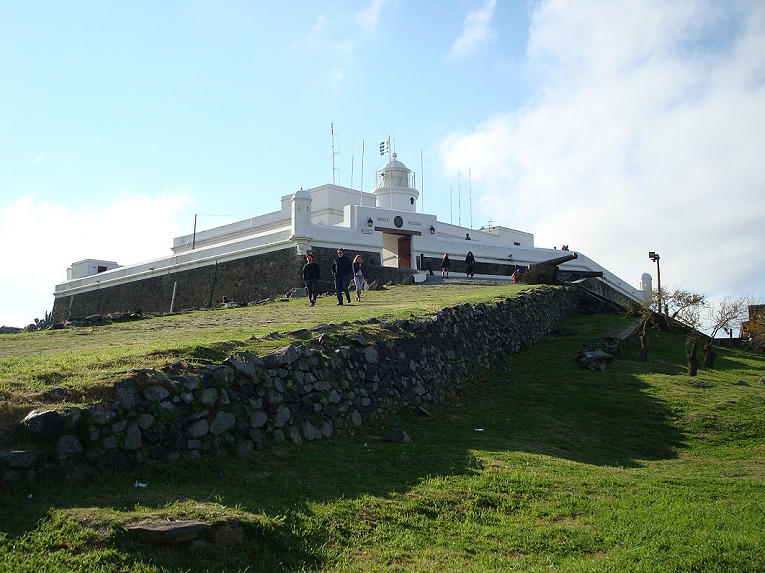
Photo: Hoverfish, CC BY-SA 3.0 via Wikimedia Commons
This fort, on the top of the Cerro Hill, houses a collection of armoury. It is the original fort from which Montevideo originated. The fort sits on the top of a hill and can be seen from many places in the city - and you'll have a fantastic view of the city from the fort. Visiting the fort can be hard, as the Cerro district is somewhat of a shantytown and reportedly not safe to wander around in — though it is possible to reach the fort by car or taxi.
The Fortaleza del Cerro, also known as Fortaleza General Artigas, is a fortress situated in Montevideo, Uruguay overlooking the Bay of Montevideo. It belongs to the barrio of Casabó, at the west of Villa del Cerro. It holds a dominant position on the highest hill of the department of Montevideo with an altitude of 134 meters above sea level, on the opposite side of the bay. Its function was to defend the population of Montevideo and its port, on the río de la Plata. Governor Francisco Javier de Elío ordered construction in 1809 and it was completed in 1839; this was the last Spanish fort built in Uruguay. It has housed the Military Museum since 1916.
© OpenStreetMap contributors
Massive landmark next to Mercado del Puerto, hosting the Uruguayan customs administration.
Small museum with carnival costumes and paraphernalia. If you don't have the opportunity to visit Montevideo during the yearly carnival, at least you will get to see some costumes and drums here.
This is a covered market full of restaurants and some shops selling handicrafts and souvenirs that is worth seeing as a sight, an eating place, and as a place for shopping. The main market is open every day during lunch hours. The restaurants around the exterior offer indoor and outdoor seating, and they remain open for dinner.
Museo de Arte Precolombino e Indígena
Museum of indigenous art and Uruguayan archaeology. As the name reveals, it showcases native American artefacts from all of South America.
Museo de Artes Decorativas
Location of the Museum of Decorative Art with over 2000 exhibits from all periods. Here you can see works by European masters from the last five centuries and ancient archeological artefacts such as Roman amphoras and furniture used by French kings. The building was built as the residence of the Taranco Ortiz family.
The house of Juan Antolio Lavalleja, leader of the Thirty-Three Orientals who fought against Brazil for Uruguayan independence in the 1820s. Part of the National History Museum.