//

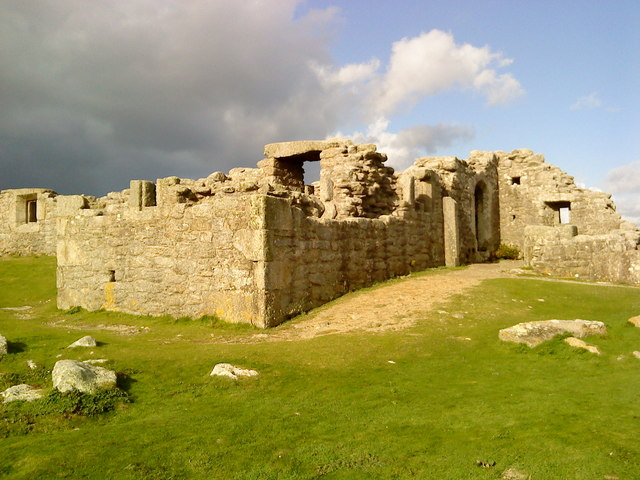
Photo: Andrew Abbott, https://www.geograph.org.uk/profile/45714, CC BY-SA 2.0 via Wikimedia Commons
A ruined artillery fort, probably built circa 1550 in the reign of King Edward VI, but named for King Charles by the Royalists who held out against Cromwell in these islands (with a spot of piracy on the side). It was badly sited and not much use, so its masonry was used to build Cromwell's Castle nearby.
King Charles's Castle is a ruined artillery fort overlooking New Grimsby harbour on the island of Tresco in the Isles of Scilly. Built between 1548 and 1551 to protect the islands from French attack, it would have held a battery of guns and an accompanying garrison, designed to prevent enemy vessels from entering the harbour. The castle is polygonal in design, constructed from granite stone, with the gun battery at the front, and a dining room, kitchen and living accommodation at the rear. An additional defensive earthwork was constructed around it during the 17th century. The design of the castle is unusual for the period, and is only seen elsewhere in blockhouses along the River Thames.
© OpenStreetMap contributors
This coastal gun tower was built by Oliver Cromwell in 1651-1652 on a promontory to guard the anchorage between Bryher and Tresco. It is administered by English Heritage.
Impressive botanical garden with a range of Mediterranean and sub-tropical plants growing healthily outdoors. Created in the 19th century in the ruins of a Benedictine Abbey, with tall hedges and landscaping as windbreaks. Includes "Valhalla", a collection of sailing ship figureheads.
Burial Chamber dates from the Bronze Age, as the gradual flooding of Ennor forced inhabitants onto higher ground. It was empty when first excavated in 1900. St Mary's has some 80 similar "entrance graves", e.g. at nearby Innisidgen and at Porth Hellick Down on the east tip, but Bant's Cairn is the finest. A little lower down the hill is Halangy Down Ancient Village, occupied from the Iron Age into Roman times, with a prehistoric terraced field system. The cairn and ancient village are at the north end of St Mary's, the bus runs to the top of Telegraph Rd. They're always open, free.
Star Castle
The Spanish Armada was defeated in 1588, but they might come back for revenge, so fortification began here (abandoning the less-well-sited Harry's Walls). Enter the curtain wall via the Gatehouse; the powder magazine here has a free exhibition on the history. A circuit along the walls is a pleasant one hour walk, past artillery emplacements and redoubts; mostly firm easy going but some rough spots. Imposing Hugh House was the officers' quarters. The core of the Garrison, a stout Vauban-style bastion, is now the Star Castle Hotel.
These are the walls of an unfinished artillery fort built to the east of the harbour in 1552-53. Building was abandoned when they decided instead to fortify the headland to the west, which became The Garrison.
It's an ill wind: the gales of winter 1962 unearthed Romano-British remains, so where to house them? This museum, opened in 1967, displays the history of the islands. Pirates, longitude, wildlife, it's all here.