//


Metropolitan area and region of the Philippines
Photo: Johnpsolis at English Wikipedia, Public domain via Wikimedia Commons
Metro Manila (Filipino: Kalakhang Maynila), on the island of Luzon, is the national capital region of the Philippines. With a population of about 24 million people (2015), it is the smallest and most populous administrative region of the country, contributing 37% of the Philippines' GDP. It is the country's center of administration, business, education, diplomacy and entertainment, a huge metropolis with massive social contrasts which may even exceed those in Latin America, and are reflected in the contrasts of urban landscapes.
The bustling, crowded and noisy City of Manila, which in Metro Manila terms is the "old city center", is home to much of the country's history and culture. It is the only city in Metro Manila which is divided into districts, of which there are sixteen.
Quezon City is the largest and most populous city of Metro Manila, also containing some of the country's best universities. In this area you can find some of the largest parks and shopping malls of the Philippines, as well as one of Manila's main business districts, the Ortigas Center.
A largely working-class area, it has a notorious reputation for being flood-prone during rainy season, with some areas below sea level. Also known as the gateway to central and northern Luzon, it is home to heritage houses and Metro Manila's largest fish market.
Contains the Ninoy Aquino airport and some of the most affluent areas of Metro Manila, as well as major business districts (including Makati, Bonifacio Global City in Taguig and Filinvest City in Muntinlupa) and a plethora of entertainment, including the SM Mall of Asia in Pasay and the Entertainment City in Parañaque. It is in some sense the "modern" city center of Manila.
From the travel guide. Select a place for details, a map and what is nearby.
The most well-known Filipino fastfood chain of all, Jollibee can boast of over a thousand stores in the Philippines and more than 300 stores around the world. Typical fastfood fare for the most part, but the burger dressing will taste different (read: sweet) to most foreigners. For something a little different, try the pancit palabok, which is a vermicelli dish with an orange sauce.
The second of Jollibee corps' trifecta of fastfood chains, Greenwich Pizzas are your typical fare, but once again with the slightly sweeter than usual tomato sauce. Some seasonal offerings may be on offer though, like the sisig pizza, so check the menu.
The Filipino version of Chinese food, also owned by Jollibee. For good sampling of their food, try the Lauriats, which feature a viand (beef, pork, chicken), rice, pancit (fried noodles with meat and veggies), siomai (dumplings), and buchi (a sweet rice ball covered with a sesame-based coating.
Tapaking is where you get the ubiquitous tapsilog (fried beef strips, fried garlic rice, and egg), which is popular breakfast fare, along with other local delicacies.
This is a fast-growing chain where you go to get the localized version of congee called goto and lugaw (rice porridge), with different kinds of toppings like chicken, roasted garlic, egg, etc.
A relative newcomer, Mang Inasal brings a variety of barbecue called "inasal" into Metro Manila from the smaller city of Bacolod (further south in the Visayan region). They offer other grilled meats, and soups like sinigang (a sour, tamarind based soup).
The place to go for your baked treats and sweets like mamon (a spongy round cake), polvoron (a tightly packed powdery treat) ensaymada (bread baked with cheese and sugar), and host of other delicacies for those with a sweet tooth. A must try savory treat is their fresh lumpiang sariwa (light and fresh spring roll with peanut sauce).
By train
The Philippine National Railways (PNR) North-South Commuter Railway (NSCR) is under construction and will run between Clark Airport in the north to Calamba in the south. It is planned to open in 2025.
By boat
All ferries and most boats serving Metro Manila dock at the Port of Manila in Manila proper, which is divided into two halves: the North Harbor on the northern side of the Pasig River in Tondo, and…
By bus
Provincial buses to Metro Manila from other parts of the Philippines are cheap and efficient, and a common way to travel between cities in Luzon.
By car
Metro Manila is the center of the Philippine highway network; most roads lead to Manila, and signs in most major highways of Luzon often use Manila as a control city.
Fares
Beep is a prepaid smart card used to pay for the LRT, MRT, and some buses.
By train
Metro Manila's three metro lines are the fastest way to get around the city, capable of zipping through the city's perennially congested streets.
By bus
City buses are operated by a multitude of private franchised operators, providing a cheap but slower way of exploring the metro.
By jeepney
In addition to buses, jeepneys are widely available. Despite having a reputation for being crowded and inefficient, they serve the nooks and crannies of Metro Manila that regular city buses cannot.
By van
UV Express (formerly called GT Express or FX) is a passenger van shuttle service, with fares more expensive than buses, but cheaper than taxis and jeepneys.
By taxi
The rideshare app Grab is ubiquitous in Metro Manila, and basically the only choice. You can use Grab to order a "GrabCar" (with fixed fare) or a traditional taxi (with metered fare).
By car
The metropolis has an extensive system of highways connecting the various cities and municipalities. Most of the major thoroughfares are numbered with one or three digits on white shield signs.
By tricycle
Tricycles (motorcycles with modified side cars) are common for short trips in areas where jeepneys do not travel. In Manila proper you are unlikely to see any.
By foot
Like most large Southeast Asian cities, Manila is definitely not a city made for pedestrians.
Choose an airport to see hotels, stations, taxi ranks and car rental desks around it.
Manila (Pasay) · International · MNL
Loading places around the airport…

Manila (Tagalog: Maynila) is the capital of the Philippines and a major attraction in terms of culture and heritage in the country. Sprawling, congested and polluted will likely be the first words to enter your mind when you think of Manila but don't let that impression stop you from exploring its places of interests: its churches; its diverse and complicated culture; colonial history; gigantic malls; bustling markets; hidden architectural gems and vibrant nightlife.

Quezon City (Tagalog: Lungsod Quezon) is the largest city in the Philippines and is one of the constituent cities of Metro Manila. Commonly called QC or Kyusi, it has a population of almost 3 million people in 2020.

Caloocan or Kalookan is a city in northern Metro Manila. Caloocan is a large suburb of Manila, and is predominantly residential, mostly home to people relocated from Manila's slums.

Parañaque is a city in southern Metro Manila. It contains the Entertainment City (E-City), the Little Las Vegas of Manila containing four huge casinos, and Baclaran, a residential and commercial neighborhood containing bustling flea markets, the Baclaran Church, backpacker inns and some nightclubs.

Pasay is a city in Metro Manila. Just south of Manila, this city houses the Ninoy Aquino International Airport which serves the region, and the Bay City development which hosts SM Mall of Asia, also part of Manila's tourist area.

Pasig is a city on eastern Metro Manila, lending its name from the eponymous river of the same name. Once part of Rizal province, Pasig is now part of Manila's ever-expanding sprawl.
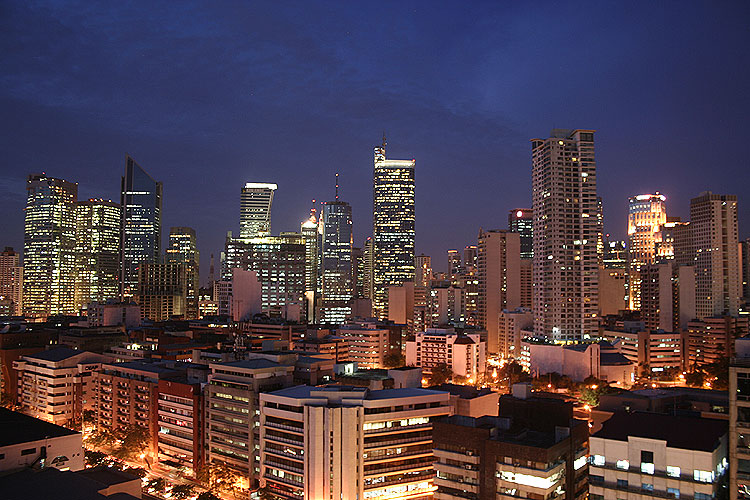
Makati lies in the heart of Metro Manila. The city is known for its upscale shopping malls with high fashion brands, restaurants and hotels, and is home to many affluent Filipinos.
Mandaluyong is a city in Metro Manila, Philippines. While not touristy as its neighbors owing to the lack of historical sites, the city is by the way a shopping destination, bordered by Makati to the south, Manila's southeast suburban districts to the west, Pasig to the east, and San Juan and Quezon City to the north.

Taguig is a city, part of Metro Manila in the Philippines. Taguig contains the Bonifacio Global City (popularly known simply as BGC), Metro Manila's second most important business district and a major tourism, shopping, dining and entertainment destination.

The Quezon Memorial Circle is a national park and shrine in Quezon City, Metro Manila, Philippines. The park is a family-friendly attraction of the city.
Articles and travel topics about Metro Manila and Philippines.
 Travel tips
Full 2026 list of visa-free countries for Philippine passport holders. Check ASEAN entry rules, stay limits, and Bureau of Immigration clearance tips.
6 min read


 Inspiration
The ultimate first-time Philippines island guide covering El Nido lagoons in Palawan, White Beach in Boracay, Bohol Chocolate Hills, and Cebu waterfalls.
6 min read
 Itineraries
An honest comparison of Palawan and Boracay covering beach sand quality, island hopping tours, nightlife, travel logistics, and real costs.
6 min read
 Travel tips
Real-world 7-day Philippines travel budget covering hotel prices, domestic flights, island hopping tours, tricycle fares, and food costs.
7 min read
Every section of the guide. Open one to read it in full.