Money and payments
Cards and cash
ATMs are generally available at banks in urban areas and accept both Visa and Mastercard.


 Africa · Western AfricaOutline guide
Country in West Africa
Photo: Burmesedays, CC BY-SA 3.0 via Wikimedia Commons
Côte d'Ivoire (Ivory Coast) is a country in West Africa, visited for its beaches, rainforest, wildlife and tourist villages. Resort lodgings in coastal areas draw many visitors.
Answers to what travellers most often look up about Ivory Coast.
Cards and cash
ATMs are generally available at banks in urban areas and accept both Visa and Mastercard.
French
The official language is French, which is widely spoken and the main language of most urban areas.
Mobile networks
Tap water is generally not drinkable.
HIV/AIDS had once reached epidemic proportions in the country but has since seen huge improvements with an adult prevalence of 2.7% as of 2016.
Although the country has been referred to in English as "Ivory Coast", the country has requested that it be called "Côte d'Ivoire" (the equivalent in French).
Attractions, food, stays and travel essentials, with ratings, reviews, opening hours and directions.

the administrative center; other countries maintain their embassies there.
although it has been the capital since 1983, it is not the administrative centre.

home of the Senoufo people and culture, bursts with commerce during Feb–May because of flowing cotton and cashew trade.

the second largest city
the second port city

a coastal town full of colonial charm, often a retreat for local Ivorians seeking to escape the city life of Abidjan on the weekends.
For the national park in South Island, see Westland Tai Poutini National Park Taï National Park is in Côte d'Ivoire, in the southwest of the country about 100 km in from the coast and near the Liberian border. It is a large park at 4,540 km² (1770 sq mi), containing tropical evergreen forest.

Comoé National Park (French: Parc national de la Comoé) is in the Northern Savanna of Côte d'Ivoire. The park is a UNESCO World Heritage Site.
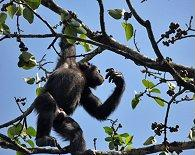
Mount Nimba Strict Nature Reserve covers parts of Côte d'Ivoire and Guinea. It is an endangered UNESCO World Heritage Site.
Places in Ivory Coast on the World Heritage List.

Comoé National Park
Listed 1983

Taï National Park
Listed 1982

Mount Nimba Strict Nature Reserve
Listed 1981

Sudanese style mosques in northern Côte d'Ivoire
Listed 2021
List from Wikidata (CC0). Photos from Wikimedia Commons.
the coastal lagoons area around the de facto capital of Abidjan
the largely Muslim area held in the civil war by rebel "New Forces"
the tropical wet forest area inhabited by the Kru people bordering Liberia
the partially cultivated area between Lac de Kossou and the border with Ghana
Public transport and paid services in Ivory Coast.
Apps for booking a taxi or a ride in Ivory Coast.
Finding apps for Ivory Coast…
Operators checked against their official websites in October 2026; services that have stopped running are not listed. Logos and Wikipedia links: Wikidata (CC0)
Choose an airport to see hotels, stations, taxi ranks and car rental desks around it.
Abidjan · International · ABJ
Loading places around the airport…
Calculated from climate averages: mild daytime highs and lower rainfall. It does not account for festivals, crowds or prices.
Average conditions in Yamoussoukro
| Jan | Feb | Mar | Apr | May | Jun | Jul | Aug | Sep | Oct | Nov | Dec | |
|---|---|---|---|---|---|---|---|---|---|---|---|---|
| Avg. high | 32° | 31° | 30° | 30° | 29° | 28° | 27° | 27° | 28° | 29° | 29° | 30° |
| Avg. low | 23° | 24° | 25° | 25° | 25° | 24° | 22° | 22° | 22° | 23° | 24° | 24° |
| Rainfall (mm) | 26 | 63 | 130 | 158 | 201 | 260 | 98 | 47 | 99 | 183 | 110 | 50 |
| Humidity | 73% | 77% | 82% | 86% | 87% | 89% | 88% | 86% | 86% | 86% | 84% | 79% |
Choose your passport and destination to see whether you need a visa.
Budget
$40
Per person, per day
Mid-range
$115
Per person, per day
Luxury
$305
Per person, per day
| Budget | Mid-range | Luxury | |
|---|---|---|---|
| Accommodation | $20 | $65 | $180 |
| Food and drink | $10 | $25 | $55 |
| Local transport | $5 | $10 | $25 |
| Activities | $5 | $15 | $45 |
Estimate from World Bank price levels (2025). Actual costs vary by city and season. World Bank
—
We do not label countries as safe or unsafe. Below is the official advice from two governments, with the date it was last updated. Always read the full advice before you travel.
US Department of State
Level 2 of 4Exercise increased caution
Exercise increased cautionin Côte d’Ivoire due to crime, terrorism, unrest, health, and piracy in nearby waters. Some areas have increased risk. Read the entire Travel Advisory. U.S. government employee travel restrictions The U.S. government has a limited ability to provide routine or emergency services to U.S. citizens outside of Abidjan. U.S. government employees working in Côte d’Ivoire are not allowed to drive outside major cities at night and require two-car convoys for official travel outside of coastal and major north/south highways. U.S. citizens are advised to take the same precautions. Crime Crime continues to be a concern in Côte d’Ivoire. Violent crime, including carjacking, robbery, and home invasion, is common in some areas. Local police often lack resources to respond to serious crimes. Stay aware of your surroundings in urban areas and crowded markets. Police roadblocks may be present throughout the country, and though not common recently, unofficial roadblocks may be encountered in some locations. Terrorism There is risk of terrorist violence, including terrorist attacks and other activity, in Côte d’Ivoire. Visit the U.S. Department of State's country reports on terrorism to learn more. Terrorists may attack without warning: Spots frequented by foreigners anywhere in the country Night clubs Schools Hotels Restaurants Places of worship International diplomatic missions Local security forces and civilians Unrest Travelers should avoid demonstrations, protests, political rallies, and large crowds. These events can become violent. Demonstrators and…
UK Foreign, Commonwealth & Development Office
Advises against all travel to parts of the country
Your travel insurance could be invalidated if you travel against advice from the Foreign, Commonwealth & Development Office (FCDO). Areas where FCDO advises against travel Borders with Burkina Faso and Mali FCDO advises against all travel to: within 40km of the borders with Burkina Faso and Mali Northern Zanzan and Savanes provinces Comoé National Park This is due to an increased risk of terrorist attacks and kidnaps by terrorists based in the Sahel region, which includes Burkina Faso and Mali. Côte d’Ivoire-Liberia border FCDO advises against all but essential travel to within 20km of the border with Liberia owing to the risk of serious violence by local militias. Find out more about why FCDO advises against travel. Before you travel No travel can be guaranteed safe. Read all the advice in this guide. You may also find it helpful to: see general advice for women travellers read our guide on disability and travel abroad see general advice for LGBT+ travellers read about safety for solo and independent travel see advice on volunteering and adventure travel abroad Travel insurance If you choose to travel, research your destinations and get appropriate travel insurance. Insurance should cover your itinerary, planned activities and expenses in an emergency. About FCDO travel advice FCDO provides advice about risks of travel to help you make informed decisions. Find out more about FCDO travel advice. Get travel advice updates Sign up to get email notifications when this travel advice is updated. Follow FCDO: travel advice on X travel advice on Facebook Travel…
Stories, itineraries and practical advice for travelling in Ivory Coast.
 Nature & adventure
As of 2023 the UNESCO World Network of Biosphere Reserves is made up of 738 reserves in 134 countries of which 22 are transboundary.
Wikivoyage
 Travel tips
Europe is a continent that is relatively small but with many independent countries. Under normal circumstances, travelling through multiple countries would mean having to go through visa applications and passport…
Wikivoyage
 Culture & history
Islam is one of the world's most important religions, second only to Christianity in number of adherents. Its followers are called Muslims and their houses of worship, mosques.
Wikivoyage
Every section of the guide. Open one to read it in full.


