//

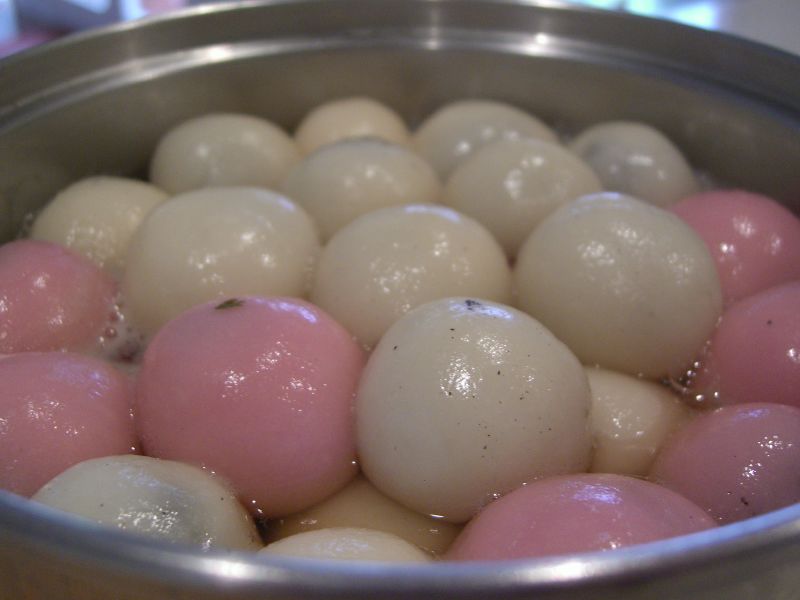
Photo: Alpha from Melbourne, Australia, CC BY-SA 2.0 via Wikimedia Commons
Which literally means the Coming of Winter, falls on December 22. In Zibo, families mark the occasion with hearty meals, often including dumplings (饺子), which are believed to keep the body warm and healthy during the cold season. In rural areas, Boshan-style braised dishes such as pork knuckle or stewed chicken with chestnuts are popular choices for the family feast. Hot soups and Tangyuan (汤圆) are also commonly served, symbolizing family unity and prosperity.
The traditional Chinese calendar divides a year into 24 solar terms. Dōngzhì, Tōji, Dongji, Tunji, or Đông chí is the 22nd solar term, and marks the winter solstice. The term begins when the Sun reaches the celestial longitude of 270° and ends when it reaches the longitude of 285°. In common usage, Dongzhi more often refers to the particular day when the Sun is exactly at the celestial longitude of 270°. In the Gregorian calendar, it usually begins around 21 December and ends around 5 January.
淄博市文会陶瓷博物馆
A large ceramics museum in central Zibo containing a number of galleries with many interesting examples of Chinese ceramics, both ancient and modern. The central hall has some particularly interesting ceramic figures of Chinese heroes, real and fictional.
蒲松龄故居
Home of ancient author of famous horror stories.
原山国家森林公园
This is the only national forest in Zibo. The park consists of five scenic zones: the great wall of the Qi Kingdom, the grass skiing field, the Dinosaur Valley, and the folk custom garden.
艺术博物馆
海岱楼钟书阁
Haidai Tower is a cultural landmark that embodies the essence of Shandong's traditional culture. For the best daytime photos, head to the peak of Shangxian Bridge, where you can capture stunning views of the tower. Haidai Tower lights up around 18:30 and turns off at 23:00. If you’d like to capture the moment it lights up, be sure to arrive a bit early. The light show starts after 20:00 and is truly impressive. For souvenirs, head to the B1 level of Haidai Tower.
中国陶瓷琉璃博物馆
As one of the largest and most comprehensive modern museums dedicated to ceramics and glazed glass in China. The museum spans four floors, with two galleries on the first floor and around six galleries on each of the remaining floors. Here, visitors can explore ceramic artworks from the Neolithic era to the present, as well as exquisite glassware from around the world and innovations brought by technological advancements. When you arrive, you can store bags or large items at the front desk and pick up a guide map to help you explore.