//

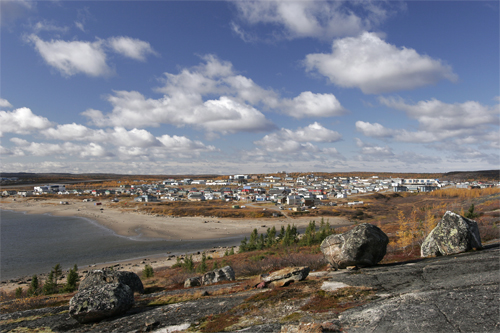
Northern village municipality in Quebec, Canada
Photo: The original uploader was Orbitale at French Wikipedia., CC BY-SA 1.0 via Wikimedia Commons
Kuujjuuaq (formerly Fort Chimo) is in the Nunavik region of Northern Quebec. It is the largest community in Nunavik, with a total population of 2,754 (2016). "Kuujjuaq" means "great river" in the Inuktitut language. After the James Bay and Northern Quebec Agreement, a dam reduced the river’s flow.
From the travel guide. Select a place for details, a map and what is nearby.
Lounge with golf simulator.
Dining room and restaurant (breakfast 08:00-10:00, lunch 11:30–13:30, dinner 17:00-20:00). Bar (M-Th Sa 17:00–22:30; F 17:00-00:00; Su closed).
32 rooms. Dining room and fully equipped kitchen for guests. Common area includes big-screen cable television. Free WiFi, coffee and tea in dining room, and access to laundry room from 5-9PM. Gift shop showcasing soapstone carvings and ivory jewellery.
Retail - camping supplies
Adventure tourism.
Groceries, clothing, hardware and home products. Fast food and other cooked meals. Coffee and other beverages. Gas station.
With no roads connecting Kuujjuaq with the rest of Quebec, the only way into the town is through the airport.
Read in the guideChoose an airport to see hotels, stations, taxi ranks and car rental desks around it.
Kuujjuaq · Regional · YVP
Loading places around the airport…
Articles and travel topics about Kuujjuaq and Canada.
 Travel tips
Discover how to use AI to find cheap flights. Learn prompt strategies, smart fare engines, open-jaw routings, and error-fare booking techniques.
6 min read

 Nature & adventure
The National Parks of Canada, and some of the National Historic Sites of Canada, are managed by Parks Canada, an agency of the Government of Canada.
Wikivoyage
 Travel tips
Although trains are not nearly as ubiquitous and convenient a mode of travel in Canada as in Europe or East Asia, they remain popular with some travelers because of the spacious design of the cars, the scenic routes,…
Wikivoyage
 Nature & adventure
Many books have been written about hiking in the Canadian Rockies, particularly in Alberta and eastern British Columbia (the "Rocky Mountains" don't actually extend that far).
Wikivoyage
Every section of the guide. Open one to read it in full.