//


Province of Canada
Photo: Hurteau, Paul ; Parent, Claude, CC BY-SA 3.0 via Wikimedia Commons
Quebec (French: Québec) is a province in Canada, the largest in size and second only to Ontario in population. French is the first language of a majority of Quebecois and the sole official language of the province, making it the only Canadian province that is officially monolingual in French. The provincial capital Quebec City is known for its beautiful and well preserved walled city, while the province's largest city Montreal is cosmopolitan and the second largest city in Canada.
The Quebec side of the Ottawa River with mountains, forests and plenty of outdoors activities. Gatineau, as part of the National Capital Region, has many fine museums.
The culturally rich and lively city of Montreal plus its suburbs. South of the St. Lawrence River, there are small towns, farmland, lakes and hills. Parts of the area were settled by Loyalists from the American Revolution giving the area a bit of a New England feel. The mountains north of the river are Montréal's playground.
This is the heartland of Quebec. Quebec City is the capital of the province with a European feel and charming Old Town. To the southwest is the prime agricultural region of the province.
A very distinctive region of Quebec with its own culture, accent and geography. The region is highlighted by one of the few fjords on the east coast of Canada.
The rugged coastal region of Quebec east of Quebec City and south of the St. Lawrence River with small towns and villages hugging the coast. The Gaspé is considered particularly scenic.
The rugged coastal region northeast of the Saguenay River on the north shore of the St. Lawrence River.
The sparsely inhabited north and northwestern region of the province, with logging and mining towns and hydro-electric projects, as well as Inuit and other Native communities.
From the travel guide. Select a place for details, a map and what is nearby.
With over 500 concerts, 350 of them presented free outdoors, the Montreal International Jazz Festival features the top Canadian and international ambassadors of jazz (end of June to beginning of July).
Montreal’s Just For Laughs Festival is the largest comedy festival in the world and attracts over 2 million spectators each year for comedy in English and French (July).
The largest Francophone music festival, the Francofolies de Montréal, features over 1,000 artists, singing stars, musicians and emerging talent from some 20 countries around the world (end of July to beginning of August).
These three concerts by the Orchestre Symphonique de Montréal (OSM) are presented in Montreal parks in a family atmosphere (June and July).
The International des Feux Loto-Québec presented at La Ronde draws the largest pyrotechnics companies from around the world. Each show lasts 30 minutes, and the fireworks competition is the most prestigious and largest in the world (every Wednesday and Saturday evening from the end of June to the end of July).
The International Flora lets you visit the loveliest gardens on the festival site itself (end of June to beginning of September).
The international-calibre Festival Nuits d'Afrique features music from Africa, the West Indies and the Caribbean, along with workshops, an African market and exotic cuisine (month of July).
For 40 years, the Quebec City Summer Festival has been presenting hundreds of artists from around the world on ten sites around the capital, all easily accessible on foot (beginning of July).
This international musical fireworks competition takes place at the Montmorency Falls (end of July to beginning of August).
Over 100 craftspeople gather at the Plein Art Québec festival to exhibit Quebec arts and craft creations in ceramics, textile and jewellery (beginning of August).
A celebration of the history of the first Europeans to arrive in North America, the New France Festival presents over 1,000 artistic events every year in a journey back to the past in the heart of Old Quebec (beginning of August).
Since 1998, the Quebec City International Festival of Military Bands is the place to go at the end of August for military music. Bands from Canada and also from all around the world arrive in Quebec City every year to offer spectacular performances.
Is the biggest winter carnival in the world. The festival typically starts on the last Friday of January or the first Friday of February and it continues for 17 days, usually with close to one million participants every year.
One of the most popular events in Eastern Canada, the Gatineau Hot Air Balloon Festival features hot air balloons and shows (beginning of September).
The Casino du Lac-Leamy Sound of Light is a competition that crowns the champion of the international circuit of musical fireworks competitions over water (end of July to beginning of August).
Is the annual Formula One race in Montreal, during the city's busiest tourist weekend (usually early June).
For tennis fans, the Rogers Cup is one of nine Association of Tennis Professionals tournaments on the Masters circuit (beginning of August).
A prestigious golf tournament, the Presidents Cup presents the best international players at The Royal Montréal Golf Club (end of September).
A number of cycling activities take place during the Montréal Bike Fest including the Tour de l'île de Montréal, the largest gathering of cyclists in North America (end of May to beginning of June).
By plane
There are flights to Quebec from major cities in North America, Europe, Northern Africa, the Middle East and China.
By boat
The days when immigrants arrived in Québec by boat via the quarantine station at Grosse Isle are long over, but visitors with a bit of time can enjoy any one of the many cruises available along the…
By train
By bus
From New Brunswick, Nova Scotia, and Prince Edward Island
By car
From the west in Windsor, London, Toronto, and other locations along the Golden Horseshoe, the main option is the Highway 401 (six hours by car from Toronto) - part of the beaten-path Windsor-Quebec…
By bicycle
A few communities are directly on the provincial boundary, easily accessible by bicycle or even on foot.
By plane
Using air transportation to travel between the different cities in Quebec (Gatineau-Québec City, Montréal-Québec City, Montréal-Bagotville) is possible but usually too expensive to be worthwhile.
By train
Trains run infrequently (compared to Europe). There are no high-speed trains in Quebec. Buses are usually cheaper, with more daily connections.
By bus
The main way to travel between cities is by bus. The bus network is very well developed, particularly for connections between Quebec City-Montreal, Ottawa-Montreal and Toronto-Montreal.
By car
Renting a car and driving around Canada poses no particular problem, even in the cities. However, it is best to arrange the rental from where you are coming.
By boat
Numerous cruises are available on the St. Lawrence River, one of the world’s biggest waterways.
By snowmobile
Quebec boasts that its 5200 km (3200 miles) of snowmobile trails (pistes de motoneige) cover much of the province, eastward to Gaspésie and west to Northern Ontario.
By ridesharing
For people travelling in small groups and wanting to keep their costs down (primarily students), Kangaride, Allô Stop and Quebec-Express are a great alternative to any of the transportation methods…
By bicycle
"La route verte" comprises 3,600 km of bikeways linking the various regions of Quebec. Parts of the route are on the Trans Canada Trail that crosses Canada from coast to coast to coast.
By motorcycle
Taking to Quebec’s winding, scenic secondary roads by motorcycle is an increasingly popular way to see the province. In southern Quebec, the best season for motorcycling is from May to October.

capital city of Quebec and cultural centre, with a well-preserved and charming old town.

small city on the ruggedly beautiful Atlantic peninsula of the same name.
has all the advantages of a big city without the inconveniences. Just outside Ottawa.

popular vacation town on Memphrémagog Lake, base for exploring the Eastern Townships

the Americas' largest Francophone city is also Quebec's largest city, cultural and financial centre.

skiing, camping, and hiking at this mountain resort town.

gateway to the North. From here, head west to gather blueberries around Lac St. Jean or east to see the whales from Tadoussac.

largest city in the Eastern Townships.

halfway between Montréal and Quebec City on the St. Lawrence River.
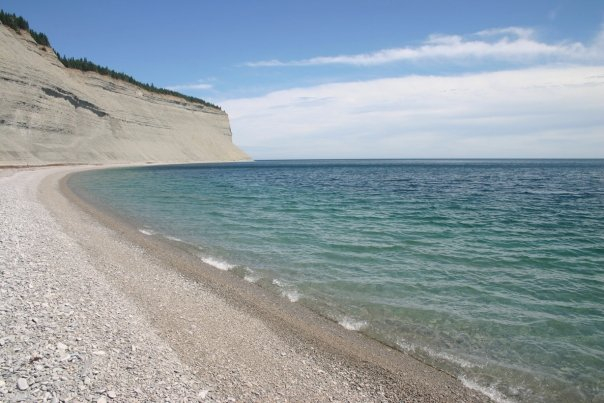
sparsely-populated world heritage-listed island

world heritage provincial park on the Gaspé Peninsula

large, elaborate church east of Quebec City, near Montmorency Falls and the pastoral Île d'Orléans

departure point for the railway to Labrador City and the ferry to Anticosti
Articles and travel topics about Quebec and Canada.
 Itineraries
The Windsor - Québec City corridor is one of the most densely-populated regions of Canada. It extends 1150 km (710 miles) along Lake Erie, Lake Ontario and the St.
Wikivoyage
 Itineraries
Quebec Route 389 is in eastern Quebec. It runs north from Baie-Comeau to Fermont in Caniapiscau, Quebec, continuing as the Trans-Labrador Highway through Labrador City.
Wikivoyage
 Travel tips
Although trains are not nearly as ubiquitous and convenient a mode of travel in Canada as in Europe or East Asia, they remain popular with some travelers because of the spacious design of the cars, the scenic routes,…
Wikivoyage
 Culture & history
The British Empire was, at its peak, the largest empire in history; it controlled just short of a quarter of the world's land area and a quarter of the population.
Wikivoyage
Every section of the guide. Open one to read it in full.