//

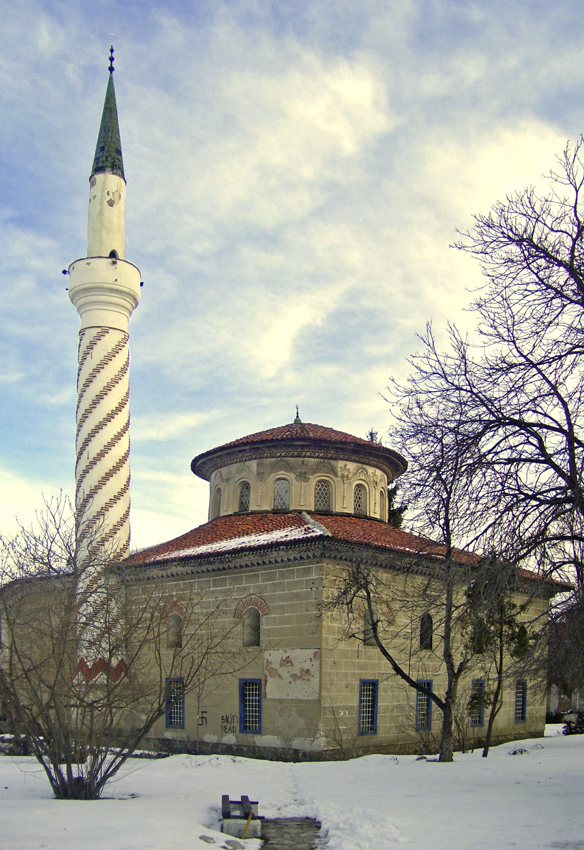
Photo: Мико, CC BY-SA 4.0 via Wikimedia Commons
The last surviving mosque in the city, now a listed monument of culture and an exhibition hall of the History Museum. It was built in the mid-19th century, and the pretty floral decorations on the inside are another example of the Samokov Art School - the Ottoman authorities commissioned local artists to paint them, the same Bulgarians who also painted Orthodox Christian icons. As of early 2024, the hosted exhibition is about the development of Samokov as chronicled in old photographs (late 19th-early 20th century).
The Bayrakli Mosque, also known as Yokush Mosque, is a former mosque located in Samokov, Bulgaria.
© OpenStreetMap contributors
Exhibitions include ancient and medieval artefacts, Samokov's past as metalworking and artisan centre (incl. glassmaking), early 20th century military history, an ethnographic collection of folk costumes and 19th century city clothing, and the Samokov Art School. It also has another, less-touristy website, but it's in Bulgarian. There's a statue of Zahari Zograf in front of the museum. The other sites managed by the museum are the Bayrakli Mosque, the town's Art Gallery, and the Petar Esov House (modern art gallery/atelier in an old house).
Sarafska Kashta
Built in the 1860s for a wealthy Jewish family, now it's an ethnographic house-museum about town life in the 19th century ("saraf" is the Persian/Arabic/Ottoman Turkish for "money changer"). The abandoned building in front of it is a synagogue.
Hram „Uspenie Bogorodichno“ (Mitropolitska tsarkva)
A functioning Orthodox church, that was built in 1712 under Ottoman rule, expanded in the 1780-90s and again in the 1830s, while the bell tower and the colonnade at the entrance were added after the Liberation. Includes icons by Zahari Zograf and other painters of the Samokov School. The name refers to Mary's death ("falling asleep") in the Eastern Orthodox tradition, followed by her resurrection and bodily ascension into Heaven.
A full-scale, operational reconstruction of a 19th century samokov or madan forge, with a small museum inside and a glass wall.