Money and payments
Cards and cash
Bulgaria remains a largely cash economy in rural areas; but in major cities, credit and debit cards are generally accepted.
Tipping
Tips are not added to the bill, so give 5-10% if you like.


 Europe · Southeast EuropeOutline guide
Country in Southeastern Europe
Photo: Raggatt2000, CC BY-SA 3.0 via Wikimedia Commons
Answers to what travellers most often look up about Bulgaria.
Cards and cash
Bulgaria remains a largely cash economy in rural areas; but in major cities, credit and debit cards are generally accepted.
Tipping
Tips are not added to the bill, so give 5-10% if you like.
Bulgarian
The official language of the country is Bulgarian, a Slavic language that is written using its own variant of the Cyrillic script.
There are three mobile phone networks (A1, Yettel, and Vivacom), all using the GSM standard on at least 4G level.
Mobile networks
Tap water varies greatly in quality and taste.
Smoking is the national pastime, and evading the fumes of cigarettes is even more difficult than evading exhaust fumes in the streets.
Covered in the guide
Bulgarians are incredibly friendly and very interested in talking to foreigners.
Attractions, food, stays and travel essentials, with ratings, reviews, opening hours and directions.

the capital and largest city in Bulgaria, sprawling under the slopes of Vitosha Mountain. Its pedestrian-friendly central part features an eclectic mixture of architectural styles: 19th/20th century European revivalism, Communist Neo-Classicism and modern office buildings, as well as the ruins of ancient Roman Serdica.

a Black Sea port and the fourth largest city in Bulgaria, it serves as a hub for the southern seaside resorts (such as Sunny Beach) and the picturesque towns Sozopol and Nesebar. The city hosts the popular music festival "Spirit of Burgas".

a mid-sized city at the foot of the Balkan Mountains, famous in Bulgarian jokes for the stinginess of its residents (hence the local Museum of Humor and Satire). The nearby Nature Park Bulgarka contains the Uzana mountain resort and the architectural-ethnographic reserve Etara.

a major economic hub in Northwestern Bulgaria that played a key role during the liberation of Bulgaria, which is commemorated in various ways throughout the city. The most notable of those is the Pleven Panorama that houses a huge panoramic painting depicting the 1877 Siege of Pleven.

Bulgaria's second largest city and one of the oldest in Europe, it was chosen as the European Capital of Culture for 2019. Once known as Philippopolis, it holds an ancient Greek amphitheatre, a Roman stadium, an Old Town with Bulgarian Revival architecture, an artistic neighborhood covered in street art, and a large monument of a Soviet soldier overlooking the city.

a port town on the Danube, a gateway to Romania (via the Danube Bridge) and the fifth largest city in Bulgaria. Because of the beautiful Neo-Baroque and Neo-Rococo architecture in its central part, it's sometimes called the "Little Vienna". The Rock-Hewn Churches of Ivanovo, a , is 20 km south of the city.

a Black Sea port and the nation's third largest city, it also serves as a tourism hub for the northern seaside resorts (such as Golden Sands) and the historic towns Balchik and Kavarna, though it does also have beaches of its own and a large seaside park, the Sea Garden.
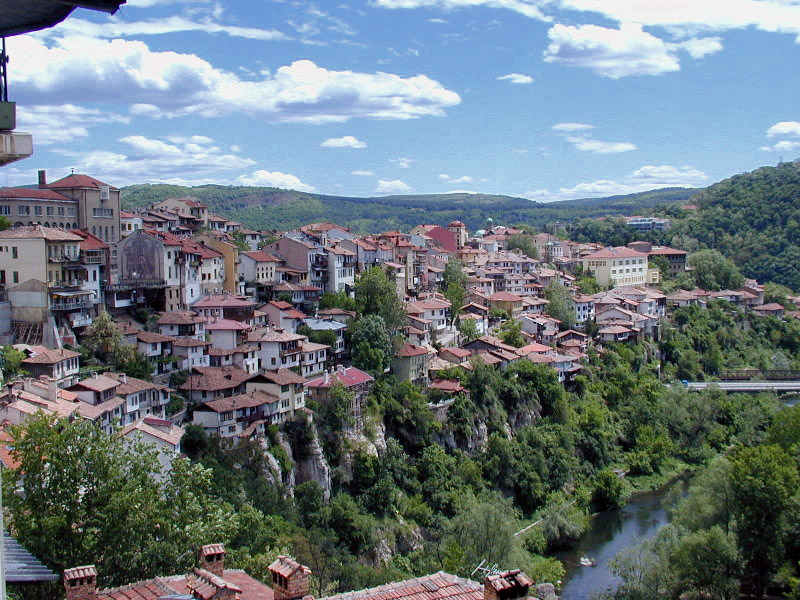
a very picturesque city, with its Old Town built on the steep banks of the meandering Yantra river. In the Middle Ages, it was the capital of the Second Bulgarian Empire and the slightly restored ruins of its fortresses still crown two peninsulas right next to the modern city. A light-and-sound show is projected onto the fortress walls on certain dates.

the second highest mountain in Bulgaria, and a . On its slopes you can find popular resorts such as Bansko and Sandanski, and little Melnik with its earth pyramids and traditional architecture.

a large protected area in the Balkan Mountains near Gabrovo, one of the 11 nature parks in Bulgaria. It contains the mountain resort/ridge meadow Uzana and the geographic centre of Bulgaria. Nearby are the historic Shipka Pass and the Communist "flying saucer" on Buzludzha Peak.
Places in Bulgaria on the World Heritage List.

Nesebar

Ancient and Primeval Beech Forests of the Carpathians and Other Regions of Europe
Listed 2007

Pirin National Park
Listed 1983

Boyana Church
Listed 1979

Madara Rider
Listed 1979

Srebarna Nature Reserve
Listed 1983

Rock-hewn Churches of Ivanovo
Listed 1979

Thracian Tomb of Kazanlak
Listed 1979

Thracian Tomb of Sveshtari
Listed 1985

Ancient City of Nessebar
Listed 1983

Rila Monastery
Listed 1983
List from Wikidata (CC0). Photos from Wikimedia Commons.
A rolling plain spreads between the Danube river to the north and the foothills of the Balkan Mountains to the south. Still sometimes called by its ancient Roman name Moesia, the land is dotted by the remains of ages past, such as the Baba Vida fortress in Vidin, one of the best preserved medieval fortresses in Bulgaria, and the ruins of the capital of the Second Bulgarian Empire in Veliko Tarnovo. During the Bulgarian National Revival, the towns of Ruse and Pleven were centres of Western culture in the region.
Called the Granary of Bulgaria, the region produces most of the country's world class wheat among other grains grown locally. The first two Bulgarian capitals, Pliska and Veliki Preslav, are in Dobruja. Veliki Preslav was said to be one of the greatest cities of the early Middle Ages comparable only to Constantinople.
The Bulgarian seaside has some of the best sandy beaches in Europe. With settlements ranging from small calm villages, through luxurious five-star resorts, to modern urban cities, the Bulgarian Black Sea Coast can satisfy any taste during the days of the hot Bulgarian summer. Most of the towns and villages along the coastline can be traced back to Ancient Greece: the town of Nesebar, for example, has a central ancient part that is a UNESCO World Heritage site. Varna to the north, is the third largest city in Bulgaria. As an economic and tourist centre, it is called the sea capital of the country. Sunny Beach is the largest beach resort in Bulgaria, in the southern part of the Bulgarian Black Sea Riviera stretching along a beautiful semicircular bay facing east.
A relatively low mountain, Strandzha is known for the specific architecture that can be observed in Malko Tarnovo, Brashlyan and most other villages, the rich folklore and distinctive rituals, such as nestinarstvo (barefoot dancing on live embers), that preserve numerous pagan elements. Strandzha is an area with a large concentration of ruins of Thracian sanctuaries and sacrificial altars, dolmens and other archaeological objects. The mountain is also the home of the Strandzha National Park.
Some of the most developed cities in Bulgaria, such as Plovdiv and Stara Zagora are found in the region. Northern Thrace is an area of lowlands along the rivers Maritsa and Tundzha, that are very fertile and rich in fossil fuels. The region is also rich in historical heritage: the Panagyurishte Treasure one of the best known surviving artefacts of Thracian culture, the Thracian Tomb of Kazanluk dating back to 4th century BC is a UNESCO World Heritage site, and Plovdiv (the second largest city in the country) is the oldest continuously inhabited city in Europe.
While not very high mountains, the Rhodopes are a preferred destination by many tourists because of the limited number of roads and the steep hills and the deep forests. The winter ski resort of Pamporovo is in the Rhodopes. "The home of Orpheus", the Greek mythological poet that went to hell to save his loved one, is a region with a distinct cultural influence. Rhodope music is world famous: many foreign musicians have been fascinated by the sounds of Rhodopes and even the song "Izlel e Delyu Haydutin" performed by Valya Balkanska is one of the few performances included in the Voyager Golden Record selection of music, part of the Voyager 2 space probe, that is expected to play across space for at least 60,000 years.
Named after the mountain Pirin the area includes the mountain, and the valleys of the Struma and Mesta rivers. The national park Pirin and the popular ski resort Bansko are part of the attractions of the region. The town of Blagoevgrad is the largest town in the area. It is known as a student town because two of the largest universities are in it. Pirin Macedonia is also a popular wine region.
The capital Sofia, as the largest city of Bulgaria, dominates the economy of the region. Vitosha mountain just south of Sofia is a popular tourist destination used as a "get-away" from the hectic urban life. The "roof of the capital" as Vitosha is sometimes called, is convenient for weekend picnics and tourist strolls in the summer and skiing and snowboarding in the winter. The region also includes the highest mountain in the Balkans: Rila, known for the ski resort Borovets, some beautiful glacier lakes, and another UNESCO World Heritage site - the Rila Monastery.
The soul of the Bulgarian people. The mountain has a special meaning of a symbol in Bulgarian folklore and culture. It is the home of heroes and victories, the guardian fortress of the people, the cradle of all that is Bulgarian. The small towns in the foot of the mountain were the revolutionary centres of Bulgarians during the times of the Ottoman Empire and many of the biggest heroes and cultural idols of Bulgaria were born in those towns. The Central Balkan national park is in the mountain and there are many places along the chain that are suitable for winter sports and tourism.
Public transport and paid services in Bulgaria.
By train
Using the train is a convenient, inexpensive and great way to travel the country, even if it's usually slower than the bus.
By taxi
Taxis are usually a convenient and affordable way to get around cities. Many taxi drivers know only limited English so it is useful to write out your destination or carry a map.
By car
If travelling by car, it would be helpful if you can read the Cyrillic alphabet at least a bit.
Apps for booking a taxi or a ride in Bulgaria.
Finding apps for Bulgaria…
Other ways to travel:By thumbOn foot
Operators checked against their official websites in October 2026; services that have stopped running are not listed. Logos and Wikipedia links: Wikidata (CC0)
Choose an airport to see hotels, stations, taxi ranks and car rental desks around it.
Sofia · International · SOF
Loading places around the airport…
Calculated from climate averages: mild daytime highs and lower rainfall. It does not account for festivals, crowds or prices.
Average conditions in Sofia
| Jan | Feb | Mar | Apr | May | Jun | Jul | Aug | Sep | Oct | Nov | Dec | |
|---|---|---|---|---|---|---|---|---|---|---|---|---|
| Avg. high | 2° | 4° | 9° | 14° | 20° | 24° | 28° | 28° | 23° | 16° | 10° | 4° |
| Avg. low | -6° | -5° | -1° | 3° | 9° | 13° | 15° | 15° | 10° | 5° | 0° | -5° |
| Rainfall (mm) | 51 | 45 | 57 | 57 | 80 | 85 | 68 | 58 | 54 | 57 | 42 | 51 |
| Humidity | 90% | 85% | 79% | 74% | 72% | 67% | 60% | 58% | 63% | 74% | 82% | 88% |
Choose your passport and destination to see whether you need a visa.
Budget
$30
Per person, per day
Mid-range
$80
Per person, per day
Luxury
$205
Per person, per day
| Budget | Mid-range | Luxury | |
|---|---|---|---|
| Accommodation | $15 | $45 | $120 |
| Food and drink | $5 | $15 | $35 |
| Local transport | $5 | $5 | $15 |
| Activities | $5 | $15 | $35 |
Estimate from World Bank price levels (2025). Actual costs vary by city and season. World Bank
—
We do not label countries as safe or unsafe. Below is the official advice from two governments, with the date it was last updated. Always read the full advice before you travel.
US Department of State
Level 1 of 4Exercise normal precautions
Exercise normal precautionin Bulgaria Bulgaria is generally a safe destination for travelers.
UK Foreign, Commonwealth & Development Office
No advice against travel. Read the full advice before you go.
Before you travel No travel can be guaranteed safe. Read all the advice in this guide. You may also find it helpful to: see general advice for women travellers read our guide on disability and travel abroad see general advice for LGBT+ travellers read about safety for solo and independent travel see advice on volunteering and adventure travel abroad Travel insurance If you choose to travel, research your destinations and get appropriate travel insurance. Insurance should cover your itinerary, planned activities and expenses in an emergency. About FCDO travel advice The Foreign, Commonwealth & Development Office (FCDO) provides advice about risks of travel to help you make informed decisions. Find out more about FCDO travel advice. Get travel advice updates Sign up to get email notifications when this advice is updated. Follow FCDO: travel advice on X travel advice on Facebook Travel Aware on Instagram
Stories, itineraries and practical advice for travelling in Bulgaria.
 Inspiration
Ten places with real character and room to breathe, from Ohrid's lakeside churches to Argentina's high-altitude vineyards.
7 min read


 Itineraries
The Danube is the second-longest river in Europe, with a length of 2,850 km (1,770 mi). It begins in the Black Forest in Germany and flows east to the Black Sea, forming the Danube Delta on its western coast.
Wikivoyage
 Culture & history
The Roman Empire was the greatest ancient empire of Europe. At the height of its power in 117 AD, it ruled over considerable parts of Europe, as well as much of North Africa and the Middle East.
Wikivoyage
 Culture & history
The Ottoman Empire, also known metonymically as the Sublime Porte, and especially in the 19th and 20th centuries as the Turkish Empire, was one of the great empires of the Old World, from the 14th to the early 20th…
Wikivoyage
 Travel tips
Europe is a continent that is relatively small but with many independent countries. Under normal circumstances, travelling through multiple countries would mean having to go through visa applications and passport…
Wikivoyage
 Itineraries
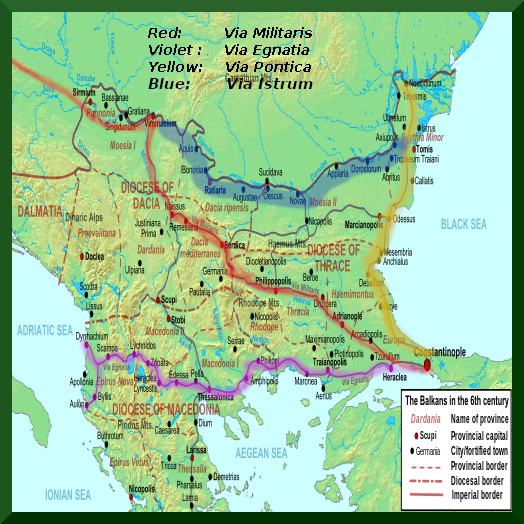
The Via Pontica was an ancient Roman road link on the western shore of the Black Sea (ancient Greek Pontos Euxeinos) and led from Byzantium (Istanbul) to the Danube Delta.
Wikivoyage
Every section of the guide. Open one to read it in full.


