
Ocean liners
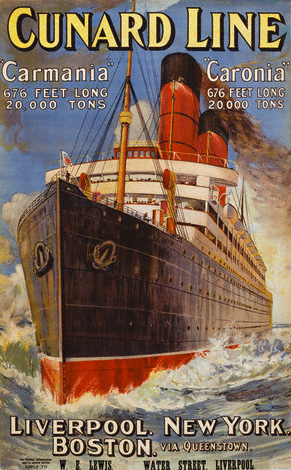
Photo: Water Street, Public domain via Wikimedia Commons
- Ocean liners are a travel topic.
Before the widespread adoption of air travel, trans-oceanic crossings by necessity relied on ships which plied the high seas. While the first crossings were made by sailing vessels, steamships became common in the mid-19th century; by the early 20th century, ocean liners of various rival lines competed aggressively on both speed and luxury.
Unlike cruise ships (which are built as floating hotels for entertainment), ocean liners were constructed as practical transportation and built for speed, for longer routes than ferries. Thus they usually had a higher passenger capacity than a cruise ship of similar size and with very few exceptions also carried cargo and/or mail.
UnderstandFrom Magellen's initial circumnavigation of the globe (1519–1521) to the mid-1800s, seafaring was powered by the winds and was a slow, arduous and sometimes risky means of travel.
Vessels in active service
Floating hotelsA few former ocean liners are now in use as hotels or museum ships at one fixed location:
Museum ships
Royal mail shipsWhile British Airways, as flag carrier of the United Kingdom, is the de-facto carrier of record for the now-privatised British Royal Mail company, a handful of ships retain some form of the Royal Mail designation for…
Museums and memorials ashoreBetween 1912 and 1915, more than 3,700 people perished at sea from the loss of RMS Titanic (which struck an iceberg), Empress of Ireland (which collided with another ship) and RMS Lusitania (torpedoed by a German U-boat…
See also
Sources and licences
- Guide text adapted from the Wikivoyage article "Ocean liners" by its contributors, available under CC BY-SA 4.0. Read on Wikivoyage · Contributors · CC BY-SA 4.0
- Photo: Water Street, Public domain via Wikimedia Commons