
Cruise ships
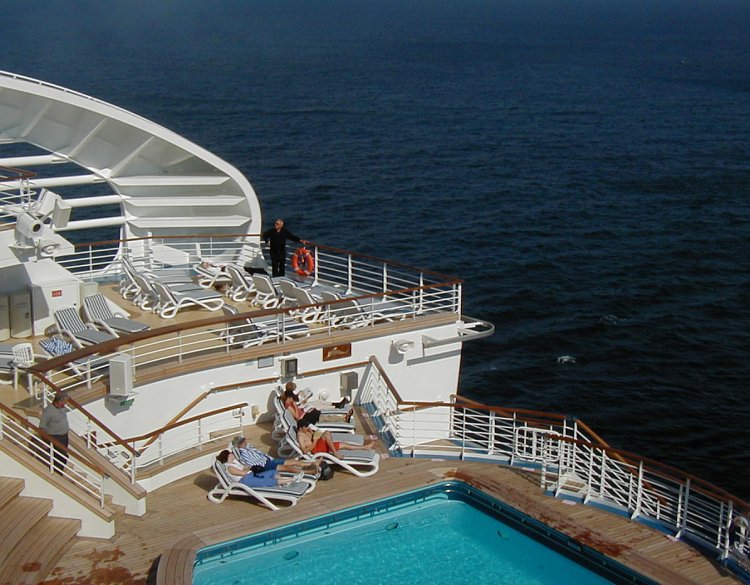
Photo: © 2003 Todd VerBeek, CC BY-SA 4.0 via Wikimedia Commons
Cruise ships are large passenger sea vessels that make up a major part of the global tourism industry. You can take a cruise to every continent on earth, including Antarctica. By far, the major destination is the Caribbean, although the Mediterranean, Baltic, and Alaska regions are also popular. Many hard-to-reach destinations, such as the Galapagos Islands, are best visited by small expedition vessels.
Cruises make it easy to visit several places in a single trip with no need to repack belongings or make transfers. Your "hotel" comes along with you – cabin, meals, transportation, and even entertainment, all typically included in your cruise fare. You may unpack once while already sailing, go to bed in Cabo San Lucas, wake up in Puerto Vallarta, and so on through a sampling of various ports of call across a region. Typical cruise itineraries limit the time you spend in each place; usually, it means just a day of activities or sightseeing. They may also include one or more days at sea – paradise if you enjoy a relaxing day by the pool or other shipboard activities, but less so if you prefer more active and open exploration ashore. There are also "trips to nowhere" without any stop-overs, where the journey and onboard services are the main attraction.
Cruises are increasingly a topic of controversy due to their heavily negative environmental impact, contributions to over-tourism, and other ethical issues, such as worker abuse; on the other hand, they are an important source of income in many regions, and some people love them.
This article focuses on cruising on the ocean and along coasts. Other options for boat travel include pragmatic ferries to isolated coastal ports with no roads or bridges in, river cruises for in-depth looks of regions served by internal waterways, the few remaining ocean liners built as speedy transport vessels, and cruising on small craft.
UnderstandThe golden age of transoceanic passenger travel has faded greatly.
BookingYou can book a cruise through several types of providers; but most commonly, you will either book directly with a cruise line (typically online, but sometimes by phone) or via travel agents or cruise agents that offer…
Get inThe best-known destinations for cruise ships are tropical ports in the Caribbean or the Mexican Riviera, the Mediterranean and Northern Europe, but cruises can be found almost anywhere there's enough water to float a…
Get aroundSince you're on a ship, you'll want to learn at least a little bit of nautical lingo, especially for navigating the ship.
SeeSome ships have been outfitted with millions of dollars worth of art and elaborate interior decor, but generally after a few days there isn't that much to see on most cruise ships. The real sights are ashore.
DoAs you plan each day's activities, everything onboard will be based on ship's time. Depending on its itinerary, the ship will usually change its time to agree with any time zone it has entered.
BuyIt's worth informing yourself about any possible additional expenses onboard before your trip – specifically, what's included in the cruise fare and what's not.
EatMost lines heavily invest in food quality and quantity, and they like to brag about it.
DrinkYou should expect to find one or more well-stocked bars on all public decks, catering expertly to your preferences, many opening mid- to late-morning and some staying open very late.
SleepThere is great energy on a cruise and there's a desire to keep partying. You need to sleep otherwise you will burn out. Whether you like to wake up early or sleep in is up to you.
Stay safeBecause of the numerous advancements in modern shipbuilding and other technology, cruise travel is generally very safe.
Stay healthyAt sea, on beaches or small boats, bare skin can sunburn very rapidly between mid-morning and mid-afternoon. That ruins cruises for more people than any other cause.
ConnectMany cruise ships are now equipped with cell phone-to-satellite transponders, which take over automatically at sea to provide wireless phone service throughout the ship.
Respecte.
CopeLook for laundry rooms in ship descriptions – not all ships have them.
Go nextFinal processing to leave the ship is called "debarkation" or "disembarkation". This involves getting perhaps a few thousand passengers off the ship as efficiently as possible, and you can't all leave at once.
Sources and licences
- Guide text adapted from the Wikivoyage article "Cruise ships" by its contributors, available under CC BY-SA 4.0. Read on Wikivoyage · Contributors · CC BY-SA 4.0
- Photo: © 2003 Todd VerBeek, CC BY-SA 4.0 via Wikimedia Commons