//

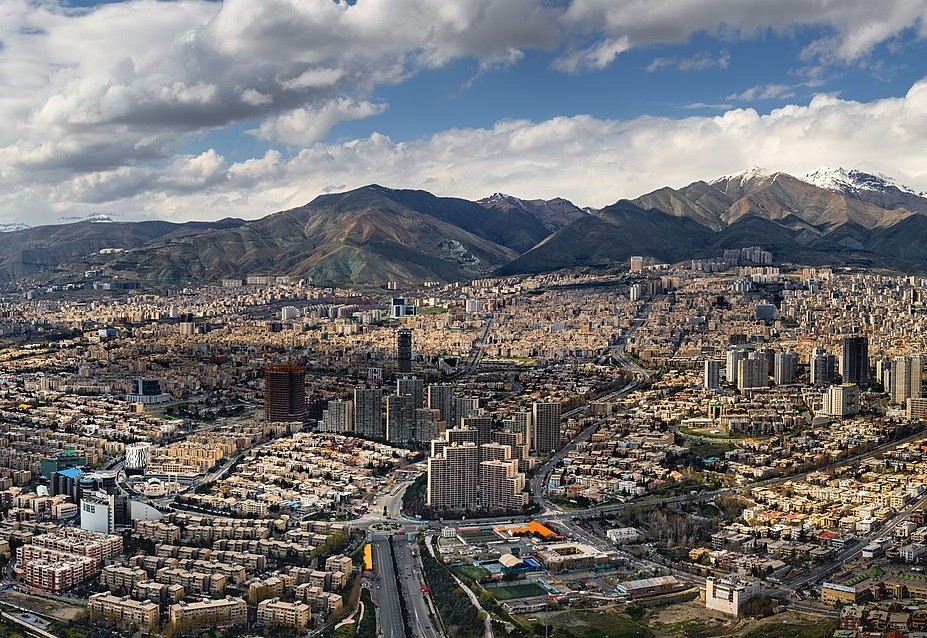
Capital and largest city of Iran
Photo: Amir Pashaei, CC BY-SA 4.0 via Wikimedia Commons
Tehran (also spelled Teheran) (Persian: تهران), is the capital city of Iran. A bustling metropolis of 14 million people, it sits at the foot of the towering Alborz mountain range. Tehran is a cosmopolitan city, with great museums, parks, restaurants, and warm friendly people. It deserves at least a few days of your Iranian itinerary.
From the travel guide. Select a place for details, a map and what is nearby.
Persian: برج آزادی, Borj-e Āzādi
The longstanding symbol of Tehran was constructed to commemorate the 2,500th anniversary of the Persian empire, combines elements of Sassanid and Islamic architecture. The entrance of the tower is directly underneath the main vault and leads into the Azadi Museum on the basement floor. Do not sit on the grass! Officers chase away people.
The Tomb of Imam Khomeini
The gigantic mausoleum is on the southern edge of the city. The sheer size of the shrine/shopping centre is enough to make the trip worth it. Women can borrow chadors at entrance. Bags have to be left for free at one of the compound doors.
برج میلاد
435-m-high Milad tower is the fourth-tallest tower in the world and 12th-tallest freestanding structure in the world, and it is visible from almost everywhere in Tehran. Tickets to enter the observation lounge must be reserved well in advance. There are several restaurants in and around the tower, and a mediocre art gallery.
Persian: کاخ گلستان pronounced 'Kakheh Golestān', Rose Garden Palace, Gulistan Palace
The oldest of the historic monuments in Tehran. The complex consists of 17 palaces, museums, and Halls. The Golestan (Rose Garden) citadel is one of mainly visited places in Tehran, which was the Qajars' royal residence, and its garden is an oasis of coolness and peace in the heart of the city. The major building, architecturally unpretentious, houses a museum with objects from the Qajar period in the self-important style of last century. In the Golestan garden, a one-story pavilion to the right and a short distance from the entrance, shelters one of the best organized museums in Tehran. It encloses about thirty showcases presenting almost everything related to Iran, which makes up the critical originality of Iranian life in a variety of provinces of the country. Golestan Palace was added to the UNESCO World Heritage List in 2013.
Marble Throne
A spectacular terrace (iwan) was built in 1806 by order of Fath Ali Shah Qajar (r. 1797-1834). Adorned by paintings, marble-carvings, tile-work, stucco, mirrors, enamel, woodcarvings, and lattice windows; the throne embodies the finest of Iranian architecture. The Marble Throne is one of the oldest buildings of the historic Arg. The existing throne, which is situated in the middle of the terrace (iwan), is made of the famous yellow marble of Yazd province.
Nook terrace
This building was a part of the interior residence of Karim Khan Zand. The basic structure of it is similar to Takht-e-Marmar. There is a small marble throne inside the terrace. The structure is much smaller than Takht-e-Marmar and it has much less ornamentation. It seems extraordinary, but the valuable gravestone of Nasser-ol-Din Shah found its way to this quite corner of the Palace. This marble stone with a craved image of Nasser-ol-Din Shah is indeed a site to behold.
Spring hall (Pond house) کاخ شهوند
The Hoze Khaneh was used as a summer chamber during the Qajar ear. A special cooling system pumped water form a subterranean system of streams (qanats) into small ponds inside the chambers. This system is no longer in use. European paints housed here.
the Gallery
Here are the paintings of the royal court, with the European paints housed in the Hose Khaneh and the works of Iranian painters housed in the Negar Khaneh (the Gallery). Meant to show the evolution of painting in Iran during the Qajar era, the works of Iranian painters are exhibited in two sections. Housed in the southern part of the Negar Khaneh are the works of early Qajar masters such as Mirza Baba, Mehr Ali Afshar, Ali Akbar Khan Mozaien-ol-Douleh, Aboul Hassan Sani (Sanie-ol-Molk) who was Kamal-ol-Molk’s uncle.
Hall of Brilliance
The Hall was built by Nasser-ol-Din Shah build to replace another hall called Talar Bolour (Crystal Hall). Built by Fath Ali Shah the Bolour Hall had been laid waste by the damp. The Berelian Hall is famous for its mirror work and chandeliers.
کاخ نیاوران
This is a historical complex which consists of several buildings and a museum. The Saheb-Qaranieh Palace (صاحبقرانیه), from the time of Naser al-Din Shah of Qajar dynasty, is also inside the complex. - Jahan Nama Museum(کاخموزههای نیاوران): Niavaran Palace, Niavaran Ave., phone +98 21 228 2012, Fax: +98 21 228 2079. - Cinema Museum(موزه سینمای ایران): Niavaran Palace Museum, Niavaran, +98 21 228 2012/5.
Emarat-e Masoudieh
Built in 1879 for the prince Mass’oud Mirza - the son of Nasseredin Shah, the governor of Isfahan.
A palace built by the Pahlavi dynasty of Iran in the Shemiran area of Tehran. The complex was first inhabited by Qajar monarchs and royal family in the 19th century. Parts of the Saadabad Palace compound are museums, in which visitors can roam through and look at the rich history of Iran. The following museums make up the complex: Klara Abkar Painting Museum, Hossein Behzad (miniature) Paintings Museum, Abkar Miniature Museum, Fine Arts Museum (18th & 19th century European paintings), Kamaleddin Behzad Miniature Museum, Mahmoud Farshchian Miniature Museum, - Mellat Palace Museum, Military Museum (موزه نظامی), Mir Emad Calligraphy Museum, Ethnological Research Museum, Iranian National Museum of War Green Museum (Shah Reza Summer Palace), Water Museum (keeping, restoring and revenue operation of water in Iran). Rojat Palace, Ebrat Palace (Mother), Vessels Museum (Ashraf Palace), Dafineh Museum, Farideh Diba Palace, Natural History Museum. Other buildings on complex area: Shahram Palace, Prince Palace, Leila Palace, Farahnaz Palace, Hamid Reza Palace, Gholamreza Palace, Nasiri Palace, Twin Ghajar Palace.
Built in 1922-1928. Main parts of it: Waiting room, Reza Shah working room, Ceremonies Hall, Reza shah Dinning room, Corridor, Reza Shah Bedroom, Ceremony Hall.
موزه هنرهای زیبا ?, Africa Museum
Part of Saadabad Palace; gifts to the Shahs from Chinese, Indian and African delegations.
The former US embassy that was stormed by revolutionary students in 1979 is now a museum. Anti-American propaganda paintings decorate the walls of the compound. Despite the official hostility, Iranians in the streets around the former embassy are friendly towards Americans and other foreigners.
The Azadi Museum is located under the Azadi Tower.
If you want to drool over gold and glitter, take a look here. You'll get to see a collection of some of the most expensive jewels in the world. Highlights include the world's largest uncut ruby, the world's largest pink diamond (the Sea of Light) and a free-standing golden globe made from 34 kg of gold and an astounding 51,366 precious stones. The collection comprises a set of crowns and thrones, some 30 tiaras, numerous aigrettes, jewel-studded swords and shields, a vast amount of precious loose gems, including the largest collections of emeralds, rubies and diamonds in the world. It also includes other items collected by the Shahs of Iran during the 2,500-year existence of the Iranian kingdom.
Iran Bastan Museum, Persian: موزهٔ ملی ایران Mūze-ye Millī-ye Irān
The museum has ceramics, stone figures and carvings dating all the way back to around the 5th millennium BC. It is the combination of two museums, the old building (entrance fee: 300,000 rials) dedicated pre-Islamic collection dating from Neolithic to the Sassanid period and the new building (entrance fee 200,000 rials) dedicated to Iran's 1,400-year Islamic history. Building One consists of three halls. The three halls contain artifacts from the lower, middle, and upper Paleolithic, as well as the Neolithic, Chalcolithic, early and late Bronze Age, and Iron Ages I-III, through the Median, Achaemenid, Seleucid, Parthian, and Sassanid periods. The post-Islamic part of the museum was inaugurated in 1996 and consists of three floors. It contains various pieces of pottery, textiles, texts, artworks, astrolabes, and adobe calligraphy from Iran's 1,400-year Islamic history. Also here find: Islamic Period Museum.
Persian: موزه ماشینهای اداری سفیر, Ambassador Museum, موزه سفیر
It was founded in 2008 by Frashad Kamalkhani, the museum owner. It includes a collection of early office machines.
Persian: کاخ سعدآباد, Kakhe malakeye madar, White Palace
Built in Neoclassical style, in 1920.
موزه آبگینه و سفالینه , Abguineh Museum
Persian: موزه فرش ایران
This exhibits a variety of Persian carpets from all over Iran, dating from 18th century to present. It has a library that contains 7,000 books.
Persian: موزه رضا عباسی
Named after Reza Abbasi, one of the artists in the Safavid period, the collections of this museum belong to a period from the 2nd millennium BC to the early 20th century.
Persian: موزه هنرهای معاصر تهران
Features the works of great artists such as Van Gogh, Pablo Picasso and Andy Warhol. The collection of these paintings were selected by the former Empress Farah Diba.
Dar-abad Nature & Wildlife Museum
Iran's most famous museum for nature and wildlife.
Ghasr Prison, زندان قصر
Closed or moved? Now there is the Islamic Revolution Court? (دادگاه انقلاب اسلامی) - It was built by the order of Fat′h Ali Shah of the Qajar dynasty in 1790 in the form of a palace.
Tamasha-gah Zaman, تماشاگه زمان
Evolution of time-measurement instruments. In a building (700 m²) with a garden (0.6 ha).
تماشاگه پول
Coins and banknotes from different historic periods.
Persian:بازداشتگاه توحید . The prison of Shah ages. It was an unofficial detention centre in Tehran, used against opponents of the Islamic Republic of Iran until its closure in 2000.
شهدا
Paintings, sculptures of people, kings, artists and scientists. Masterpieces of "Seyed Ali Akbar Sanati".
Photography Museum
Ancient photos, tools and equipment.
سکه
Persian: تنوع زیستی حیات وحش
Displays 500 works of art on the 200-year history of Tehran.
موزه خودروهای تاریخی ایران در
The collection include 45 imperial cars, 2 royal carriages and 3 motorcycles.
صنعت برق ایران
عکسخانه
Art collections, coins, stamps, carpets.
Kamal-ol-molk St, Baharestan Sq
It was part of Golestan Palace, but now it is located inside a government building. It is a small museum but with some good furniture and paintings.
Natural specimens pertaining to geology, zoology, botany, fossils of plants and animals on four level.
Small rug exhibit (30 pieces).
صبا
Iranian Musician Memorial Museum.
نقاشی پشت شیشه
پست و تلگراف
تنوع زیستی
موزه ملی قرآن کریم
(موزه سینما)
The Botanical Garden is a place where a variety of indigenous and non-native plants are cultivated outdoors and in greenhouses and plays an important role in a variety of research areas including plant and gardening science, public education and making people aware of the importance of plants and the need to protect them. In addition, the botanical garden is used as a genetic reserve for endangered plants. The botanical gardens provide the facilities to study and conserve biodiversity. Using different scientific methods, it is possible to identify the plant species of Iran and determine their distribution range. Research on the methods of breeding and cultivating valuable species from a conservation and economic point of view is another area of interest in botanical gardens.
پارک آب و آتش و پل طبیعت
Opened in 2009, the Ab-o-Atesh (lit. "Water and Fire") Park is one of Tehran's newest and most impressive. The highlight of the park is the Pol-e Tabiat or Nature Bridge, which offers spectacular views of north Tehran and the Alborz mountain range. Populated by the well-to-do urban middle classes of Tehran, this friendly park offers a plethora of cafes and restaurants, most of which can be found along the Rah-e Joobi or Wooden Road Food Court (رستورانهای راه چوبی) in the southern section of the park (nearly all of the restaurants there are open only after 20:00 as it is customary for Iranians to eat dinner late in the evening). The park and its surroundings also offer other services, such as a skate park.
دریاچه چیتگر
Also known as the Lake of Martyrs of the Persian Gulf, is an artificial and recreational lake in the north of Chitgar Park. The total area of this complex is about 250 hectares; 130 hectares across the lake, and the rest of it goes for the coastal zone and resorts. The lake has good weather and it's host to migratory birds in some seasons.
It is one of the most picturesque and beautiful parks in Tehran. It is at the base of the Kolakchal Mountain. Mellat Park in Valiasr street is one of the largest recreation areas in the Middle-East. Niavaran Park is one of Tehran's famous and most pleasant public city parks. It is in the Niavaran district and is immediately south of the Niavaran Palace Complex. Additionally there are some large parks called "park-e-jangali" (literally "forest park") around (and some inside) the city which are very popular among the locals for picnic. The most famous one is Chitgar in the west of the city and is accessible via Karaj road.
باغ فردو س
تلهکابین توچال
A recreation area on Mount Tochal that offers hiking trails, a ski resort, gym and other activities.
This is the alternative way to climb Tochal mountain. The walk goes across a canyon to Tochtal (مسیر کوهپیمایی به توچال از طریق دربند). Short-ride chair lift is also available here and leads to the upper platform, operates only during weekend Th–F 07:00–18:00.
دركه
This is another entry point into nearby mountains. Like Darband, Darake hiking trail begins with tens of open-air restaurants alongside a stream.
Tehran Theater of the Performing Arts, Te'atr e Shahr, Persian: مجموعه فرهنگی و هنری تئاترشهر
Architect Ali Sardar Afkhami designed the main building in the 1960s, later (1972) expanded.
Kebab and sandwich joints are found everywhere. This one has interesting salad, and humus (Lebanese mezeh). They have roast beef, chicken, turkey sandwiches that comes with fresh vegetables, like mint and basil.
A hangout of the rich and famous.
A sight to see - not for the food. This is the closest thing in Iran to a pick up bar. Teenagers push the limits on acceptable clothing. Has western import products in several stores underneath. There is also a decent bakery here with western type bread.
Young Iranians flirting, smoking flavored water pipe, and eating. The dizi is recommended.
The Iranian version of KFC. Serves very good chicken burgers.
A cozy place serving fantastic Dizi among other traditional dishes. Cute little canaries are flying around.
Huge (very huge!) portions that are hard to finish. That is why most of the locals pack about half the portion for take-away (free). The canteen-like place is super crowded at lunchtime and the people form a long queue. Get an ordering number at the entrance first. Upstairs you can watch the bustling square while enjoying your meal.
Fantastic place to stock up on those much needed vegetables. The menu is pure veg and very, very good. Also, great coffees and desserts at very reasonable prices. Serves pizza, sandwiches, and salads
A beautiful Dizisara. With many Miniature paintings on walls and a nice meal of Abgusht (traditional Iranian soup-like food, but way heavier than normal soups), it is worth a visit for lunch. Not open for dinner.
Speciality is the steamed blue fish.
Delicious Iranian food served buffet style.
Ambient cellar restaurant with ornate chandelier and fountain. Popular with young people since water pipe smoking is allowed for both men and women. Try the lamb leg dishes.
Beautifully decorated, originally part of the mosque. 300-year-old building restored in 2002. Typical Iranian food.
Iranian food. Ranked as one of the best outdoor restaurants in Tehran.
Many locals regard this as a fairly good chelo kababi in Tehran.
Fusion Persian food in a luxurious setting. Consistently ranked as one of the best restaurants in Tehran.
The best Asian restaurant in Tehran, serving good Thai curries and decent sushi. European décor and music.
Traditional Iranian food served in style.
The oldest confectionery shop of Iran founded in 1938. birthplace of paderazi and sugar bread. Best known for traditional Paderazi and Shekari cookies. Quality is guaranteed. A diverse range of cookies and pastries are available.
If you want talk to your friends, you can go to Gramophone coffee shop, listen to nice music, and have a nice coffee. Some of people who work there can speak English. Ask for Beiruz.
Anjoman Khoshnevisan
In a beautiful historic garden in Tehran. It is an ideal place to spend late afternoons/evenings. It offers great selection of teas and coffees as well as sandwiches.
The newly renovated Tehran Heritage Hostel sitting in a 100-year-old-building opened in January 2018. The location is very central and Baharestan metro station is just around the corner. Dormitories have beautifully designed bunk beds with private curtains, individual lockers, sockets and light on each bed and private rooms are en-suite, beautifully decorated with stunning bed linen. Useful and friendly staff, they can book your bus or train tickets for you.
Good hotel with very friendly receptionist, Mr Mousavi, is a good source for information, especially regarding embassies and visas. Great place for breakfast, tea and meeting other travellers. Internet and wifi available.
Location quite good, 5-min walking to National Jewelry Treasure and Turkish Consulate, with nearby currency exchange places. The duty manager (an old gentlemen) is very nice and speaks good English. Rooms are good and clean, bathroom water is hot. Can help you book train/bus/flight tickets, car/van or even visa renewal. Breakfast included. Free Wi-Fi, but signal is not good in the room.
Accommodation for cultural exchange. It features eight private rooms, two dorm rooms, an event-based café, a spacious outdoor garden and is run by a multilingual team.
One of the cheapest accommodation in Tehran. Nothing fancy and not exactly very nice but the obvious choice for those on a budget. Has a small kitchen with possibility to boil water and a dial up Internet connection. They do laundry for a reasonable price of 30,000 rials.
One of the cheapest hotels outside the grubby Amir Kabir Street. Still in central Tehran but Jomhuri Ave. has more restaurants than Amir Kabir St. Hotel Naderi is an old famous hotel where writers and intellectuals still meet in the downstairs Cafe Naderi. Some bathrooms are very old and somewhat dirty but the beds are reasonably clean. Ask for a room in the back to avoid the noise. Not to be confused with Hotel New Naderi.
Small hotel with free Wi-Fi for guests.
Seven Hostel
In a villa not too far away from the center; it offers a veranda, kitchen and patient help for your time in Tehran.
Nice little hostel in a residential neighbourhood. Mori the manager is very nice and helpful. Clean dorm and bathrooms (only two (?) for the dorm). It's a good place to meet other travellers: those who just arrived and those who are about to leave. Free Wi-Fi and breakfast: Mr. Mori gets fresh bread every morning and you are free to use the guest kitchen to fry some (free) eggs, boil water for tea and use the fridge. It takes some time to get to the sights but the location is nicer than most of the central hotels.
Private rooms, mixed dorms and female dorms €13 per bed per night. This place is clean with a super friendly staff, with a large variety of dorms and private rooms. Beautifully designed and noticeably clean private & dormitory rooms, working space, study & working room, kitchen & serving space, a green front garden which is a place to meet locals & get to know the local culture while relaxing and enjoying a traditional drink or meal, 24/7 reception, secured lockers, CCTV protection for common spaces, free Persian-style breakfast.
Hi Tehran Hostel II (Enghelab St. Branch) is in the most famous historical/political street of Tehran, full of cafes, restaurants & art centers. 150 meters from Ferdowsi St and its metro station & exchange shops. The newer of the two Tehran Hostels, it is in a renovated historical building which dates back to first Pahlavi period. Beautifully designed with clean private & dormitory rooms and other amenities as in its sister hostel. 24/7 reception, secured lockers, CCTV protection for common spaces, free Persian-style breakfast.
It's near various cafes and Iranian restaurants popular with tourists and locals.
70 nice rooms with a great location. Popular with business travelers.
Two-star hotel in convenient location and good rooms. Insist on a room in the rear building as rooms in the front building face the very noisy Taleghaani Avenue. Must pay in USD or euros. Breakfast included.
Very nice and posh rooms and fantastic breakfast buffet. Centrally location. Highly recommended.
هتل آپارتمان ایده آل
Offers apartments with kitchens and separate sleeping rooms. While not palaces, they are good for self-caterers or people who face a longer stay in Tehran. Staff is motivated and speaks English.
Opened in 1953; renovated in 1981. Nice rooms and good service.
Rooms are renovated but small. Some rooms have a view into the former US embassy complex.
By 'new', they mean 1970s. Clean rooms.
Basic hotel popular with tour groups. Rooms can be smoky or dirty.
Opened in 2010, it is one of the nicest hotels in Tehran. 224 rooms, gym, sauna, pool.
Formerly a Hilton hotel. 15 floors, 550 rooms, built in 1962.
50 spacious rooms with leather couches.
Nice location on cosmopolitan upmarket section of Valiasr St. Saei Park is almost next door and a beautiful green/concrete oasis in a deep valley. Hotel was once the Miami Hotel, and on the top floor is still the Miami Restaurant. Fairly good food - try the estrogen (sturgeon) fish kebabs, and the chicken cordon bleu. Good coffee in ground floor cafe. Rooms are comfortable and well equipped although rather dark. Business centre with fast internet and wifi in most rooms. Terrific indoor pool with separate bathing times for men and women. The hotel cars are in very poor condition, better to take a taxi from the street.
بازار
Wander around Tehran's massive bazaar. The main entrance on 15 Khordad Ave leads to a labyrinth of stalls and shops that were once the engine room of Iran's commodity markets and one of Imam Khomeini's greatest sources of conservative, pro-Revolution support. As usual, shops are clustered according to the products they sell. If you're planning on heading out into remote areas, the bazaar is an ideal and cheap place to stock up on almost anything you need.
Bazar Roze Behjat Abad
For those interested in cooking, Behjat Abad Market offers a good variety of fresh ingredients all year round.
The confectionery shop next to the supermarket is perfect for shopping souvenir sweets. Though on the pricey side by Iranian standards, the quality of the sweets is also high. Look out for the Tehranis who are wearing traditional black chadoors; they are a distinct minority among the well-to-do clientele of this ultra-modern mall.
By plane
Despite the warnings in some travel guides, there is no exit fee for foreign travellers, neither in Mehrabad nor in Imam Khomeini Airport.
By train
There is at least one train per day (some overnight) from the Iranian cities such as Mashhad, Isfahan, Tabriz, Kerman, Yazd, Sari, Gorgan, Ahvaz and Bandar Abbas.
By car
Traffic is very congested but has improved with the completion of several new tunnels and highways (referred to as autobahns by the locals) across the city.
By bus
Almost every city and far-flung village in Iran has bus services to Tehran-- hundreds of buses that pour in and out of the capital each day. Most buses arrive at one of four major bus terminals:
By bus
Tehran has an inexpensive but confusing bus network.
Bus Rapid Transit (BRT)
The BRT buses are colored in red. BRTs has special lines and travels very quickly from Azadi square (west of Tehran) directly to the East (Terminal-e-Shargh).
By metro
Tehran's metro system has seven lines that will whisk you quickly from one end of the city to the other without having to deal with the noise, pollution and chaos of Tehrani traffic.
By taxi
As with the rest of the country private and shared taxis abound in Tehran, although you may find flagging down a shared taxi more difficult amid the traffic and chaos, while private taxis are more…
Choose an airport to see hotels, stations, taxi ranks and car rental desks around it.
Tehran · International · THR
Loading places around the airport…
Articles and travel topics about Tehran and Iran.
 Itineraries
For modern-day trade in China, see Shopping in China The Silk Road (丝绸之路 sī chóu zhī lù), also known as the Silk Route, is not a single road, but a network of historical trade routes across Asia from China to Europe.
Wikivoyage
 Itineraries
The Trans-Iranian Railway (Persian: راهآهن سراسری ایران) is a railway connecting the Persian Gulf with the Caspian Sea through Iran. In 2021 it was added to the UNESCO World Heritage List.
Wikivoyage
 Culture & history
The ancient Persian Empire included areas far beyond modern Persia, now called Iran. At times the Persians controlled much of the Middle East — they were a main antagonist of Ancient Greece a few centuries BCE, and…
Wikivoyage
 Culture & history
The Baha'i Faith is an Abrahamic religion that originated in Persia (now called Iran) in the 19th century. It is estimated to have 4-8 million adherents spread around the world.
Wikivoyage
Every section of the guide. Open one to read it in full.