Money and payments
Cards and cash
ATMs are becoming more and more common across the country, but they are still by and large limited to bank ATMs.


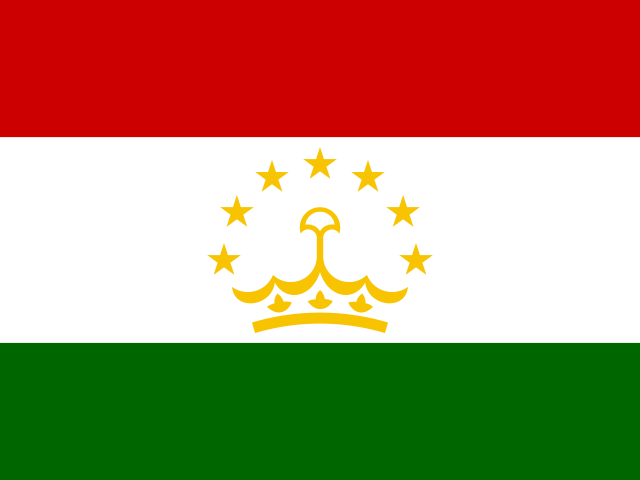 Asia · Central AsiaOutline guide
Landlocked country in Central Asia
Photo: Peter Fitzgerald, CC BY 3.0 via Wikimedia Commons
Tajikistan (Tajik: Тоҷикистон Tojikiston) is a landlocked country on the ancient Silk Road in Central Asia. The nation's majority culture is non-Turkic, unlike its neighbors to the north and west and east. Tajikistan is the poorest of the former Soviet states, owing to its remote geography and a devastating civil war that wracked the country from 1992 until 1997. But travelers here will find a land of stunning beauty, replete with soaring mountains, quaint pamirs (U-shaped valleys or plateaus surrounded by mountains), turquoise alpine lakes, Silk Road cities and ruins, and a charming and hospitable people. For those looking to experience a true adventurer's dream in the Roof of the World without the throngs of tourists in Nepal and Pakistan, Tajikistan is the place to be.
Answers to what travellers most often look up about Tajikistan.
Cards and cash
ATMs are becoming more and more common across the country, but they are still by and large limited to bank ATMs.
Russian, Tajik
The national and official language of the country is Tajik, which is one of several dialects of Persian. It is written using the Cyrillic script, which was introduced to the country by the Soviets in the 1930s.
All you have to do is enter your Tajik phone number (which you'd get when you get a SIM card) and then put however much money you want into the slot.
Travelers should drink bottled water and avoid ice (and drinks made with ice, like milkshakes and smoothies).
The healthcare system in Tajikistan is best described as severely underdeveloped.
Attractions, food, stays and travel essentials, with ratings, reviews, opening hours and directions.

the capital and largest city by far, with a little more than a million inhabitants and almost all of Tajikistan's international scene.

formerly known as Qurghonteppa, the largest city in Khatlon, and the political heart of the rebellion in Tajikistan's civil war.

an ancient Silk Road town in the center of the Ferhghana Valley on the Kyrgyz border.

an old city home to the well known and beautiful Abdullatif Madrassah and Mosque.
largest city of, and gateway to, the Pamirs.

founded as Alexander the Great's northernmost city, the center of Tajikistan's Ferghana Valley region, and the nation's second largest city.

in the heart of the Ferghana Valley, on the Uzbekistani border.

the country's third largest city.

with passes between 3,200 and 4,500 m, and Lake Karakol.

valley including the Fann Mountains, one of Central Asia's prime trekking and climbing destinations.
Places in Tajikistan on the World Heritage List.

Pamir National Park
Listed 2013

Sarazm
Listed 2010

Tigrovaya Balka Nature Reserve
Listed 2023

Silk Roads: Zarafshan-Karakum Corridor
Listed 2023
Cultural Heritage Sites of Ancient Khuttal
Listed 2025
List from Wikidata (CC0). Photos from Wikimedia Commons.
The Tajik portion of the Ferghana Valley includes the nation's second-largest city as well as numerous ancient Silk Road cities like Isfara and Istaravshan.
The Tajik heartland, home to the capital, Dushanbe, as well as numerous small hot springs in the mountains like Gharm.
Tajikistan's diverse southwestern province, home to most of Tajikistan's ancient Buddhist sites, and the center of the rebellion that led to Tajikistan's disastrous post-Soviet civil war.
One of the world's highest mountain regions, with soaring landscapes, trekking, climbing and an incredible drive down the Pamir Highway.
Beautiful valleys amidst the majestic Fann Mountains, and ancient ruins by Panjakent.
Public transport and paid services in Tajikistan.
By minivan or shared taxi
Scheduled minivans run between the major cities but otherwise hiring a vehicle or sharing one with other passengers is the only way to travel around the country.
By marshrutka
Marshrutkas are similar to minivans in design but that act more like buses in that they have set routes they travel. Most Tajik cities will have a plethora of marshrutkas that run different routes.
By bus
In Dushanbe and Khujand, there are city bus networks.
By train
Tajik railways have no website. There are two confirmed trains running in Tajikistan: Moscow-Dushanbe (2 per week) and Moscow-Khujand (one weekly) that can be taken locally.
By plane
As the country is broken into many isolated areas by mountain passes that are closed in winter, travel during this time is by air only, if the planes are flying.
By car
An international driving license is required. The traffic culture is very different from that in the West. Traffic is dangerous for both pedestrians and drivers.
Apps for booking a taxi or a ride in Tajikistan.
Finding apps for Tajikistan…
Operators checked against their official websites in October 2026; services that have stopped running are not listed. Logos and Wikipedia links: Wikidata (CC0)
Choose an airport to see hotels, stations, taxi ranks and car rental desks around it.
Dushanbe · International · DYU
Loading places around the airport…
Calculated from climate averages: mild daytime highs and lower rainfall. It does not account for festivals, crowds or prices.
Average conditions in Dushanbe
| Jan | Feb | Mar | Apr | May | Jun | Jul | Aug | Sep | Oct | Nov | Dec | |
|---|---|---|---|---|---|---|---|---|---|---|---|---|
| Avg. high | 5° | 7° | 14° | 20° | 26° | 32° | 35° | 34° | 28° | 20° | 12° | 7° |
| Avg. low | -4° | -3° | 2° | 8° | 13° | 18° | 20° | 19° | 14° | 8° | 2° | -3° |
| Rainfall (mm) | 36 | 52 | 52 | 52 | 31 | 11 | 2 | 1 | 2 | 11 | 33 | 35 |
| Humidity | 65% | 69% | 65% | 59% | 46% | 29% | 21% | 20% | 22% | 35% | 54% | 63% |
Choose your passport and destination to see whether you need a visa.
Budget
$40
Per person, per day
Mid-range
$100
Per person, per day
Luxury
$255
Per person, per day
| Budget | Mid-range | Luxury | |
|---|---|---|---|
| Accommodation | $20 | $55 | $150 |
| Food and drink | $10 | $20 | $45 |
| Local transport | $5 | $10 | $20 |
| Activities | $5 | $15 | $40 |
Estimate from World Bank price levels (2025). Actual costs vary by city and season. World Bank
—
We do not label countries as safe or unsafe. Below is the official advice from two governments, with the date it was last updated. Always read the full advice before you travel.
US Department of State
Level 2 of 4Exercise increased caution
Exercise increased cautionin Tajikistan due to the risk of terrorism, unexploded landmines, and limited ability to assist U.S.-Tajik dual nationals. Some areas have increased risk. Read the entire Travel Advisory.. Terrorism There are terrorist organizations in the region. There is risk of terrorist violence, including terrorist attacks and other activity in Tajikistan. Visit the U.S. Department of State’s country reports on terrorism to learn more. Landmines and unexploded ordnances Unexploded landmines and cluster munitions are a hazard along the Afghan-Tajik and Uzbek-Tajik borders, the Vakhsh and Rasht valleys, and in the popular hiking area of Romit. Pay close attention to land mine warning signs. Do not venture off the road into areas marked with red and white plastic tape for any reason. Avoid roadside ditches, shoulders, and unmarked trails in these regions. Never touch anything resembling unexploded munitions. Some unmarked landmines may also be present in the Surobad district of GBAO and the Sarazam district. U.S. government employee travel restrictions U.S. government employees working in Tajikistan are not permitted to travel between cities at night. U.S. government employees working in Tajikistan must obtain special authorization from the embassy security office to travel to border areas with Afghanistan due to safety risks. U.S. government employees working in Tajikistan must obtain special authorization from the embassy security office to travel to GBAO due to the potential for armed conflict, in addition to receiving a special permit from the…
UK Foreign, Commonwealth & Development Office
No advice against travel. Read the full advice before you go.
Global travel impacts due to escalation in the Middle East Escalation in the Middle East has caused widespread travel disruption, including airspace closures, delayed and cancelled flights. Your travel plans may be affected, even if your destination is not in the Middle East. Before you travel: check travel advice for any countries or territories you are transiting through check for the latest updates from your airline or tour operator review your travel insurance policy for coverage monitor local and international media for the latest information and sign up for travel advice email alerts. If you have been impacted by travel disruption and need to review your Tajik visa, contact the Tajik Ministry of Foreign Affairs. Before you travel No travel can be guaranteed safe. Read all the advice in this guide. You may also find it helpful to: see general advice for women travellers read our guide on disability and travel abroad see general advice for LGBT+ travellers read about safety for solo and independent travel see advice on volunteering and adventure travel abroad Travel insurance If you choose to travel, research your destinations and get appropriate travel insurance. Insurance should cover your itinerary, planned activities and expenses in an emergency. About FCDO travel advice The Foreign, Commonwealth & Development Office (FCDO) provides advice about risks of travel to help you make informed decisions. Find out more about FCDO travel advice. Get travel advice updates Sign up to get email notifications when this travel advice is updated. Follow FCDO:…
Stories, itineraries and practical advice for travelling in Tajikistan.
 Culture & history
The ancient Persian Empire included areas far beyond modern Persia, now called Iran. At times the Persians controlled much of the Middle East — they were a main antagonist of Ancient Greece a few centuries BCE, and…
Wikivoyage
 Itineraries
For modern-day trade in China, see Shopping in China The Silk Road (丝绸之路 sī chóu zhī lù), also known as the Silk Route, is not a single road, but a network of historical trade routes across Asia from China to Europe.
Wikivoyage
 Culture & history
Zoroastrianism is an ancient Iranian religion with a history spanning over 3,500 years, that survives to the present day.
Wikivoyage
 Itineraries
The Pamir Highway leads through the Pamir Mountains in Central Asia. The bulk of the Highway runs through the Tajik portion of the Pamir Mountains, and extends into Kyrgyzstan to the north and Uzbekistan and, briefly,…
Wikivoyage
 Travel tips
The Union of Soviet Socialist Republics (USSR) (Russian: Союз Советских Социалистических Республик (СССР)), or Soviet Union, emerged as the successor state to the Russian Empire in 1917, and was dissolved in 1991.
Wikivoyage
 Travel tips
Woven carpets are traditionally crafted in North Africa and many parts of Asia, mainly along the Silk Road. They are sometimes called Oriental carpets, and are often associated with Islamic cultures, partly due to their…
Wikivoyage
Every section of the guide. Open one to read it in full.

