//


Capital and largest city of North Korea
Photo: Laika ac from USA, CC BY-SA 2.0 via Wikimedia Commons
Pyongyang (Korean: 평양, P'yŏngyang) is the capital city of North Korea, with about 2,750,000 inhabitants. It is on the Taedong River in the southwest of the country and is known as the Capital of the Revolution.
From the travel guide. Select a place for details, a map and what is nearby.
The arch was designed to commemorate Korean resistance to Japan between 1925 and 1945 and eventual liberation from Japanese rule. The arch is modeled on the Arc de Triomphe in Paris. At 60 m high and 50 m wide it is the biggest victory arch in the world.
Arirang Festival
A mass gymnastics and artistic performance. The performance runs through parts of August and September. With over 100,000 performers this is, by the number of participants, the greatest show on earth.
Nearly every city has its own Children's Palace, with Pyongyang having the largest. After classes in the morning, selected (gifted) students spend the afternoon at the palatial Children's Palace to practice their art or other special skills. Children choose their area of specialisation in cooperation with teachers once they're old enough to attend (around 11) and continue with that skill every day until they graduate or they complete the area of study. Areas include: ballet, rhythmic dance, gymnastics, computer programming, singing, musical instruments, chess, volleyball, basketball, embroidery and calligraphy.
At the top of Mansu Hill is a statue of a man riding Chollima, a winged horse, representing the economic development of Korea.
A 170 m tall monument is dedicated to the Juche philosophy of Kim Il Sung. Don't miss the trip to the top, which costs €5 and offers a great view of the city (though, if you're staying at the Yanggakdo, the view from a top floor is similar and free).
This small amusement park has a handful of new rides. You and your guides can't just wander around as you'll need a guide from the park to take you to each ride, but you will be put at the front of the queue for each one. The guide will keep track of the rides you go on and then you pay according to how many rides you went on at the end of your visit.
This centre houses two floors worth of flowers named after Kim Jong Il and Kim Il Sung. Kimilsungia flower shows are held every year in Pyongyang. Traditionally, embassies of foreign countries in North Korea each present their own bouquet of the flower to the annual exhibition.
Victorious Fatherland Liberation Museum
The War Museum moved to a new building (next to the previous museum) in 2013. Large statues and captured US planes, tanks, and other weapons are in front of the main building. The museum contains dioramas and historical artefacts from the war, paintings of the leaders, and serves as a memorial to national war heroes. Expect to spend 2-3 hours to visit the museum.
20 m high bronze statue of Kim Il-Sung and Kim Jong-Il. During the centennial celebration of Kim Il-Sung's birthday, a statue of Kim Jong-Il was added. This colossal display will most likely be the first thing you visit. Be aware that the locals expect visitors to this place to show respect to the monument. Your tour group will most likely lay flowers on the statue pedestal which are also available on-site for €3-10. Formal dress is expected, though not strictly required.
Opened in October 2013, this is a large water park complex with lots of water slides. Open to foreigners on Saturdays.
Where North Korean films are made, and see film sets based on Japan, Russia, China and South Korea.
State Circus
Closer to an acrobatics show, the circus provides a variety of illusion and gymnastics acts. Live animals are no longer used. There is a live orchestra. The majority of the audience is local.
This is the deepest metro system in the world at over 110 m. There are large socialist realist murals in the platforms of the stations, with each station designed to embody a different ideal. A standard tourist visit for €2 will ride from the origin Puhung station to the Arch of Triumph (6 stops) on the Chollima Line. It is possible to travel the full extent of the metro for €20, although disembarking at a couple stations remains restricted and the full tour takes several hours.
This 105-storey building dominates the Pyongyang skyline with its 330 m height. Construction started in 1987, but came to a halt in 1992 during the country's economic crisis in the wake of the fall of the Soviet Union. Construction by Egypt's Orascom Group resumed again in April 2008. It was scheduled for a partial opening in the summer of 2013, but it remains unopened as of January of 2025.
Sells a huge variety of DPRK postage stamps, with designs ranging from Olympic sports to Korean food to DPRK history. You can also buy postcards and postcard stamps, although postage costs are lower on the second floor of the Koryo Hotel.
The USS Pueblo is an American naval vessel captured by North Korea in 1968. Although her crew was eventually released, the ship has been kept as a museum in Pyongyang. It is still commissioned by the United States Navy and is its only vessel still listed as captured. The Pueblo is now part of the Korean War Museum, and is next to the main museum building.
This monument is about the Workers Party of Korea. The hammer, sickle and brush are standing for the workers, farmers and the intellectuals. The ring around these symbols represents their unification.
Pyongyang's main square is directly opposite the Juche Tower on west bank of the Taedong River and is a common gathering place for military parades, dances and rallies. Attractions surrounding the square include the Grand People's Study House.
Contains the bodies of President Kim Il-sung and his son Kim Jong-il, who have been designated as eternal leaders of the country.
Opened in 1948, this museum showcases exhibits of items related to Kim Il-sung and the Korean Revolutionary movement.
The second-largest stadium in the world, with a total capacity of 114,000. The site occupies an area of 20.7 hectares (51 acres).
The Neutron is a science museum displaying many science-related exhibits and objects. In the center, a North Korean Missile stands on display.
The Pyongyang Marathon is a yearly event in April open to Americans and most other nationalities since 2014. There are 10 km, half- and full marathon races. Although anyone can sign up, it has to be through an official tour operator, including UriTours, KoryoGroup, and Young Pioneer Tours. Roughly 1,000 foreigners were scheduled to run in 2016.
Foreigners are allowed to use the main public swimming pool on Saturday mornings, and also the ice skating rink in winter. Medical aid may take a long time to arrive.
Bowling is available at Golden Lanes for minimal cost.
Designed in the shape of a river cruise boat. A good choice for those fond of traditional Korean food, as over 120 Korean dishes are available.
The most famous place for those who wish to try the Korean speciality of dog. Costs €30.
해당화관
Teppanyaki-style restaurant with €30, €50 and €70 set meals. Considered one of the top restaurants in the country, the chefs have been trained in China. The name might have been changed from Haedanghwa to Ryugyong Service Complex in 2016.
A 2015 boat completed for the 70th anniversary of the workers party, the Rainbow boat has 8 food options: a buffet, a traditional Korean restaurant, a revolving restaurant on the 3rd floor, an outside snack bar, a coffee shop, a karaoke bar, four booth areas with a continental menu, and a convenience shop. A fee of USD1 or ₩5,000 is charged upon boarding in addition to the price of food.
On the bank of the Taedong River, Okryu was founded in 1960 and is one of the oldest restaurants in the country and one of the few with branches abroad. It is famous for its Pyongyang-style cold noodles.
Specialises in beef dishes. Recommended for meat-lovers.
Famous for ox rib soup.
7 types of Taedonggang beer are on tap (although only types 1, 2, 5 and 6 are generally available). The restaurant has a large projector typically showing Russian concerts, and brick walls that look out of place in the city. Fairly expensive for dinner, but recommended for drinks. The fries are recommended as a bar snack, although the locals prefer dried fish.
In addition to a pool and restaurant, the upstairs of the diplomatic club has an extensive karaoke area, and a billiards room with a small bar.
A five-storey building which is the cheapest option in Pyongyang. It has 83 rooms, but rarely available to foreigners.
12 rooms and is Pyongyang's smallest hotel. It is the only hotel in Pyongyang with al fresco dining.
Class 2 hotel with 170 rooms. Open since 1961.
2nd class hotel that has been around since 1956.
First-class hotel next to the Potong River about 4 km from the city centre. It has 216 rooms equipped with air conditioning, refrigerator, telephone, and satellite TV. Facilities include restaurants, bar, souvenir shop and a beauty salon.
Opened in 1989, this first-class hotel has 317 rooms and a rotating restaurant on the roof.
First-class option, renovated. Features a pool, bars, Internet, and cable TV.
Opened 1995. It is on Yanggakdo Island, in the middle of the Taedong River. It is 47 storeys tall, has several restaurants (including a revolving restaurant on the top), and a casino in the basement where you can watch Chinese gamblers go wild. Also has a bowling alley, shoe repair shop, and massage service.
The most luxurious hotel in the city together with Yanggakdo Hotel. Has 45 floors and over 500 rooms. It's in the city centre near the train station, which makes you less isolated than the Yanggakdo.
The Pyongyang diplomatic store complex has fresh milk, a duty free section and tailor services.
The Haemaji complex features a grocery store, bakery, coffee shop and steak house.
The CanGuang complex near the Koryo hotel has a grocery store, cafe and hotel.
The Potonggang complex is a 3-storey department store selling food, home good and small appliances. Local currency is used, and there is a currency exchange point across the street.
Gwangbok is a 3-storey shopping complex joint venture with a Chinese company. The top floor has a food court, and the second floor has locally-produced clothing. Local currency is used and can be exchanged on the first floor.
The Ryugyong shopping complex has a grocery store, furniture store, and kitchen supplies. There's also a cafe in the complex, a hardware store next door, and an electronics store across the street.
A bustling market with imported and local goods. One of the few places to buy fresh meat and produce, and with a bit of everything else. Prices on imported goods will not be significantly cheaper than at other stores, but one of the few places to shop alongside locals. Note: Tongil is not typically a permitted destination for short-term visitors.
By plane
International flights use a new terminal opened in summer of 2015, featuring more seating, an expanded duty-free store, and additional amenities.
By train
There are two international train services to Pyongyang, from Beijing (via Dandong and Sinuiju) and Moscow (via Zabaikalsk, Dandong and Sinuiju).
By metro
The metro system has two routes. However, if on a package tour, your short trip on the metro will be organised in advance. Only visitors of foreign residents may use the entire metro.
By taxi
Taxis can be taken, but drivers are wary of accepting foreigners. One exception might be the Koryo Hotel, near the railway station.
By trolleybus
Foreign residents cannot use buses normally, but sometimes a tour group organises the tour of the trolleybus system.
Choose an airport to see hotels, stations, taxi ranks and car rental desks around it.
Pyongyang · International · FNJ
Loading places around the airport…
Articles and travel topics about Pyongyang and North Korea.
 Itineraries
The Trans-Siberian Railway (Russian: Транссиби́рская магистраль Transsibírskaya magistral' or Трансси́б Transsíb) is the name given to the rail routes that traverse Siberia from Moscow.
Wikivoyage
 Itineraries
Portugal to Singapore by train is an intercontinental itinerary from Lagos in Portugal to Singapore, crossing 13 countries by train. This is reckoned to be the longest railway journey you can take.
Wikivoyage
 Travel tips
See Public transportation for practical information about urban rail transport. Urban rail includes rail-based public transportation in urban areas, including rapid transit (also known as underground, subway, or metro),…
Wikivoyage
 Culture & history
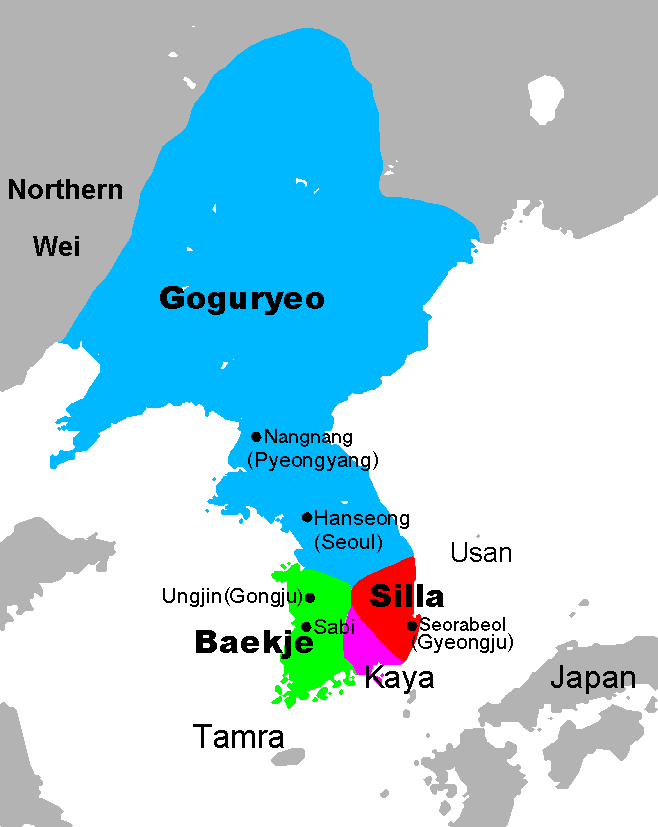
Korea is one of the great civilizations of Asia, shaped by its position between mainland and sea, as well as Imperial China, pre-modern Japan and the Mongol Empire.
Wikivoyage
Every section of the guide. Open one to read it in full.