//


Ostend (Dutch: Oostende, meaning "East End") is a seaside city of 70,000 inhabitants in West Flanders in Belgium. Its North Sea beaches have drawn in tourists since the 19th century when it was a fashionable outing for royalty and aristocracy. It has since become more democratic and is now densely built up with tall 20th-century blocks of holiday apartments and hotels. Its waterfront promenade features every cliche of a European seaside holiday, including a large musical theatre and casino. Besides being a holiday destination, Ostend is also a sizeable port for cargo traffic, particularly across the English Channel. Passenger lines towards the UK have ceased.
From the travel guide. Select a place for details, a map and what is nearby.
James Ensor House
The house where Anglo-Belgian artist James Ensor lived from 1916 has been restored and transformed into a museum of his life. Studio and lounge on the second floor. Only reproductions are displayed.
Art Museum by the Sea
Created after the 2008 merger of the Museum voor Moderne Kunst (Modern Art Museum) and the Museum voor Schone Kunsten (Museum of Fine Arts).
The Leopold Park was set out in 1860 on the old city walls in British style, with ponds, paths and flowerbeds. The first park regulations gave free access to tourists, but local residents had to pay. The beautiful bandstand was inaugurated in 1885. The best-known statue of Oostende, called The Sea, but there is not one person who calls it that. Nearly everyone remembers the statue only by its popular name ‘Dikke Mathille’ - ‘Fat Mathilde’. There even is a “Dikke Mathille” beer that you can taste in local pubs. Near the Fat Mathilde on the right hand side is the famous Floral Clock created from 20,000 flowers and plants. It has a diameter of 9 m, the hands are 3 and 4 m long and weigh 70 and 90 kg. The date, made entirely of flowers, is reset every day during the summer months.
St. Peter and Paul Church
This vast, neo-Gothic church from 1907 has a suite of stained-glass windows and a memorial chapel dedicated to Belgium's first queen, Marie-Louise of Orleans, who died in Ostend in 1850.
Sailing Ship Mercator
A former Belgian merchant marine training ship, this three-masted schooner is now a floating maritime museum. It has a length of more than 78 m and a width of 11 m. This beautiful ship is really worth a visit. Great for kids as well.
Amandine Ship
Sits in a dry basin on a plastic "sea" as a museum of the history and traditions of Ostend's Icelandic fishery.
De Plate Oostend Historical Museum
Housed in King Leopold's restored, 19th-century summer residence, the museum holds displays of Neolithic and Roman objects excavated in the vicinity and exhibits depicting Oostend traditional dress, folklore, and history. There's a re-created fisherman's pub, a fisherman's home, and an old tobacco store.
Atlantikwall Open Air Museum
An open air museum focussing on the Nazi mega-project that was the Atlantikwall, a large coastal defence system of bunkers stretching from southern France to northern Norway, as to defend against a British invasion. The museum counts some two dozen bunkers, trenches, as well as accommodation and artillery.
Prince Charles Memorial
A small museum in honour of Prince Charles, the last royal owner of the estate. The memorial museum is housed in the home he stayed at frequently from 1950 until his death in 1983.
Anno 1465
Back in the early mediaeval period, the land stretching from Ostend to Westende formed a long island of its own, called Testerep. The small town of Walraversijde once lay west of today's Raversijde, but is now abandoned. Modern-day Walraversijde is a group of four reconstructed early mediaeval fishermen's houses, as well as several long-term archaeological dig sites.
The company Franlis provides 45-minute sea excursions along the coast which provide an unusual view on Ostend and its harbor. Embarking point is West Pier in Ostend (right in front of the small beach “Klein Strand”).
Ostend is visited by many day-trippers, especially during July and August. Tourists from the Belgian inland and foreigners mostly arrive by train (day trips) and head for the closest beach area from the station. There is a pont - free of charge - that takes you the eastern beaches: a wild stretch of beaches and dunes between Ostend and Bredene. There is even a beach for nudism-aficionados. Drinks and ice cream at - marvelously set - Twins Club.
Many places in Oostende offer bicycles for rent, including the following stores: Nico - Fun on Wheels (Albert I-Promenade 44A), Linda (Albert I-Promenade 28), Candy (Albert I-Promenade 4). There are coastal tracks through the dunes, and country roads leading to quiet villages. It is the perfect place to start cycling tours to the many Belgian coast towns and even Bruges is nearby.
Popular place among locals for fries in Ostend.
Good food at a budget price. Serves for example spaghetti and salads.
Oli's Friet & Eat
Close to the beach and the Ostend Casino. Serves fries and a selection of typical Belgian dishes. Possible to eat inside or on the terrace.
Busy and popular restaurant in the touristic heart of Ostend. The food is well presented and comes in generous proportions. It is recommended to make a reservation in advance.
The place to go if you want to eat seafood. The signature dish is a huge bowl of mixed seafood.
This restaurant on a small island in the middle of the Maria Hendrikapark offers tasty meals.
In this restaurant they serve Belgian and Thai dishes.
Italian restaurant for fine dining. They can offer gluten free dishes.
Cozy bar to go to if you feel like having a coffee, glass of wine or a cocktail.
In the city center. Almost all year round there is a high chance that a large part of the people staying in the hostel are going to be groups of school children. Lockers and luggage storage are available. There is also a kitchen and a self service restaurant.
Small charming hotel with only 25 rooms, in a quiet street in the heart of Ostend. The hotel has a secure parking/garage. Close to the Casino-Kursaal of Ostend and the beach.
Embellished with flowers, the hotel is near the beach, the casino of Ostend and the shopping centre.
Hotel with view on the yacht marina.
The majestic landmark hotel at the Ostend beach remains full of grand history, but is now rather worn and outdated in many ways.
By train
The Train Station is in the centre of Oostende and offers many direct connections within Belgium. Changing in Brussels, Ghent or Antwerp adds even more options, both domestic and international.
By bus
The Flemish national bus company, De Lijn, has lines to Ostend from Bruges, Diksmuide and other neighbouring towns. For more information regarding different timetables: https://www.delijn.be.
By car
Coming to Ostend by car is also possible. Ostend has plenty of parking lots.
By tram
The Kusttram, which runs along the whole Belgian coast from Knokke to De Panne stopping in every beach resort such as De Haan, Nieuwpoort and Koksijde.
Most points of interest in town are close together. You can easily reach them by foot or by renting a bicycle from the rail station for €9 per day.
Read in the guideChoose an airport to see hotels, stations, taxi ranks and car rental desks around it.
Oostende · International · OST
Loading places around the airport…
Articles and travel topics about Ostend and Belgium.
 Itineraries
Stretching from Knokke to Adinkerke, the Kusttram (Dutch for "Coast Tram") makes it possible to travel almost the entire length of the Belgian coast by tram.
Wikivoyage
 Itineraries
In early modern Europe, the Grand Tour was an educational journey undertaken by an elite of young men, and in some cases women, who could be sponsored by wealthy parents, or other benefactors.
Wikivoyage
 Nature & adventure
For the more active traveller, Europe provides excellent opportunities for long distance walking, where you can follow long-distance walking trails and take in some of Europe's finest scenery, while getting fit at the…
Wikivoyage
 Travel tips
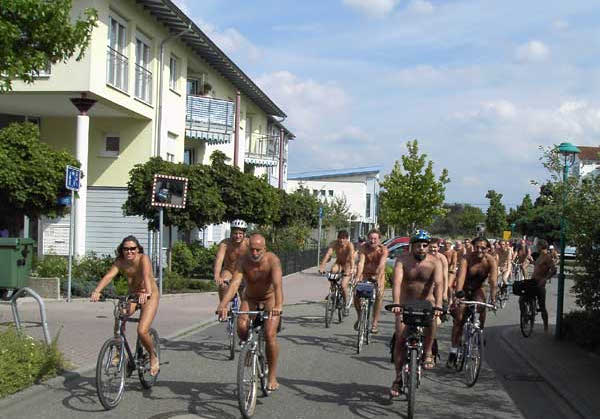
Naturism – also known as Nudism or a Clothes-Free lifestyle – has a small but enthusiastic following in a number of countries around the world.
Wikivoyage
Every section of the guide. Open one to read it in full.