Money and payments
Cards and cash
ATMs are present throughout the country; BCI, Standard Bank, Eco Bank, Millennium BIM are the banks you are most likely to run in to.


 Africa · Eastern AfricaOutline guide
Country in Southeast Africa
Photo: Boats_outside_Island_of_Mozambique.jpg: Stig Nygaard derivative work: Jjtkk, CC BY 2.0 via Wikimedia Commons
Mozambique (Portuguese: Moçambique) is a country on the Indian Ocean coast of Southern Africa. From the Monte Binga peak, 2,436 m high, to the stunning beaches along the coast, Mozambique is a country of contrasts. As well as some of the best colonial era architecture and relics to be found on the continent, Mozambique has also preserved its African cultural heritage, which can be experienced through art, music and food. Its eastern coastline along the Indian Ocean is more than 1,000 km long, a fantastic draw for scuba divers, fishermen, sailors and beach lovers.
Answers to what travellers most often look up about Mozambique.
Cards and cash
ATMs are present throughout the country; BCI, Standard Bank, Eco Bank, Millennium BIM are the banks you are most likely to run in to.
Portuguese
The official language of Mozambique is Portuguese, though many people speak English in the capital Maputo and in touristy areas.
There is also the South-African owned Vodacom MozambiqueVodacom have 4G in many towns and GPRS Edge elsewhere.
Mobile networks
Do not drink tap water or use any ice.
Attractions, food, stays and travel essentials, with ratings, reviews, opening hours and directions.

the thriving capital in the far south of the country.

a busy port town and capital of Sofala Province.

a UNESCO World Heritage Site and the former capital under Portuguese rule.

a pretty historic town on a bay.

an industrial city in the north and capital of Nampula Province.

in Northern Mozambique, a popular holiday destination for Mozambicans, although its isolation has kept it off the tourist route for most European visitors.
in Central Mozambique, capital of Manica Province, point of departure to visit Chimanimani National Park and Mount Binga (tallest peak in Mozambique), transitional point to Zimbabwe and Malawi.

The Bazaruto Archipelago is a group of islands off the coast of Vilanculos in Mozambique.
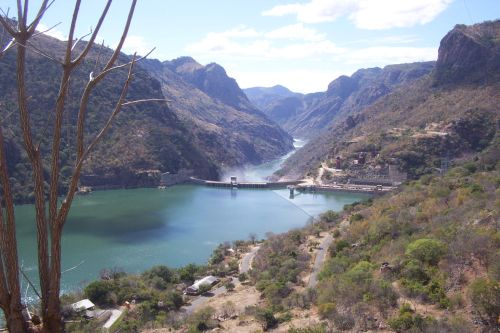
Songo is a town in Central Mozambique. The nearby dam, called Cahora Bassa, is a large hydroelectric scheme that supplies electricity to grids as far as South Africa.

The 4,000 km2 Gorongosa National Park in Central Mozambique is at the southern end of the East African Great Rift Valley. The park includes the valley floor and parts of the surrounding plateaus, which are watered by rivers originating from nearby 1862-meter Mount Gorongosa.
Ilha de Mozambique (Mozambique Island) is an island in the Nampula Province in Northern Mozambique with a historical heritage that's among the best in Mozambique, and indeed in all of Africa. It was the capital of Mozambique for nearly four centuries under Portuguese colonization before the move to Lourenco Marques (now Maputo), and had been used as a major base for the Arab traders long before the arrival of the Portuguese.

Ponta d'Ouro is a popular destination for South African divers and surfers in southern Maputo province, Mozambique. There is a small village, but it is mostly overshadowed by the tourist camps.
Northern Mozambique is a region in Mozambique. It includes the provinces of Cabo Delgado, Nampula, and Niassa.
Tofo Beach is in Inhambane Province, Mozambique. It has been described as "the next Goa", and while this may be pushing it a bit, Tofo has definitely become a traveller's focus on the Eastern coast of Africa.
Vilanculos (Vilankulo) is the Mozambican capital of water sports. It's a popular beach resort area with accommodation from economy to 5-star barefoot luxury.
Places in Mozambique on the World Heritage List.
List from Wikidata (CC0). Photos from Wikimedia Commons.
Cabo Delgado, Nampula and Niassa provinces
Manica, Sofala, Tete and Zambézia provinces
Gaza, Inhambane and Maputo provinces, and the Bazaruto National Sea Park
Public transport and paid services in Mozambique.
Chapas and buses
Buses and chapas leave early in Mozambique: 04:00 is not unusual, particularly as you go further north.
Rail
Trains aren't really very useful, considering there's only one and it's in the far north of the country traveling from Nampula to Cuamba near the Malawian border. See get in above for more details.
Taxis
Once only found in Maputo taxis can now be found in many cities throughout the country. They never have meters so you must negotiate regarding cost before your journey.
Air
Domestic flights are the fastest and most sane way to get around the country if you can afford it. Linhas Aereas de Moçambique flies between the major cities.
Apps for booking a taxi or a ride in Mozambique.
Finding apps for Mozambique…
Operators checked against their official websites in October 2026; services that have stopped running are not listed. Logos and Wikipedia links: Wikidata (CC0)
Choose an airport to see hotels, stations, taxi ranks and car rental desks around it.
Maputo · International · MPM
Loading places around the airport…
Calculated from climate averages: mild daytime highs and lower rainfall. It does not account for festivals, crowds or prices.
Average conditions in Maputo
| Jan | Feb | Mar | Apr | May | Jun | Jul | Aug | Sep | Oct | Nov | Dec | |
|---|---|---|---|---|---|---|---|---|---|---|---|---|
| Avg. high | 31° | 31° | 30° | 28° | 27° | 25° | 25° | 27° | 28° | 29° | 30° | 31° |
| Avg. low | 22° | 22° | 21° | 19° | 16° | 14° | 14° | 15° | 17° | 18° | 20° | 21° |
| Rainfall (mm) | 153 | 99 | 95 | 64 | 20 | 18 | 16 | 14 | 28 | 51 | 98 | 122 |
| Humidity | 74% | 74% | 74% | 74% | 71% | 68% | 67% | 66% | 65% | 68% | 70% | 72% |
Choose your passport and destination to see whether you need a visa.
Budget
$40
Per person, per day
Mid-range
$115
Per person, per day
Luxury
$305
Per person, per day
| Budget | Mid-range | Luxury | |
|---|---|---|---|
| Accommodation | $20 | $65 | $180 |
| Food and drink | $10 | $25 | $55 |
| Local transport | $5 | $10 | $25 |
| Activities | $5 | $15 | $45 |
Estimate from World Bank price levels (2025). Actual costs vary by city and season. World Bank
—
We do not label countries as safe or unsafe. Below is the official advice from two governments, with the date it was last updated. Always read the full advice before you travel.
US Department of State
Level 2 of 4Exercise increased caution
Exercise increased cautionto Mozambique due to terrorism, crime, health, and unrest. Some areas have increased risk. Read the entire Travel Advisory. Terrorism Terrorist groups in northern Mozambique are active. Attackers may strike public areas and tourist destinations with little or no warning, sometimes taking hostages. Terrorists have targeted upscale lodges in remote areas where international big-game hunters stay. Security and police forces may be slow to respond. There is risk of terrorist violence, including terrorist attacks and other activity in Mozambique. Visit the U.S. Department of State's country reports on terrorism to learn more. Crime Violent crime, such as mugging, is common. Petty crime is common in popular tourist locations. Stay aware of your surroundings. Health Mozambique’s health infrastructure is weak. Medicine availability is variable and often in short supply. Local medical facilities may lack basic resources and supplies. Some health facilities may ask for cash payment up front. Medical services for routine and emergency procedures are limited. Read the Health section of the Travel Guidance for more information. Unrest Unplanned protests are possible throughout the country. They can quickly become violent. Protests may temporarily block major roads, including toll booths and border crossings. Do Not Travel to the following areas due to terrorism: Cabo Delgado Province Niassa Special Reserve inside Niassa Province Certain districts in the north of Nampula Province
UK Foreign, Commonwealth & Development Office
Advises against all travel to parts of the country
Your travel insurance could be invalidated if you travel against advice from the Foreign, Commonwealth & Development Office (FCDO). Areas where FCDO advises against travel Cabo Delgado Province FCDO advises against all travel to Cabo Delgado Province, except for Palma town and the area around Pemba and Afungi. FCDO advises against all but essential travel to Palma town and the area around Pemba and Afungi. Nampula Province FCDO advises against all travel to the districts of Memba and Eráti in Nampula Province. Niassa Province FCDO advises against all travel to the districts of Mecula and Marrupa in Niassa Province. Find out more about why FCDO advises against travel. Travel insurance If you choose to travel, research your destinations and get appropriate travel insurance. Insurance should cover your itinerary, planned activities and expenses in an emergency. About FCDO travel advice FCDO provides advice about risks of travel to help you make informed decisions. Find out more about FCDO travel advice. Follow FCDO travel on Twitter, Facebook and Instagram. You can also sign up to get email notifications when this advice is updated.
Stories, itineraries and practical advice for travelling in Mozambique.
 Itineraries
The Cape Route, the route around Africa, the Carreira da Índia or the European-Asian sea route, used to be among the world's most important routes of commerce.
Wikivoyage
 Itineraries
This itinerary describes the overland route from Cairo, Egypt, to Nairobi, Kenya, by public transport. This is more or less the only surface route from North Africa to East Africa accessible to Westerners, and so most…
Wikivoyage
 Nature & adventure
Many of these parks are on the UNESCO World Heritage List. They can be visited for safaris, to see the African flora and fauna.
Wikivoyage
 Travel tips
Airfares can be cheaper when booked from the European capital that has a strong colonial link to your destination, which typically means from Brussels, Lisbon, London, and Paris.
Wikivoyage
 Nature & adventure
Scuba diving is an activity in which you swim underwater for extended periods using self-contained underwater breathing apparatus, hence the acronym scuba.
Wikivoyage
 Inspiration
Some hotels have a heritage from the golden age of steam railways and ocean liners, before the Second World War, in the 19th or early 20th centuries. These hotels were where the rich and the famous of the day would stay.
Wikivoyage
Every section of the guide. Open one to read it in full.


