//


Town and municipality in Coastal Montenegro
Photo: Brian Dell Bdell555, Public domain via Wikimedia Commons
Although not the most spectacular city in Montenegro (Kotor takes that prize), Herceg Novi is probably the most pleasant and warrants several days' visit. The cities have similar architecture but Herceg Novi is neither as grand nor as touristy and expensive. Herceg Novi translates into English as "New Castle".
From the travel guide. Select a place for details, a map and what is nearby.
Built in 1382, the fortress is the main attraction of this town. It regularly shows films at night.
Цитадела
Survived many naval battles, but finally tumbled into the sea during a devastating earthquake in 1979. Remains of the citadel can be visited, though in present times there isn't much left to admire. The remains can also be seen from on top of Forte Mare, saving the walk.
This fortress dominating the old town and doubles as an open-air theatre, worth visiting mainly for the splendid views of the town and the Kotor bay.
Форт Шпањола
The Spanjola fortress higher up the mountain (170 m above sea level) dates back to 16th century. Take a small street going upwards across from the Kanli Kula fortress. Entrance is free and you can freely climb (and fall from) the walls.
Fortress built on a small island with the same name at the entrance of Kotor Bay, that makes up about 90% of the surface area of the island. These fortifications were built in 1853 by Austro-Hungarian general Lazar Mamula to defend Kotor Bay. During the Second World War, the fortress was converted into an Alcatraz-style concentration camp by Italian fascist forces lead by Benito Mussolini, but after the war it fell in disuse. Since 2016 the fortress houses a hotel.
A white octagonal clock tower on the western entrance gate to the old city. The original clock was replaced with an electric one in the mid 20th century.
Zapadna kula
It is not accessible to visitors, but it can be viewed from the park to the north.
Medieval watchtower.
submarine tunnels
A legacy of the Yugoslav Navy, these two submarine pens were designed to provide shelter to a submarine guarding Kotor Bay. The deep bay in combination with calm waters offers ideal naval conditions for submarine defences. The pen entrance has iron struts covered with styrofoam that could swing towards each other to close off the entrance and camouflage the location by making it look like a scree slope from the air. Laying in ambush, submarines would then wait for enemy ships to pass by on their way to Kotor to engage them. The pens were constructed in the 1950s but never saw battle, and their role ended when the Yugoslav Navy disbanded in 1992. The two tunnels are about 700 m apart and connected by a hiking trail.
Spomenik Herojima Pomorskih bitaka na Jadranu
Monument to seamen fighting naval battles on the Adriatic Sea. On display are a number of cannons, anchors, and other naval relics.
Bronze statue of a chimney sweep who mysteriously disappeared in the 1950s. The statue's nose is shiny, as rubbing it is said to bring luck.
Spomenik kralju Stefanu Tvrtku I Kotromanić
A large statue in honour of the first Bosnian king who laid the foundations to the city in 1382.
Crkva rođenja presvete Bogorodice
Cultural heritage site of Montenegro, built in 1783.
Црква Светог Спаса
18th-century church.
The most prominent church in the historic centre, in eclectic architectural style.
Baroque church on a quiet square in the south-east of the old town.
Црква Светог Преображења Господњег
A small Orthodox church with impressive murals. Free entrance.
Русское кладбище в Херцег-Нови
Burial grounds for Russian Army officers who fled Russia after the 1917 formation of the Soviet Union. There is a small memorial, and a church inaugurated in 2007 to commemorate Russians who found a new homeland in Montenegro.
Манастир Савина
The Savina monastery, approximately 2 km east from the city centre has three beautiful Orthodox churches and (yet again) splendid views of the bay.
Црква Светог Теодора Ушакова
Small Orthodox church with bright blue cupola dedicated to Fyodor Ushakov who was a Russian naval commander and Orthodox saint.
Titova vila "Galeb"
Residence of Yugoslav president and Second World War veteran Josip Broz Tito. The mansion was constructed in 1976 after a design of local architect Milorad Petijević and combines Mediterranean, modernist, and coastal architectural aesthetics. It features 4 levels of which two underground, with a combined floor space of 5,500 m². Tito used the retreat four times, staying over a week each time. He received several guests, including British prince Charles in 1978. The mansion is used as a spa.
Gradski muzej
Housed in a late-Baroque mansion, the city museum tells the history of Herceg Novi throughout the ages, from Medieval times to the World War II era. Many historic artefacts are displayed, and the garden features over 100 Mediterranean plant species. Count 20 to 30 minutes for a visit. Guided tours are included in the admission fee and start every hour, or whenever visitors arrive if it's not too busy. Most displays are in English, but there are relatively few so a guided tour is recommended.
House of Yugoslavia's only Nobel laureate, Ivo Andrić, who won the Nobel Prize for literature in 1961. The house is now a museum for the work of Ivo Andrić.
Музей Михаила Булгакова
The first exposition for Mikhail Bulgakov's work internationally, the museum opened in 2020 and houses a variety of props, decorations, and other objects.
Galerija "Jisop Bepo Benovic"
Art gallery
Galerija "Sue Ryder"
Art gallery.
These caves were eroded into the cliff face by tidal forces, and now large enough for a car to drive in. With water levels lower than they used to be, the caves no longer flood even during high tide, and now provide shade and a cool breeze for swimmers.
Pebble beach near the sea caves where locals tend to show more skin than on the opposite shoreline. There are toilets at the western end but no other amenities.
Films screened in the Kanli Kula fortress.
Music festival
Olympic swimming pool at the waterfront.
Muzicka skola
Regular live performances by students.
Bus is the only transport in/out of Herceg Novi, and the bus station is busy all day long with buses heading (mostly) down the Adriatic coast.
Read in the guideMost of the attractions are in the historic town (stari grad) which can be traversed on foot in under 10 minutes. Some of the museums are a bit further out but easily at a walking distance.
Read in the guideChoose an airport to see hotels, stations, taxi ranks and car rental desks around it.
Dubrovnik · International · DBV
Loading places around the airport…
Articles and travel topics about Herceg Novi and Montenegro.
Old towns of the Balkans outlines a list of notable old towns in the Balkans. The Eastern Mediterranean part is covered separately under Old towns in Eastern Mediterranean Europe.
Wikivoyage
 Travel tips
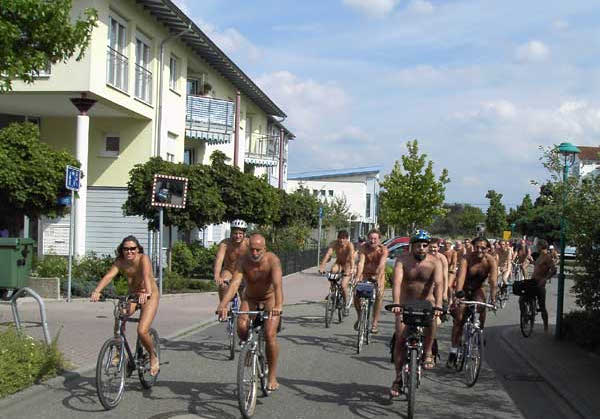
Naturism – also known as Nudism or a Clothes-Free lifestyle – has a small but enthusiastic following in a number of countries around the world.
Wikivoyage
 Travel tips
Montenegro is not a country that comes to mind when it comes to great rail journeys. Montenegro by rail is slow, the network limited and considerably old compared to the rest of Europe, but one area where rail travel in…
Wikivoyage
 Travel tips
This page gives an overview of ferry services in the Mediterranean, including associated seas such as the Adriatic, Black Sea and Sea of Marmara.
Wikivoyage
Every section of the guide. Open one to read it in full.