//

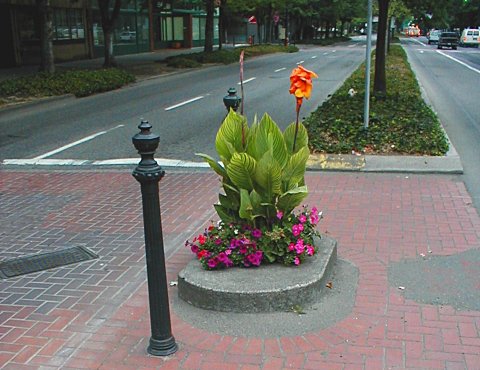
Photo: en:User:Duk, CC BY-SA 3.0 via Wikimedia Commons
The "smallest park in the world", a title backed up by the Guinness Book of Records, Mill Ends was created satirically for the purpose of being "a leprechaun colony and racetrack for snails." It is in the median of SW Naito, and consists of nothing more than a single small tree in the crosswalk on the north side of the intersection.
Mill Ends Park is the smallest urban park in the United States. It consists of 1 tree, located in the median strip of SW Naito Parkway next to Tom McCall Waterfront Park along the Willamette River near SW Taylor Street in the downtown core of Portland, Oregon, United States. The park is a small circle 2 ft (0.61 m) across, with a total area of 452 sq in (0.292 m2). It was the smallest park in the world, according to the Guinness Book of Records, which first granted it this recognition in 1971, and held the distinction until February 2025, when the honour was awarded to a park in the town of Nagaizumi, Japan, dubbed "The world's smallest park", which is 0.24 m2 (370 sq in).
© OpenStreetMap contributors
This wide expanse of green lawns along the downtown Portland waterfront is a scenic slice of park land, with views over the Willamette River and of the skyline. At one point, this narrow stretch of land was a four-lane freeway, but growing environmental awareness led to the city replacing the freeway with this park. Along the waterfront there are a number of fountains, memorials, and gardens, including the Salmon Street Springs, a large fountain at the Salmon Street entrance that's popular with kids during the summer; the Battleship Oregon Memorial, the old mast of the USS Oregon battleship between Oak and Pine Streets; and the Japanese American Memorial Garden at the north end of the park has monuments telling the story of people of Japanese descent in the US, including the WWII internment camps. The park is also home to many festivals throughout the year, including a Cinco de Mayo celebration, the Waterfront Blues Fest, and the carnival-like Rose Festival.
This wonderful festival, held in early June, is Portland's largest event. The Portland waterfront is turned into a carnival for a couple of weeks, starting with Fleet Week as military ships moor alongside Waterfront Park and culminating with a bunch of festivities on the second weekend, including the centerpiece of the festival, the Grand Floral Parade held on the last Saturday. Other events include flower shows, other parades, fireworks, and dragon boat races.
Neon-colored pirate-themed minigolf course under blacklights. There's also a few escape rooms and axe throwing. Reservations required and can be made on their website.
Looming over the west entrance of the Portland Building is the second-largest hammered-copper statue in the U.S. (after the Statue of Liberty); a classical sculpture of a woman bearing a trident, crouching over the entryway and reaching down to welcome visitors. For its sheer size, it's surprisingly easy to miss - keep your eyes peeled for Michael Graves' historic postmodern building painted in red, blue, and tan.
Located on the Portland, a steam sternwheeler tug boat moored in the river, the museum contains numerous ship models, maritime artifacts and memorabilia, while tours are offered of the ship.
This is the central courtyard of downtown Portland, a big gathering spot that's popular with tourists and locals alike. Notable features of the park are a cascading waterfall fountain, chess boards, and the Weather Machine, a machine that predicts the weather every day at noon. Many other sculptures and art elements surround the square, including Kvinneakt, the bronze statue of a nude woman that's otherwise known as the "Expose Yourself to Art" statue after a popular poster featuring a flasher (former Mayor Bud Clark) facing this work. An annual Christmas tree lighting ceremony takes place here the Friday evening after Thanksgiving to ring in the holiday day season and get everyone attending into the holiday cheer.