//

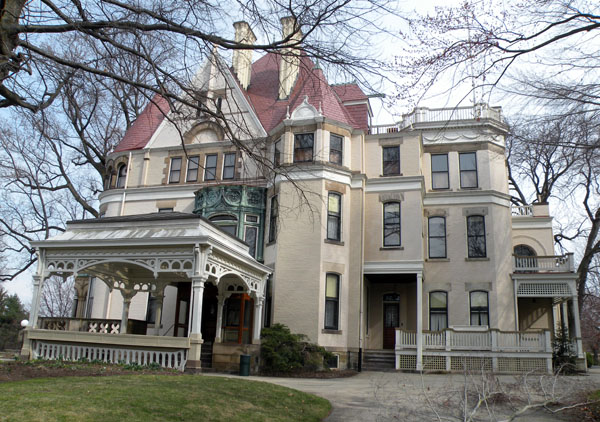
Photo: Lee Paxton (Original uploader was Leepaxton at en.wikipedia), CC BY-SA 4.0 via Wikimedia Commons
A complex of museums and historic buildings including: Clayton (the home of industrialist and art collector Henry Clay Frick), the Frick Art Museum, the Car and Carriage Museum, and the Greenhouse.
The Frick Pittsburgh is a cluster of museums and historical buildings located in Pittsburgh, Pennsylvania, United States, and formed around the Frick family's nineteenth-century residence known as "Clayton". It focuses on the interpretation of the life and times of Henry Clay Frick (1849–1919), industrialist and art collector.
© OpenStreetMap contributors
A large cemetery founded in the mid-1800s. While not a tourist attraction like the old cemeteries of New Orleans or Paris, Homewood houses many ornate mausoleums, statues and memorial edifices.
A wonderful wooded park (and Pittsburgh's largest) with a network of trails ideal for walking the dog or bicycling. There are several entrances to the park, the main ones being at Reynolds St and Homewood Ave (across the street from the Frick Art & Historical Center) at the north end of the park, Beechwood Blvd just south of Forbes Ave and at Nicholson St on the west side of the park, and at Forbes and Braddock Avenues on the east side of the park. From any of the entrances you'll head down shady, wooded slopes to a small valley which runs south to the Nine Mile Run Watershed, where a small stream flows into the Monongahela River. The Frick Environmental Center, off of Beechwood Blvd just south of Forbes Avenue, hosts nature programs for children and has a small pond and a woodland area for wildlife viewing. There is also a pair of excellent playgrounds in the park, one at Beechwood Blvd and Nicholson St and the other at Forbes and Braddock Avenues, along with softball fields and tennis courts.
Estate of the Mellon family, landscaped in part by the Olmsted Brothers (who landscaped Boston Common and New York's Central Park) with many different flowering trees - now part of the grounds of Chatham University.
Turn-of-the-century wood paved street built in 1914, lined with restored houses.