//

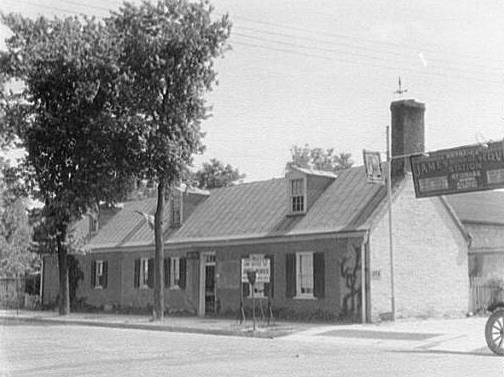
Photo: Theodor Horydczak, Public domain via Wikimedia Commons
The James Monroe Museum and Memorial Library is a historic museum at 908 Charles Street in Fredericksburg, Virginia. It is located on the site of the James Monroe Law Office, used by future United States President James Monroe from 1786 to 1789. It was declared a National Historic Landmark in 1966. It is now owned by the Commonwealth of Virginia and operated by the University of Mary Washington. The museum features original objects and memorabilia related to James Monroe, and includes items relating to other members of his family, including dresses worn by First Lady Elizabeth Monroe.
© OpenStreetMap contributors
A short walk from Kenmore. A small frame structure, it was purchased by George Washington in 1772 for his mother, Mary Ball Washington, who lived much of her widowhood in Fredericksburg. Of interest is the garden now maintained by a volunteer group of certified Master Gardeners. A huge crepe myrtle is thought to have been planted by Mary herself.
A Georgian mansion that was once occupied by Fielding Lewis and Betty Washington Lewis, George Washington's sister.
A former tavern run by Charles Washington, brother of George in 1760; it began operating as a tavern in 1792. An historic landmark, the atmosphere is all historic, right down to the southern cuisine and servers dressed in colonial attire giving in-depth tours.
A restored 18th-century pharmacy. Take a tour, the guides are dressed in period attire and take you through the building explaining 18th-century medicine and local history.
pronounced, "chat-um"
A Civil War-era mansion that overlooks the Rappahannock where Union soldiers crossed at the battle of Fredericksburg. It also provides a great view of the city. Take US-17 or US-1 to River Road, or cross the Hwy 3 bridge from downtown Fredericksburg and make a left when you see the sign.
A small liberal arts college near Downtown Fredericksburg. It has been voted, in the past, as one of the most beautiful college campuses in the United States, according to the Princeton Review. Its architecture is comparable to that of the University of Virginia.