//

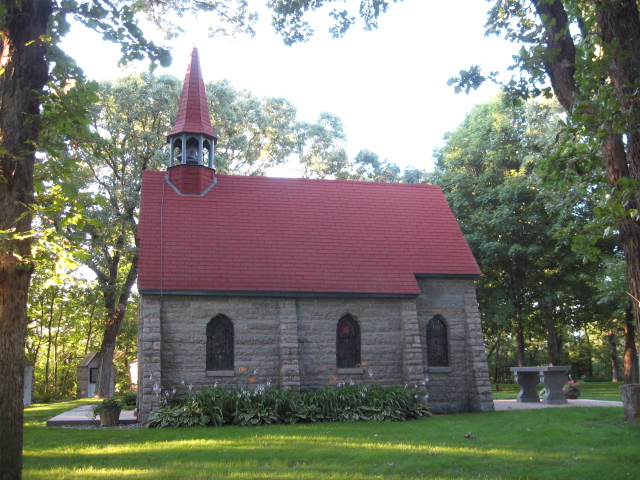
Photo: Glenn M. Harden, CC BY-SA 3.0 via Wikimedia Commons
Assumption Chapel, also known as the Grasshopper Chapel, was built in petition for relief from the Grasshopper Plagues of the 1870s. The Chapel is situated on the top of a hill on the outskirts of Cold Spring, Minnesota. Pilgrimage Road winds up the steep hill first lined with huge lilac bushes and then shrouded by enormous trees. The top of the hill is covered with lush grass and more trees. In the midst of a clearing in the trees stands the granite form of the Chapel. In 1952, in honor of the centennial of the diocese of Saint Cloud, the Chapel was rebuilt. The current chapel stands sixteen by twenty-six, the approximate size of the original chapel. It is constructed of rough granite, much of which was donated by the Cold Spring Granite Company, a major local business. The inside of the Chapel is simple and has no pews, only an altar. The chapel walls are made of polished agate and carnelian granite. Four simple stained glass windows enhance the interior of the chapel. Above the altar stands the wooden statue that had been carried in procession through the Cold Spring community at the time of the Chapel's original consecration. The most telling feature and testimony to the history of the chapel is the stone carving above the door. It is inscribed "Assumpta est Maria" ("Mary has been taken up"), referring to the new name given to this reconstructed chapel. Mary is pictured between the words but at her feet, bowing in submission, are two kneeling grasshoppers.
Assumption Chapel, also known as the Grasshopper Chapel, is a Roman Catholic Marian shrine, "Calvary Hill", and pilgrimage chapel. The shrine stands upon one of the tallest hills in Stearns County, and which is known locally as, meaning "Mary's Mountain", on the outskirts of Cold Spring, Minnesota. The chapel stands in a region of Minnesota largely settled in the 1850s by German-American Catholics who were invited to the area by Slovenian-American missionary Fr. Francis Xavier Pierz and which remained, until shortly before the Second World War, a major center for the speaking of the German language in the United States.
© OpenStreetMap contributors