//

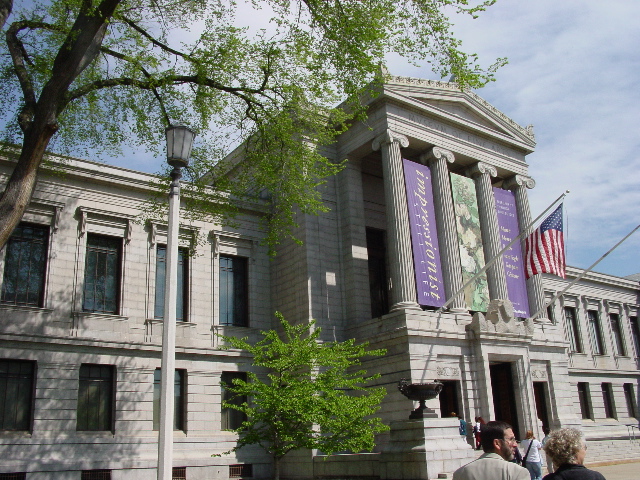
Photo: Martin~jawiki at Japanese Wikipedia, CC BY-SA 3.0 via Wikimedia Commons
As the fourth largest museum in the US, the Museum of Fine Art is known for its impressive assortment of French Impressionist paintings as well as its extraordinary collection of ancient Egyptian, Greek, and Roman art. The MFA also has one of the largest collections of Japanese art outside of Japan. A new modernist Art of the Americas Wing was completed in 2010, architected by Norman Foster. A visitor could simply rush through the highlights in a few hours, or linger all day and take it all in properly. The museum also has a great collection of early American art, including the portrait of George Washington used on the dollar bills you might find in your wallet right now.
The Museum of Fine Arts is an art museum in Boston, Massachusetts. It is the 20th-largest art museum in the world, measured by public gallery area. It contains 8,161 paintings and more than 450,000 works of art, making it one of the most comprehensive collections in the Americas. With more than 1.2 million visitors a year, it is the 83rd-most-visited art museum in the world as of 2024.
© OpenStreetMap contributors
Shattuck Visitor Center
Offering walking and cycling tours throughout The Fens, the Muddy River, and other points of interest along this section of the Emerald necklace. See the calendar of events for specifics.
Not your typical museum experience. Modeled after a 15th-century Venetian palazzo, the museum displays Mrs. Gardner's evocative home as it was when she lived here. She collected many masterworks, unappreciated at the time, and displayed them in a most unconventional manner. The juxtaposition of artworks from different cultures and time periods still delights visitors today. While the museum contains works by famous artists like Rembrandt and Velazquez, the main attraction is not in any particular work, but in how each room is laid out: not only the paintings and tapestries, but also the furniture and architecture in every corner of the building are valuable works of art. Gardner's will stipulates the works of art must remain in her original arrangement. This is the reason one wall remains blank, after an unbelievable art heist in early 1990. Thirteen pieces were stolen, valued at over $500 million dollars; the works of art remain missing to this day.
Jordan Hall
Catch a performance at the oldest independent school of music in the United States. The New England Conservatory of Music is renowned for its instruction in string, woodwind, and brass instruments. Designated a National Historic Landmark in 1994, Jordan Hall—along with Symphony Hall—are considered two of America's most acoustically perfect performance spaces. Often used as a concert hall for NEC students and faculty, the BSO will perform in this space as well.
Symphony Hall
One of "The Big Five", an evening at the Boston Symphony Orchestra (or BSO) will be a treasured memory for any visitor. Attending one of these highly acclaimed, if somewhat formal performances, is a must for any lover of the finer things in life. If you think you might prefer something lighter, however, try the Boston Pops. Comprised of BSO musicians (but usually not their first-chair players), The Pops plays more familiar classical and popular music. The building, Symphony Hall, was constructed in 1900 and is considered to have the finest acoustics of any concert hall in the United States. In 2006 the BSO renovated the building and was worried about preserving the quality of the sound. They decided to spare no expense, using only craftsman capable of building with the same methods and materials as the original construction.
MHS
Founded in 1791, the Massachusetts Historical Society is the nation's oldest historical society. The collections of the MHS bring alive the stories of America's past through a series of changing exhibitions and public programs that are free and open to the public. Thomas Jefferson's handwritten copy of the Declaration of Independence is a particularly significant piece in their collection. Many famous people sit on the board of directors, including professor Henry Louis Gates, Jr., historian Doris Kearns Goodwin, and director Ken Burns.