//

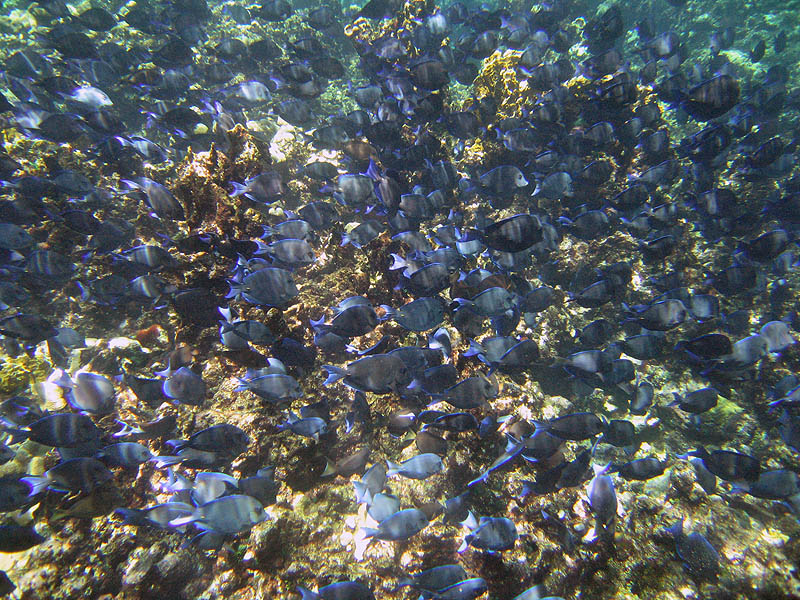
Photo: Jaro Nemčok, CC BY-SA 3.0 via Wikimedia Commons
Year round. Information is available at the National Park Service visitor contact station at Fort Christianvaern in downtown Christiansted. Walking trails through frangipani trees, organ pipe cactus, and underwater trails for snorkeling. Picnic areas. Five concessionaires offer trips to Buck Island form St. Croix under permits. There is no overnight camping on the island; the park is closed from sunset to sunrise to protect nesting sea turtles that come ashore at night. Anchorage is available overnight to boaters within the designated area. A permit is required to anchor within the designated area.
Buck Island Reef National Monument protects Buck Island, a small, uninhabited 176-acre island about 1.5 miles (2.4 km) north of the northeast coast of Saint Croix, U.S. Virgin Islands, and 18,839 acres of submerged lands, totaling 19,015 acres. It was first established as a protected area by the U.S. Government in 1948, with the intention of preserving “one of the finest marine gardens in the Caribbean Sea”. The U.S. National Monument was created in 1961 by John F. Kennedy and greatly expanded in 2001 by Bill Clinton, over the opposition of local fishermen. Buck Island National Monument is one of few places in the Virgin Islands where brown pelicans and threatened least terns nest.
© OpenStreetMap contributors
Well-preserved Danish yellow brick fort from the late 1700s. M-F 8AM-5PM, Sa Su 9AM-5PM. Closed on Federal holidays.
The site consists of seven acres centered on the Christiansted waterfront, or wharf area. On the grounds are five historic structures: Fort Christiansvaern (1738), the Danish West India & Guinea Company Warehouse (1749), the Steeple Building (1753), Danish Custom House (1844), and the Scale House (1856). Alexander Hamilton also lived here before moving to New York.