//

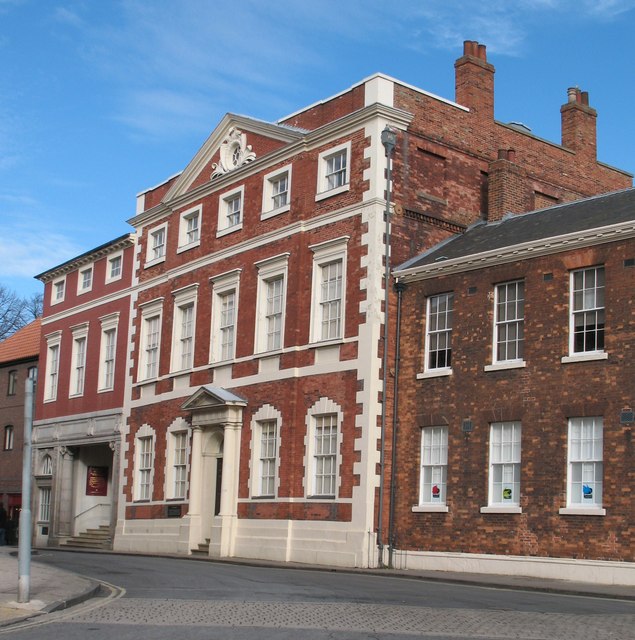
Photo: Gordon Hatton, CC BY-SA 2.0 via Wikimedia Commons
A Georgian townhouse built as the winter home for the Viscount Fairfax and his daughter, which has today been lovingly restored as a charming example of aristocratic life in York. It is decorated and furnished similar to how it would have been in the 1760s, almost exclusively using objects from the private collection of chocolatier Noel Terry (1889–1979). Giuseppe Cortese's elaborately-wrought stucco ceilings are a particular highlight, adorning half a dozen of the Fairfaxs' stately rooms. 'Gregory the Townhouse Mouse' will keep your kids entertained with his exploration trails around the property. Audio tours in eight languages.
Fairfax House is a Georgian townhouse on Castlegate in York, England, near Clifford's Tower and York Castle Museum. It was probably built in the early 1740s for a local merchant and in 1759 it was purchased by Charles Gregory Fairfax, 9th Viscount Fairfax of Emley, who arranged for the interior to be remodelled by John Carr. Fairfax was the widower of heiress Elizabeth Clifford, daughter of Hugh Clifford, 2nd Baron Clifford of Chudleigh: his inheritance from her death enabled him to purchase the house, which he intended as a home for his daughter from his first marriage, Ann Fairfax.
© OpenStreetMap contributors
not to be confused with St Mary's Abbey
A Saxon church, though most of the current building dates from the 13th century. Its 47 m steeple is the tallest in York and it has some fine stained-glass windows. Deconsecrated in the 1950s, St Mary's was reborn as a contemporary art venue in 2004, and now hosts exhibitions throughout the year. As of 2026, the church hosts Van Gogh: The Immersive Experience, which has come to York following successful runs in Amsterdam and several other European cities. The "Experience" is a 360-degree multisensory digital presentation of hundreds of the Dutch post-impressionist's works, allowing you to see through the eyes of the great man himself and gain an insight to his unique mind.
Contact via Facebook and X. The museum brings together the collections of one of the Army's oldest cavalry regiments - the Royal Dragoon Guards, dating from 1685, with one of its newest infantry regiments - the Yorkshire Regiment, which was only formed in 2006. Charting the relationship between Yorkshire and the Army going back centuries, the collections span medals, standards, uniforms, firearms, swords and soldiers' personal effects, with interactive exhibits and many tales of individual courage and hardships to bring the history to life.
In the 11th century, the Normans built a castle here to keep the Vikings at bay and subdue the local population following their conquest of England. The Vikings being Vikings, they promptly smashed it, so the Normans built bigger and better - the tower you see today was the castle's keep. The tower was the scene of the infamous massacre of York's Jews in 1190. In 1684, its interior was wrecked by an explosion, but the hollow tower is now the oldest remnant of the castle. The rest fell into disrepair, before being re-built as a gaol, and in modern times housing the Castle Museum. Access is by very steep steps up the hillock; it's a bit like climbing a pyramid. After closure, you can still climb to the front door and look back over the square - this is especially atmospheric after dark.
Reconstruction of York as it might have looked 1000+ years ago. The visit takes the form of a sit-down ride as you experience the sights, sounds, smells and diverse languages and faces of everyday 10th century life, with the aid of animatronics, dioramas and touchscreen technology. Although a bit like the Viking version of It's a Small World, everything you see has been meticulously researched and the centre is itself built on the archaeological remains of the real Jórvík. Audio commentary available in 15 languages. After the ride is a collection of artefacts, including replicas - for more visit the Yorkshire Museum.
Knock-about version of horrible history, suitable for ages 8+. 75-minute tour with storytelling and a very liberal interpretation of historical events that will keep you laughing and screaming. Part of The Dungeons international franchise, run by Merlin Entertainments.
It was built as a corn exchange in 1868, and was converted to full-time theatre use in 1902. The auditorium is indeed very grand, if a little faded. Despite the name, the Grand hosts a wide variety of plays, musicals, gigs and dance, although opera and ballet performances are rather scarce.