//

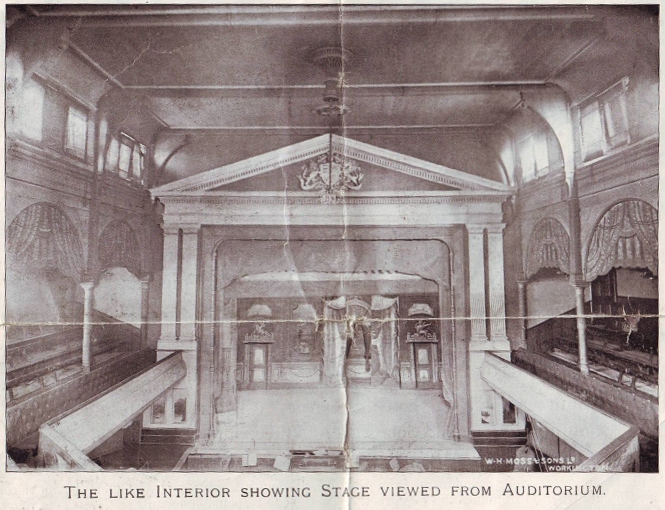
Photo: Lfc-forum (talk), Public domain via Wikimedia Commons
The Opera as it was known, was designed by T.L. Banks & Townsend, and has a small auditorium with two balconies accommodating 1130 spectators. It is equipped with a small stage with a procenium width of 11 m, a depth of 9 m and a grid height of 14 m. It also features an orchestra pit for 16 musicians. It was gutted by fire in 1927 and rebuilt with a wider auditorium, ornamental ceiling and seating capacity upgraded to 1200. The facade was rebuilt between 1963 and 1970. The building is not listed as cultural heritage, and has been under threat of demolition by real estate developers to be replaced with retail units and flats.
The Workington Opera House, or The Opera as it was known, is a purpose built theatre located in Workington, Cumbria, England. Originally built as the Queen’s Jubilee Hall & Opera House it was gutted by fire in 1927 and rebuilt with a fine wide auditorium, and Ornamental ceiling with seating for 1200. The theatre has good sightlines and a large stage and currently sits empty after its former use as a bingo hall ended in 2004.
© OpenStreetMap contributors
Museum dedicated to the life and legacy of Helena Thompson, with numerous artifacts illustrating her life on display as well as a Victorian parlour.
At the point where the River Derwent flows into the harbour, the old docks are a remnant of Workingtons industrial history. Two benches offer a nice view over the docks now reclaimed by leisure vessels rather than cargo ships, with the current active shipping yard to the north.
Iconic shelter with precise origins unknown, it is thought to be the hut of a coastguard harbour worker. Restored by the town's civic trust and Workington Regeneration group.