//

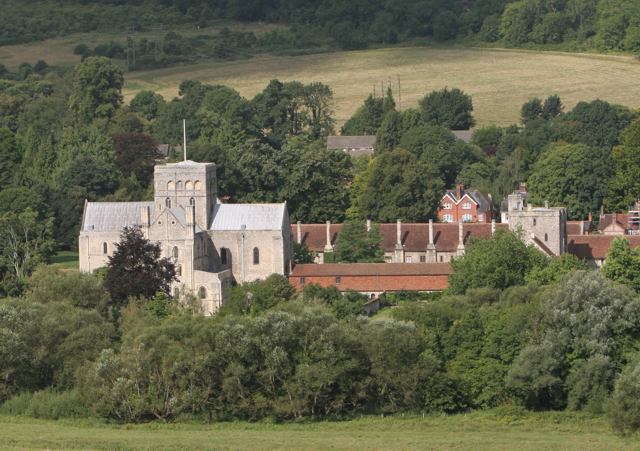
Photo: Peter Facey, CC BY-SA 2.0 via Wikimedia Commons
The Hospital of St Cross was founded in the 1130s by Bishop Henry of Blois to accommodate thirteen poor men and is still home to 25 Brothers, whose apartments form one side of the historic quadrangle. The chapel is an unspoiled example of the period during which Norman architecture transitions into Gothic. The Hospital has a long tradition of hospitality and now offers refreshment to visitors in the restored Hundred Men's Hall. The traditional Wayfarer's Dole is still given at the Porter's Gate to all travellers who request it. Accessible by road, by a half-hour walk along the River Itchen (from City Mill; signposted), or by Solent Blue Line bus 47 (buses run twice per hour M-Sa and once per hour on Su; see Get around above for bus company details; alight at the Bell Inn). Open any reasonable hour. Free.
The Hospital of St Cross and Almshouse of Noble Poverty is a medieval almshouse in Winchester, Hampshire, England. It has been described as "England's oldest and most perfect almshouse". Most of the buildings and grounds are open to the public at certain times. It is a Grade I listed building.
© OpenStreetMap contributors
One of England's independent (fee-paying) schools, founded in 1382 and believed to be the oldest continuously running school in the country. Guided tours are available, lasting approximately 1 hour and include Chamber Court; the Gothic Chapel with its 14th-century vaulted roof; College Hall; the 17th-century red brick schoolroom built in the style of Christopher Wren; the original cloister.
This was once a not uncommon position for a place of worship in England, but St. Swithun's is the only one remaining today. The interior of this tiny church is very plain, with whitewashed walls and an unadorned wooden ceiling. Sit for a moment in the simple wooden pews and it is hard not to feel a sense of peace.
This palace was the chief residence of the Bishops of Winchester and its extensive ruins still reflect their importance and wealth.
A Norman cathedral begun in 1079, containing the Winchester Bible and featuring the longest Gothic nave in the world. The cathedral was built on rafts floating on a peat marsh! For 800 years the raft was able to carry the weight but, by the 19th century, the cathedral was in danger of collapse and the foundations were rebuilt by a diver working underwater; look out for the statue and story of this "Winchester Diver" if you visit. The cathedral is the venue for regular recitals and concerts, and hosts Bournemouth Symphony Orchestra's Summer Series. The famous English novelist Jane Austen died in Winchester in 1817 and is buried in the cathedral. A statue by British artist Anthony Gormley is to be found, somewhat unexpectedly, in the crypt of the cathedral. Hidden away in cathedral Close is the Dean Garnier Garden, which offers splendid views of the cathedral. Pay special attention to the stonework, and how the medieval builders suffered from problems with subsidence.
A family-friendly council-run museum which tells the story of Winchester from the Iron Age to the present day. Multilingual audioguides and hands-on children's activities are available.
Located off the Broadway between King Alfred's statue and the rear of Winchester Cathedral. These are formal gardens through which the Itchen flows, and include a children's play area.