//

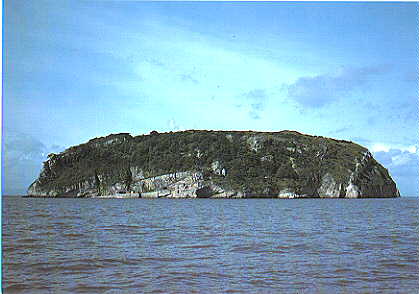
Photo: Karlton15 at English Wikipedia, Public domain via Wikimedia Commons
An island about 8 km off the coast of Weston, and a challenging place to visit because of its high cliffs and strong tidal currents which make landing on the island difficult. It has a very rich history, and dotted with ruins of a 13th-century priory, a fisherman's cottage dated 1776, and fortifications from 1860. It features naval gun placements and anti-aircraft batteries from the Second World War. Nowadays it is mostly a bird sanctuary and nature reserve.
Steep Holm is an English island lying in the Bristol Channel. The island covers 48.87 acres (19.78 ha) at high tide, expanding to 63.26 acres (25.60 ha) at mean low water. At its highest point it is 78 metres (256 ft) above mean sea level.
© OpenStreetMap contributors
National Trust-owned peninsula 2 miles to the south of Weston, jutting out into the Bristol Channel. The steep cliffs made it the perfect location for an Iron Age hill fort, and for a Victorian fort to defend against the French navy. It also features defensive positions dating from the Second World War, including a searchlight bunker to illuminate airborne targets at night, a torpedo launching facility, a naval gun battery emplacement, and barracks. Reaching the fort from the Weston-super-Mare station takes an 18-km (!) detour to find a crossing over the river Axe.
Located at the northern end of the beach, Marine Lake is a small man-made lake filled at high tide by the sea. It has a beach as well as a concrete walkway around the landward side, and a causeway at the ocean side. Popular with families as the water is calm and fairly shallow.
The Pier suffered a devastating fire in 2008, but in October 2010 the £39-million rebuilt pier opened to the public. The Grand Pier includes multiple attractions including a Go-Kart Track, Robo Coaster and Ghost ride. Food and drinks are available and there is also a themed bar.
Trips around Weston Bay lasting for an hour, and also a longer day trip to the nature reserve of Steep Holm and Flatholm Island in the Bristol Channel. The MV Balmoral and the PS Waverley occasionally call in at Weston. Details from Tourist Information Centre.
Small water park mainly intended for young children, with splash pads. The facility has toilets and changing rooms. No dogs allowed. Bringing picnics is allowed, although there is also a small cafe.
When it opened in 1937, this lido was the largest open-air swimming pool in Europe. Erected in art deco style, it was rebranded as the Tropicana in 1983 and received upgrades such as a wave pool and water slide. But as the infrastructure aged, visitor numbers declined, and Tropicana was closed in 2000. The facility was neglected and deteriorated quickly, and after a decade of disrepair the infrastructure had become unsafe. The city council announced that Tropicana would be demolished to make room for a new project. Lack of funding and planning permissions delayed the project, until artist Banksy curated an art exposition in Tropicana in 2015, attracting international attention. The city council committed an investment of half a million pounds to render the site safe until a new use for it can be found. The Tropicana's impressive sea wall and art deco facade are a modern day relic of the lost glory of Weston-super-Mare.