//

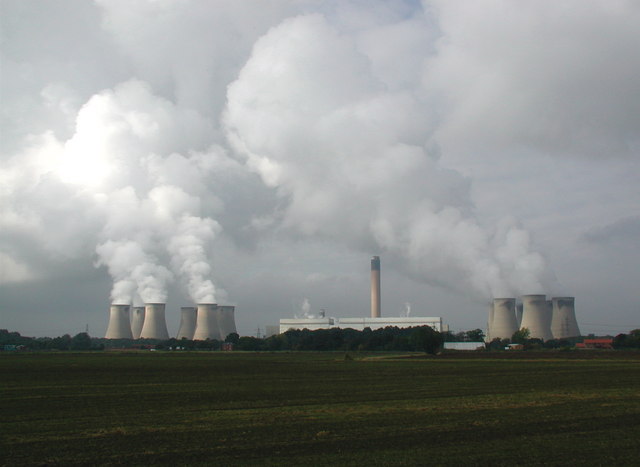
Photo: Paul Glazzard, CC BY-SA 2.0 via Wikimedia Commons
Time was that coal trains snaked across Yorkshire to feed this humongous citadel of complex engineering. Since 2023 it only burns biomass, such as wood pellets and the oily husks of sunflower, peanut, olives and rapeseed. That produces lots of CO2 but helps the sources (mostly US and Canada) reduce their emissions - there's a question over the net effect. Visits are only open to school / student groups.
Drax Power Station is a biomass and former coal power station in Drax, North Yorkshire, England. It has a 2.595 GW capacity for biomass and had a 3.960 GW capacity for coal that was retired in 2021. Its name comes from the nearby village of Drax. It is situated on the River Ouse between Selby and Goole. Its generating capacity of 3,906 megawatts (MW), which includes the shut down coal units, is the highest of any power station in the United Kingdom, providing about 6% of the United Kingdom's electricity supply.
© OpenStreetMap contributors
St Helen's Church in Skipwith, North Yorkshire, is a Grade I listed parish church, celebrated for its rare Anglo-Saxon architecture dating back to around 950 AD.