//

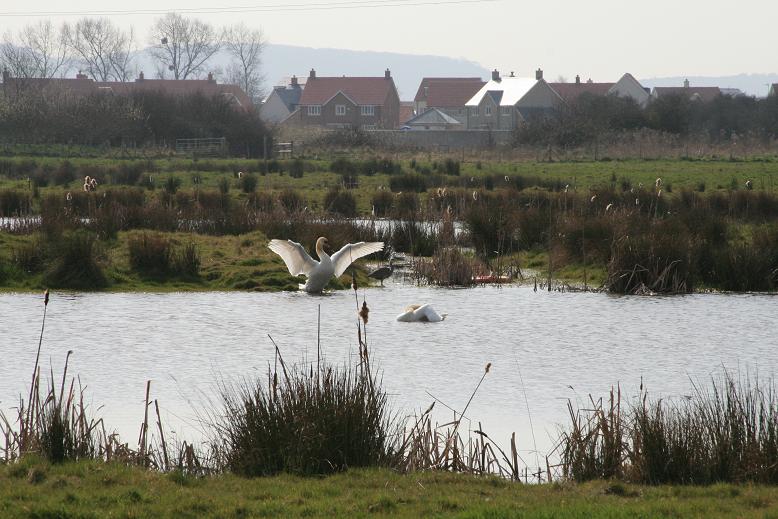
Photo: Michael Dennis Stagg, CC BY-SA 2.0 via Wikimedia Commons
Nature reserve between Portishead and the Royal Portbury Dock. The reserve is the result of redevelopment of the area where coal fired electric power stations dumped coal ash for about 50 years, starting in 1929. After power generation seized and the power stations were demolished in the early 1980s, the ashes were flattened and nature gradually reclaimed the area. The ashes create a unique biome, which is managed by the Avon Wildlife Trust. It is nowadays a haven for water birds, as well as otters and grass snakes.
Portbury Ashlands which is now known as Portbury Wharf Nature Reserve is a nature reserve between Portishead and the Royal Portbury Dock in Somerset, England. It was formed from the redevelopment of the area of Portishead formerly occupied by two power stations. To the east of the harbour, an area known as "the Ashlands" was used for over 50 years to get rid of power station waste which was dumped into lagoons on the site.
© OpenStreetMap contributors
Concrete pier stretching about 100 m into the Severn.
Marina in the re-purposed dock of a coal terminal linked to electric power plants demolished in the early 1980s. Nowadays an example of gentrification, nothing is left of its industrial heritage and the marina is surrounded by low rise residential housing blocks.
A section of the Portishead Pier made of up alluvial sandstone, rich in fossils of marine lifeforms dating back to the Carboniferous Period of geological history.
Grassland covering a limestone ridge that was the location of a coastal gun battery during the Second World War to protect the Severn estuary from naval invasion by axis forces. The fossils, folds and faults in the area are of geological interest.
Open air heated swimming pool kept at a comfortable 28°C. Only open during summer months.
Battery Point Lighthouse
Lighthouse designed by the Chance Brothers of Smethwick, built as a 9-m-tall black pyramid on a concrete base in 1931 overlooking the marshes. It had been equipped with a 2000-kg fog bell cast by Gillet & Johnston of Croydon in 1938, but the bell was removed in 1998 because of structural concerns. It is now installed in Wyndham Way Close very near to High St.