//

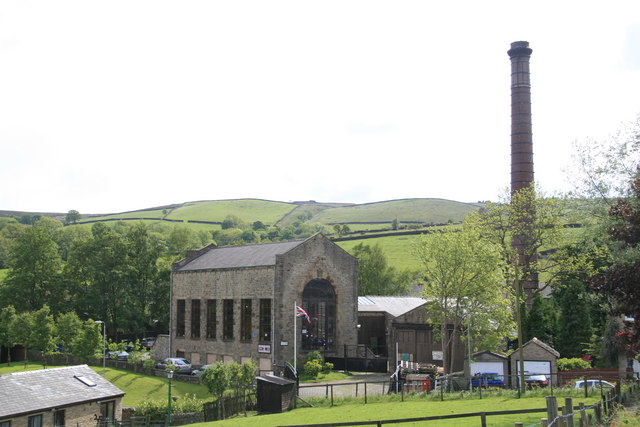
Photo: Chris Allen, CC BY-SA 2.0 via Wikimedia Commons
Steam-powered weaving shed opened in 1914; it closed in 1978 and was mostly demolished, but the engine that powered the looms has been preserved and is occasionally in steam.
Bancroft Shed was a weaving shed in Barnoldswick, Lancashire, England, situated on the road to Skipton. Construction was started in 1914 and the shed was commissioned in 1920 for James Nutter & Sons Limited. The mill closed on 22 December 1978 and was demolished. The engine house, chimneys and boilers have been preserved and maintained as a working steam museum. The mill was the last steam-driven weaving shed to be constructed and the last to close.
© OpenStreetMap contributors
On show are swords, kukris, commemorative boxes and plates, models carved in ivory, photographs, paintings, Indian army cap badges and buttons. The postage stamp collection may be of particular interest to philatelists. There's a tiger skin which was shot in the Saugor area in 1915 together with clothes worn by E.M. Forster when he was secretary to H.H. The Maharajah of Dewas State, Senior. The uniform of Field Marshal Sir Claude Auchinleck is prominently displayed and, quite poignantly considering that the centre of the cotton textile industry has now shifted to India and Pakistan, the last Union Flag to be lowered at the Residency, Lucknow in 1947 is exhibited.
The 19th-century steam engine, which had powered the looms in Queen Street's weaving shed, has developed a fault and is out of operation. There are still weaving demonstrations of their looms in the warehouse area. Like most mills in East Lancashire, Queen Street Mill specialised in producing plain cotton calico known as 'grey cloth'. The architecture of the mill was designed to allow this process to be carried out as efficiently as possible. Ample free parking; café serving snacks and light refreshments; toilets include disabled and baby change facilities with full access for disabled users (visitors with guide dogs welcome).