//

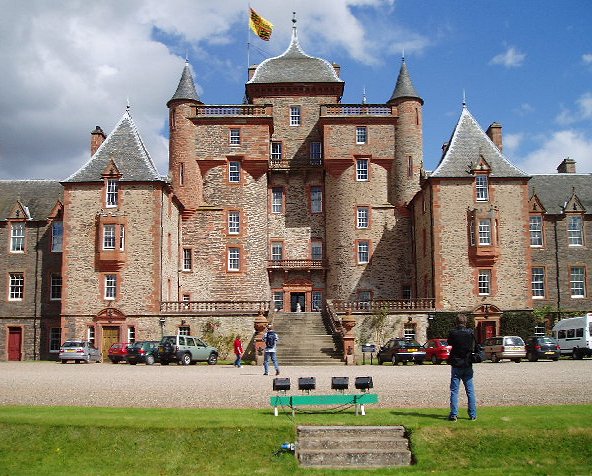
Photo: Kevin Rae, CC BY-SA 2.0 via Wikimedia Commons
Built from the 16th century but greatly extended in the 17th and 19th, this is a grand mansion set in parkland. You see the interior by guided tour. The scraps of its 13th century predecessor can be seen a mile away. It often stages events such as show-jumping, open air theatre and classic car rallies.
Thirlestane Castle is a castle set in extensive parklands near Lauder in the Borders of Scotland. The site is aptly named Castle Hill, as it stands upon raised ground. However, the raised land is within Lauderdale, the valley of the Leader Water. The land has been in the ownership of the Maitland family since 1587, and Thirlestane served as the seat of the Earls of Lauderdale. The castle was substantially extended in the 1670s by the first and only Duke of Lauderdale. Further additions were made in the 19th century. The castle is now cared for by a charitable trust, and is open to the public.
© OpenStreetMap contributors
Walled rose garden, a riot of colour and scent. The house is a grand Georgian mansion but has no tours.
Founded in 1136 as a Cistercian abbey, it grew rich and renowned, and a tempting target for every army that passed through. It fell into ruin after the 16th-century Reformation. Several Scots kings and nobles are buried here, and a lead casket buried in the Chapter House contains a heart, believed to be that of King Robert the Bruce.
The former home and gardens of the great late Georgian novelist Sir Walter Scott. (Gardens only half-price, dogs welcome.) He earned a fortune from writing, but spent an even bigger fortune extending and extending this place into a grand Baronial mansion, all mock-castellations. He was a huge collector of books, armour and other relics, even today they haven't finished cataloguing them all. His descendants lived here till 2004 but the house is now owned by a trust. The Chapel, added in 1855, has mementoes of the Oxford Anglican movement.
This was founded in 1150 by the Premonstratensians, a monastic order similar to the Cistercians. Built in Gothic style, it often struggled financially: its lands weren't as rich as other abbeys, its patrons had other priorities, and English armies found it burned ever so well. It ceased to function by the end of the 16th century and fell into ruin. Sir Walter Scott and Field Marshal Earl Haig are buried here.