//

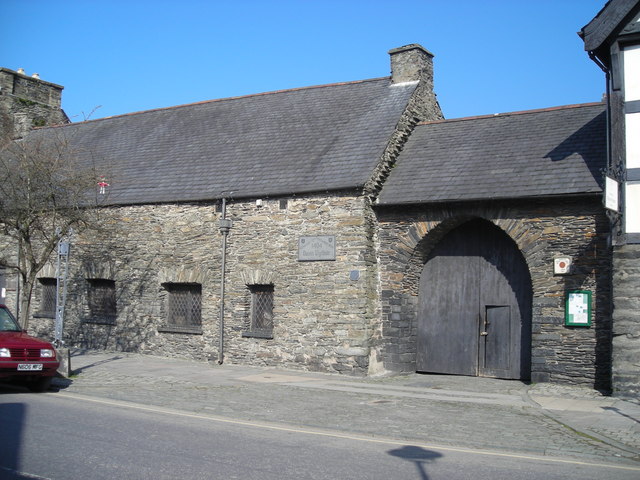
Photo: idris, CC BY-SA 2.0 via Wikimedia Commons
Located in the centre of town, these historic buildings are believed to be built on the site of the first Welsh parliament and related buildings of that period.
Owain Glyndŵr's Parliament House was traditionally the building where Owain Glyndŵr held a parliament in 1404. However, the origin of the building is probably later. The existing building may be 15th century in origin, but has been extensively rebuilt, particularly by David Davies of Llandinam, who purchased it in 1906. It was opened on 20 February 1912 to provide a social centre for the town. The present rubble exterior is an interpretation of its 15th-century appearance, probably by the architect Frank Shayler, who may also have designed the adjacent Glyndŵr Institute.
© OpenStreetMap contributors
This internationally known centre for the development of alternative technology was founded in 1973 as a testbed for sustainable living. In 1975, it opened as a visitor centre, so that the practises developed here could be showcased to the public. The centre is a very interesting place to spend the day, especially for families. The centre shows its sustainable credentials right from the word go, as the car park and bus drop off are located at the bottom of a steep hill below the centre. Visitors use the gravity-powered cliff railway to reach the centre from here. The carriages are fitted with water tanks, which are filled at the top and emptied at the bottom, so that the heavier top car slides down the hill, pulling the other car up as it goes (via a cable and pully system). From the top station it's level walking all around the centre, taking in displays on sustainable homes, transport, water, power generation, agriculture and more. The restaurant serves good, tasty food, but don't expect burgers and hot dogs here.
Wildlife reserve managed by the Montgomeryshire Wildlife Trust
Cors Dyfi is home to one of only 2 pairs of Osprey in Wales. The Osprey Project is open from 10AM until 6PM, April to September.
Travellers passing by on the main road understandably tend to assume that this mid-18th-century stone building with its large wooden water wheel must have been a mill. In fact, the water wheel powered the bellows of a blast furnace which was used to smelt iron, and Dyfi Furnace is the best-preserved example of an 18th century charcoal-burning blast furnace in the UK. The iron ore was shipped in from Cumbria, while the charcoal to fire the furnace came from the ample local forestry. The building is well-preserved and there's plenty of interpretive displays to help you imagine what it must have looked like when it was fully functioning.