//

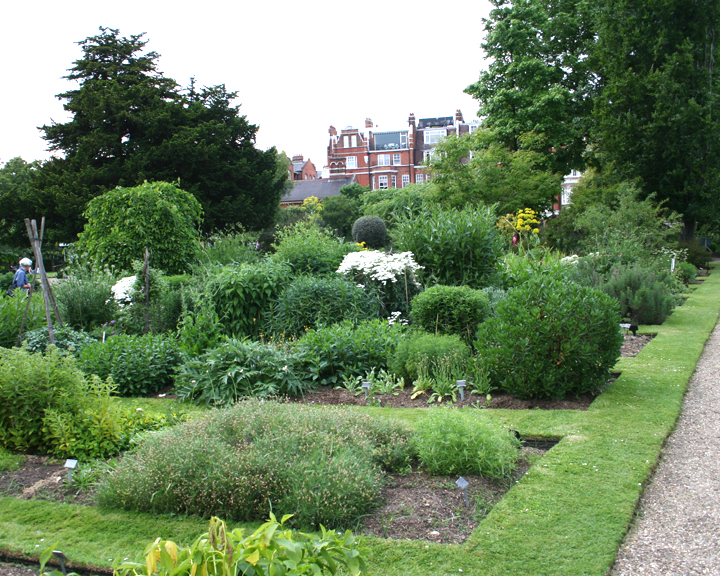
Photo: flickr user flickr-rickr, CC BY-SA 2.0 via Wikimedia Commons
Garden founded by apothecaries in the 17th century to the medicinal properties of plants. It was only opened to the public in the 1980s, when it became a charity. The heat-sink caused by its thick walls, combined with the general waste heat of London itself, keeps the garden much warmer than it would otherwise be at this latitude. Due to this, the garden contains the world's most northerly example of a grapefruit outside of a greenhouse, and the largest fruiting olive tree in the country. The collection contains thousands of different plant species.
The Chelsea Physic Garden was established as the Apothecaries' Garden in London, England, in 1673 by the Worshipful Society of Apothecaries to grow plants to be used as medicines. This four-acre physic garden, the term here referring to the science of healing, is among the oldest botanical gardens in Britain, after the University of Oxford Botanic Garden. Its rock garden is the oldest in Europe devoted to alpine plants and Mediterranean plants. The garden has high brick walls which trap heat, giving it a warm micro-climate, and it claims the largest fruiting olive tree in Britain and the world's northernmost grapefruit growing outdoors. Jealously guarded during the tenure of the Worshipful Society of Apothecaries, the garden became a registered charity in 1983 and was opened to the general public for the first time.
© OpenStreetMap contributors
This large museum traces the history of the British Army, and includes interesting and thought-provoking exhibits that go well beyond a collection of military equipment (though the museum does, of course, boast a large collection of it).
A retirement home for soldiers created by King Charles II. Tours around the listed building and grounds are regular and include the museum (which can be visited separately) whose exhibits contain military memorabilia donated by Chelsea Pensioners over the years.
Now preserved by the National Trust, this 18th-century house was the home of the historian Thomas Carlyle from 1834 and now houses a museum dedicated to his life and work.