//

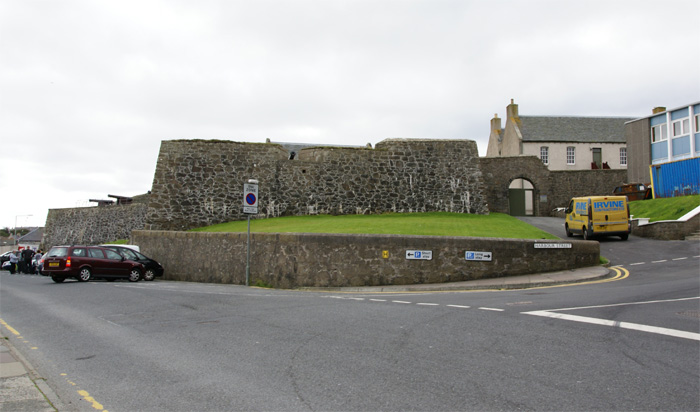
Photo: Otter, CC BY-SA 3.0 via Wikimedia Commons
A five-sided artillery fort built in 1665 against the Dutch. Then it was demolished, rebuilt, demolished, then burnt by the Dutch just to make sure. The present structure dates from 1780, raised against American revolutionaries, but never saw action. It's no longer in a commanding position, as it's become hemmed in by modern buildings behind, and reclaimed land has extended the shoreline in front.
Fort Charlotte in the centre of Lerwick, Shetland, is an artillery fort, roughly five sided, with bastions on each of three landward corners, and half-bastions on the corners of the seaward face.
© OpenStreetMap contributors
Multi-purpose entertainment venue on the waterfront, with a music venue, cinema, conference rooms and educational facilities.
Great modern museum, with the natural history, archaeology, history and anthropology of the islands.
Every February the "guizer" volunteers start building a Viking longship in this shed. By midsummer the work in progress is on display, along with "Jarl Squad" regalia and film and photos of previous events. In late January there's a grand torchlight costumed procession and the ship is ceremonially burned. The ritual goes back to the 1880s when earlier yule torchlight revels were stamped out because of drunkenness and fire-raising.
Shetland's largest leisure centre with swimming pool, steam room, gym and other facilities. Good for kids and reasonably priced.
An Iron Age broch - a stone and turf fortified dwelling - occupied between 700 BC and 600 AD. It was built on an island in the freshwater loch; the water-level was lowered in the 19th century, so it's now connected to shore by a broad spit and pathway. No parking on the road here, use side streets or buy something at nearby Tesco to use their parking lot.
A böd is a traditional fisherman's booth. This one, built in 1780, houses the textile museum. Much of the work is for sale.