//

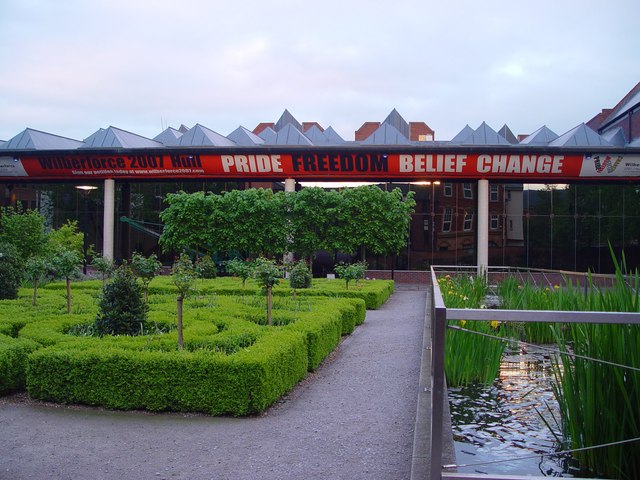
Photo: Peter Church, CC BY-SA 2.0 via Wikimedia Commons
Showcases 200 years of transportation history.
The Streetlife Museum of Transport is a transport museum located in Kingston upon Hull, England. The roots of the collection date back to the early 20th century, however the purpose-built museum the collection is housed in was opened in 1989 by the then Hull East MP, John Prescott. Core areas of the collection include Veteran cars, horse-drawn carriages and objects relating to local public transport.
© OpenStreetMap contributors
Birthplace and residence of William Wilberforce (1759-1833), MP for Hull and slavery abolitionist, whose anti-slavery bill was finally passed in 1807 after his tireless campaigning. The house has been a museum in his memory since 1903.
Hull's last remaining sidewinder trawler, berthed in the River Hull to the rear of the Museum Quarter complex. Guided tours are available.
Stand at the statue and look in all four directions at the fantastic buildings around you.
Runs adjacent to and on the south side of Queen's Gardens and with Alfred Gelder Street on its south side. Built between 1903 and 1916, to a design chosen by competition, it is the home of the City Council, it also houses the city's silver, the Hull Tapestry, the old magistrate's court, and below this the cells! The Guildhall is a great slab of early 20th-century civic pride, prosperity and confidence. At the west end sits a sculpture symbolising 'Maritime Prowess' atop its ornate Neo-Classical design and at the east end a clock tower. Starting in 1991 The Hull Tapestry took 15 years to complete and in 19 panels depicts important aspects of the city's history and development. The tapestry can be viewed (free of charge) Monday-Thursday 8:30AM-4:30PM, and Friday 8:30AM-3:30PM. To view it ask at the reception desk of the Guildhall. Guildhall tours are also available free of charge but these must be booked in advance.
A narrow street connecting the junction of Whitefriargate and Silver Street with the southern end of Manor Street. The name has been used in many works of fiction, but its origin is unclear. It was thought to have originated due to the existence of a nearby medieval spice market, but is more likely due to the son of a Dutch trading family by the name of 'Lindegroen' who possibly established his business in the area and is therefore most probably an English corruption of 'Lindegroen Jonger' (Lindegroen Junior.) The smallest window in England is in the George Hotel on the Land of Green Ginger.
It is the largest parish church in England, but as a piece of imposing medieval ecclesiastical architecture, it is more like a cathedral. The oldest parts date back to c. 1300 and the 150-ft-high tower contains a ring of 15 bells.