//

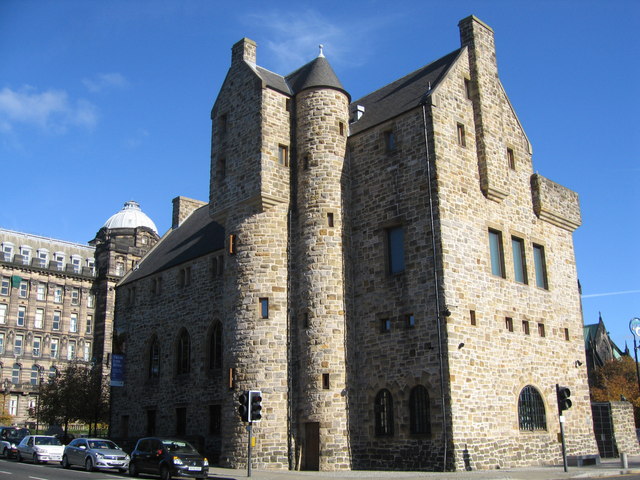
Photo: wfmillar, CC BY-SA 2.0 via Wikimedia Commons
This depicts Glasgow's patron saint and the growth of Christianity in the city, and of other faiths practised locally and worldwide.
The St Mungo Museum of Religious Life and Art is a museum of religion in Glasgow, Scotland. It is the only museum dedicated to religion and art in the British Isles.
© OpenStreetMap contributors
This was built in 1197 but much modified in the 13th century and is a fine example of medieval Gothic. It's dedicated to St Mungo, the city's patron saint, who is buried in the crypt. The Church of Scotland doesn't have bishops so it actually only a parish church.
Dominated by the statue of John Knox, it's a pharaonic “City of the Dead”, with its grand monuments to merchants and baillies who would be as prestigious in the next world as they were in this. One fellow was so renowned that there was no need to inscribe his name: wonder who he was, and how we've coped without him?
Early police forces had a variety of roles that were later separated as firefighting, event security, night-watch and sanitary regulation (which often meant extorting bribes from the sex trade). Glasgow had the world's first police force from 1779, but it lacked state backing and folded. The first regular force was from 1800, and since then has grappled with criminals' ingenuity, but fortunately more often their gob-smacking stupidity. This small but well-stocked museum takes you through the history.
The City Council headquarters were built in 1888 in Italian Renaissance style. Tours take in the marble staircases, lobbies, debating chamber and banqueting hall. Public tours are conducted M-F at 10:30AM and 2:30PM. Tickets for the tour can be obtained from the reception desk 30 minutes prior to each tour commencing.
was the centre of the early modern city, as it expanded south from its medieval core towards the Clyde. Only the clocktower survives of the former city chambers, demolished in 1921.
Opened in 1934, but rebuilt in ever-so-Sixties style after a fire, this is a popular live venue with 1900 standing capacity. It's renowned for its sprung dance floor and excellent acoustics.