//

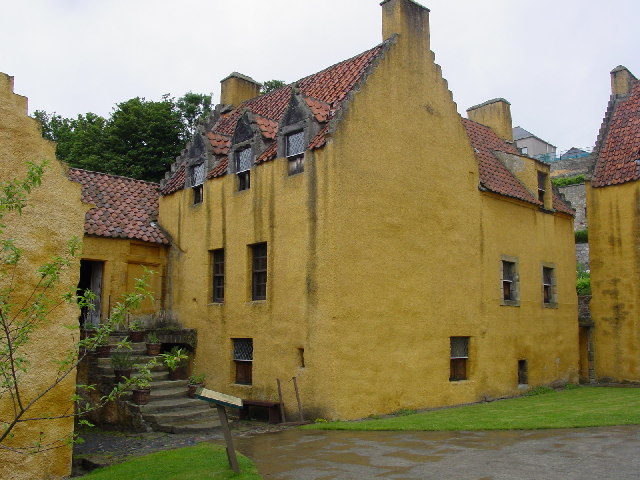
Photo: Lyall Duffus, CC BY-SA 2.0 via Wikimedia Commons
Built early 17th century by Sir George Bruce, using materials (and wealth) gathered from his European trade in timber, coal and salt. The interior is richly decorated in 17th- and 18th-century style, with a large porcelain collection, and the garden has been restored to that era. Now run by the National Trust for Scotland, it was never a royal palace but King James VI visited in 1617 and was intrigued by Sir George's ability to mine beneath the sea. (Excellent drainage was the secret.) The tour brought the king out of an air-shaft onto an islet, with his guards and courtiers mute in the distance across the water — "Treason!" he squealed.
Culross Palace is a late 16th to early 17th century merchant's house in Culross, Fife, Scotland.
© OpenStreetMap contributors
Ruins of a Cistercian abbey and monastery founded in 1217: it fell derelict after the 16th century Reformation but wasn't smashed up as other abbeys were. It became the mausoleum for Sir George Bruce and family, then was incorporated into the parish church which is still in use.
The original medieval castle is just a ruin. The adjacent 18th century mansion can be visited by guided tour: these are weekly during summer.