//

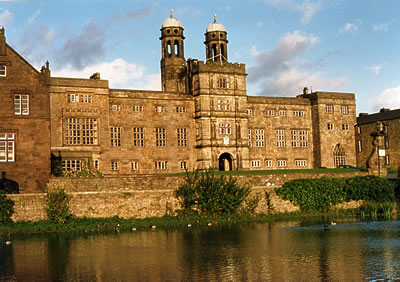
Photo: Nico Morgan, CC BY-SA 2.5 via Wikimedia Commons
Roman Catholic independent school, established by the Jesuits on the continent in 1593, and relocating to England once it was safe to do so in 1794. Those who were here include Gerald Manley Hopkins, Arthur Conan Doyle and JRR Tolkien, and the college and adjacent moors can be clearly traced in their works. The grand building, mostly 1880s, can be visited on open days.
Stonyhurst College is a co-educational Catholic public school providing education for boarding and day pupils, adhering to the Jesuit tradition. It is based on the Stonyhurst Estate, next to the village of Hurst Green, in Lancashire, in the United Kingdom. It occupies a Grade I listed building. The school has been fully co-educational since 1999. It is a member of the Headmasters' and Headmistresses' Conference.
© OpenStreetMap contributors
A 14th-century Cistercian Abbey on the banks of the Calder; it was ruined at the Dissolution and the abbot hanged for his part in the "Pilgrimage of Grace" uprising. The abbey was demolished and its stone recycled into a house, so there are limited remains, which you can see from the garden. The monk's dormitory has become an RC church, English Martyrs, still in use. The rest is now owned by the Anglican Diocese of Blackburn and the house is a spiritual retreat, offering residential programmes. "SuperWhalleyAlbanAbbots, Solas-are-the-focus" was the zingy title of one such event.
Held by the Royalists in the Civil War, this castle was one of many that the Parliamentarians ordered to be "slighted" ie partly demolished, but it was already so bashed about that they hardly bothered doing so. What's left of it is a small Norman keep with curtain wall balancing on a 35-metre outcrop of limestone coral. It's surrounded by pleasant gardens and a park.
Ancestral home of the Parker Family, who have lived here since it was built in 1507. The Tithe Barn is used for events such as weddings. In summer the Hall can be visited by guided tour.
Anglican (Church of England) parish church: the tower and east window are 15th-century, the rest is 19th.
Scrappy remains of a Cistercian abbey founded in 1148, set on the banks of the Ribble against the Bowland hills.