//

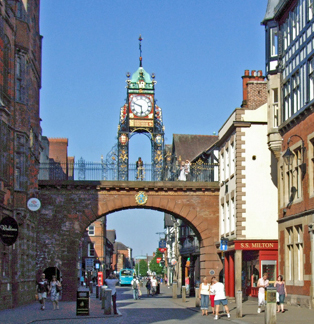
Photo: Dennis Turner, CC BY-SA 2.0 via Wikimedia Commons
It is claimed to be the second most photographed clock in the UK. The gatehouse from 1768-9 and the clock dating from 1899.
Eastgate is a permanently open gate through the Chester city walls, on the site of the original entrance to the Roman fortress of Deva Victrix in Chester, Cheshire, England. It is a prominent landmark in the city of Chester and the Eastgate clock on top of it is said to be the most photographed clock in England after Big Ben.
© OpenStreetMap contributors
Believed to have been the site of the largest wooden structure amphitheatre in the Roman Empire outside of Rome for its time, with a larger stone amphitheatre later built on-top of the foundations
Interactive museum about Chester's Roman history, with hands-on exhibits. If visiting in term time worth waiting until after 3PM to avoid parties of schoolkids.
Chester's former cathedral was saved from the reformation under Henry VIII by Queen Elizabeth I. It has Norman masonry dating back to around 1075 AD and an Elizabethan-era ceiling which saved it from destruction after the Reformation. The organ was commissioned and built by William Hill and Company in London and was used for Queen Victoria's coronation before being sent to Chester by barge.
The Groves is Chester's own riverside promenade running alongside the River Dee from the Grosvenor Park to the Old Handbridge (which gave its name to one of the suburbs on the other bank).
Small but informative museum majoring on the city's Roman heritage.