//

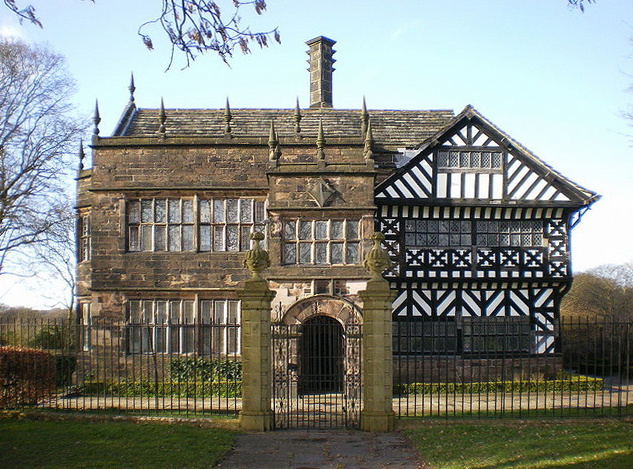
Photo: Alexander P Kapp, CC BY-SA 2.0 via Wikimedia Commons
16th-century mansion, timber-framed with stone additions, used as multiple lets for 17th- and 18th-century cottage industry. One of those occupants was Samuel Compton, who designed his "Spinning Mule" here. This helped textile processes grow bigger and bigger, into "dark satanic mills", and the days of cottage industry were ended. The Hall fell into disrepair but was bought up by Lord Leverhulme the "Sunlight Soap" tycoon, who gifted it to the town.
Hall i' th' Wood is an early 16th-century manor house in Bolton, Greater Manchester, England. It is a Grade I listed building and is currently used as a museum by Bolton Metropolitan Borough Council. It was the manor house for the moiety of the Tonge with Haulgh township held by the Brownlows in the 16th century. The original building is timber framed and has a stone flagged roof; there were later additions to the house, built from stone, in 1591 and 1648. The name represents "Hall in the Wood' spoken in the local regional English dialect and is pronounced.
© OpenStreetMap contributors
Grand collection of static textile mill engines.