//

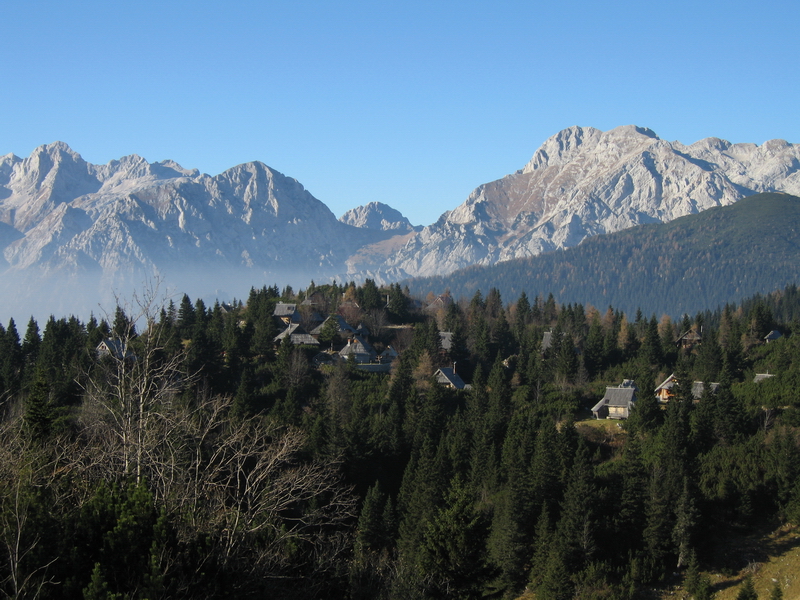
Photo: Lacen, CC BY-SA 3.0 via Wikimedia Commons
Velika planina (Big Alp) is Slovenia's biggest mountain pasture and offers some great views, hikes and also mountain bike tours (including freeride downhill). Bikes may be rented at the tourist information, however, if you plan tougher tours, especially down the hill, bring a suitable bike. In winter, you can also ski here. You can also walk over to Mala planina (Small Alp), where you find serviced mountain huts which also offer food and sleep possibilities (names and contact information in sleep section, please verify whether they are open before relying on them!)
The Big Pasture Plateau is a karstified mountain plateau in the Kamnik–Savinja Alps northeast of Kamnik, Slovenia. It measures 5.8 square kilometres and has an average elevation of 1,500 metres above sea level. Its highest point is Mount Gradišče, at 1,666 m (5,466 ft). There are numerous herders' dwellings that comprise several settlement areas: Velika Planina 'Big Pasture', Mala Planina 'Little Pasture', Gojška Planina 'Gozd Pasture', Tiha Dolina 'Quiet Valley', and others. The Big Pasture Plateau is a tourist destination both in winter as a ski resort and in summer as a place for relaxation.
© OpenStreetMap contributors
A historic church with Gothic Revival frescos (the main one dating around 1504), it is on a plain above Črna/Stahovica, which also offers a great view (depending on the weather even towards Ljubljana)
The hike is about 50 minutes to go up. Besides the waterfall, you may access two commemoration sites with a small detour (10 minutes or so): an American pilot grave and a former partisan hospital (ruins and memorial information)
If you like, when visiting Kamniška Bistrica spring, also take a walk to Predaselj valley, a steep and narrow valley which the river has cut into the rock.
Finding your way is not always easy, so you may want to bring a map with you. Kamniški vrh is a hike which is popular amongst locals for a short trip (you can reach it in 1 hr 30 min from Slevo, probably about 2 hr from the valley).
It has served as a church since the 13th century, and was completely rebuilt in the 19th century. It was used as a fortified seat of the German military during World War II, and then rebuilt as a church by architect Majda Neřima and her teacher, famous architect Jože Plečnik (and is counted among the latter's most important oeuvres made after the war). Especially recognized by public: the sacristy.