//

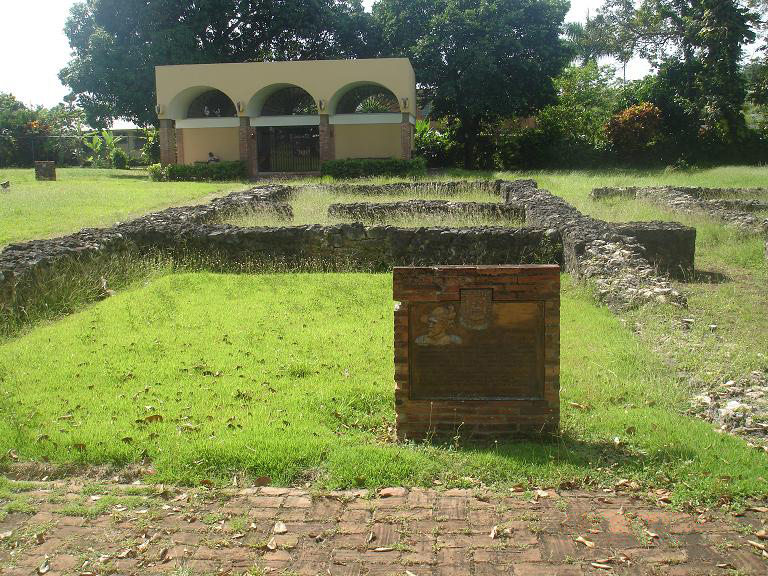
Museo y Parque Historico Ruinas de Caparra
Photo: Original uploader was Marine 69-71 at en.wikipedia, CC BY-SA 3.0 via Wikimedia Commons
Caparra was the first Spanish settlement in Puerto Rico. It was put several miles inland to keep it protected from pirates. The site is the ruins of the house/fort of Puerto Rico's first governor, Juan Ponce de León. A small museum displays some of the excavated artifacts. The displays are all in Spanish, though they do have a summary page in English upon request.
Caparra is an archaeological site containing the remains of Caparra, the first European settlement in the main island of Puerto Rico. Located in the municipality of Guaynabo on the grounds of the Museo y Parque Histórico Ruinas de Caparra near the town line with the capital municipality of San Juan, it is centered around the foundations of the residence of Juan Ponce de León, the first European conquistador and governor of Puerto Rico, who established the settlement as the capital of Puerto Rico in late 1508. It is a U.S. National Historic Landmark, as it represents the oldest known European settlement in the United States.
© OpenStreetMap contributors
or the Palacio de Santa Catalina, "La Fortaleza" (or The Fortress in English) is the official residence of the Governor of Puerto Rico, who is Puerto Rico's head of Government. It was built between 1533 and 1540 to defend the harbor of San Juan. The structure is also known as El Palacio de Santa Catalina (or Palace of Santa Catalina). It is the oldest executive mansion in the New World. La Fortaleza was declared as a World Heritage Site by UNESCO.
Traditional entrance to San Juan.
Built in 1523, when it was called the Church and Monastery of Saint Thomas Aquinas. It is the second oldest church in continuous use in the New World and the oldest in the United States. Before Ponce de Leon was moved to the San Juan Cathedral, his body was buried here for 300 years.
Ballaja Barracks
Completed in 1863, and in 1881 a chapel was added. This building housed military personnel and is now a museum called Las Americas Museum containing Caribbean and European American arts and artifacts.
El Morro
A 16th-century citadel that lies on the northwestern-most point of the islet of San Juan, Puerto Rico. It is part of San Juan National Historic Site and was declared a World Heritage Site by the United Nations in 1983.