//

Archaeological site in Sindh, Pakistan
Photo: Mamoon Mengal, CC BY-SA 1.0 via Wikimedia Commons
The ancient settlement of Mohenjo-daro is in Larkana District in the Sindh province of Pakistan. Listed as an archaeological site of immense historical significance on the UNESCO World Heritage List, it is one of the most important archaeological sites of South Asia, not to be missed if you are interested in archaeology or in the history of the Indian subcontinent.
From the travel guide. Select a place for details, a map and what is nearby.
Visible from a great distance, this is the highest and most prominent structure in Mohenjo-daro. It was built atop the citadel mound long after the fall of the ancient city; it is from the Kushan Empire, 1st to 4th centuries CE, while all of the other excavated ruins are from 2,600-1,900 BCE. It is believed that the Buddhist Stupa was built over an older Hindu temple.
The stupa is shown on Pakistani twenty rupee notes.
Granary
The Great Hall is a large building and is believed to have been a granary; it has what appears to have been a loading platform for carts transporting grain and a ventilation system to prevent spoilage. An alternate theory is that it was a public hall; the actual function of the building has not been determined.
A 2.4-m-deep, 12-m-long, and 7-m-wide pool in the centre of higher settlement is the best-known structure of Mohenjo-daro. It is made of fine baked waterproof mud bricks and a thick layer of bitumen (natural tar – presumably to keep water from seeping through the walls), which indicates that it was used for holding water. Many scholars have suggested that this huge deep bath could have been a place for ritual bathing or religious ceremonies. It is the earliest public water tank of the ancient world. Adjacent to it is a well that was used to supply water to the bath.
Pillared Hall
This brick pillared structure of approximately 27.5 m² is thought to may have been an assembly hall, a place for people to sit for meetings and social gatherings. Some believe it to be prayer hall or a palace.
A unique large open space and courtyard lying to the east of the Great Bath, this large building has several rooms and three verandas, with two staircases leading to the roof and upper floor. It is thought to have been either a college for priests or the residence of a high official.
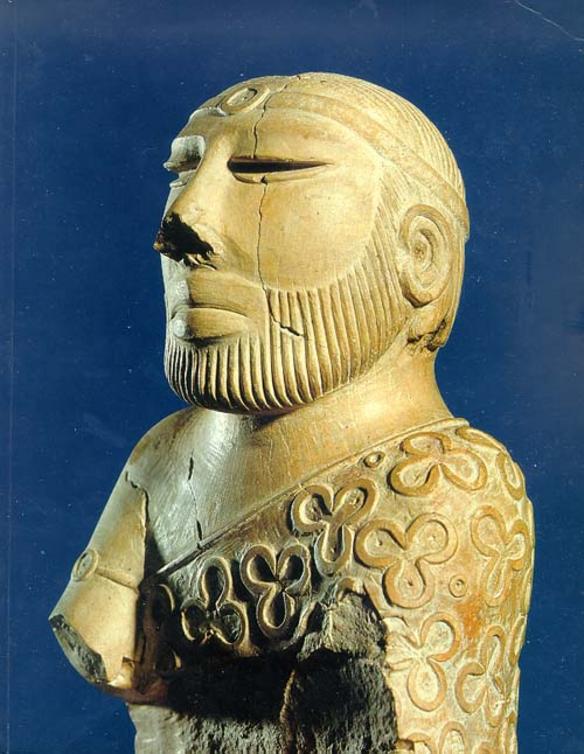
The museum was inaugurated in 1967, and contains relics found at the archaeologic site. The relics include weapons, engraved seals, kitchen utensils, sculptures and terracotta toys. Jewellery and other ornaments are showcased on the first floor and illuminated in natural light while heavy stones found during excavation are kept as well. A wall on the first floor is illustrated with a conjectural yet impressive view of the ancient city.
Renovated accommodation is run by Pakistan's archaeological department is overall, ideal for a stay overnight and available at affordable rates. They can also provide pick and drop to/from Larkana or Badah station via car. The rest house has nine rooms with attached baths. Three air conditioned rooms, double bed, TV, and sofas are on the first floor while six non-air conditioned rooms with two single beds in each room on ground floor. Has a cafeteria, sitting area in lounge as well a big hall to accommodate large group of people for overnight stays. Cafeteria can prepare a meal according to your taste but may charge Rs 500 per person for lunch or a dinner meal while Rs 200 for breakfast. It is advised to book in advance.
By plane
Pakistan's flag carrier Pakistan International Airlines flies from Karachi to Mohenjo-daro. Direct flights run three times a week and take around one hour.
By rail
The nearest railway station is some 11km away from the site in the outskirts of the nearby town of Dokri, but named after Mohenjo-daro.
By bus
Getting to Mohenjo-daro by public bus is a two-step process as there's no direct service to Mohenjo-daro.
By car
If you are driving or being driven, Mohenjo-daro can be accessed most easily by some arterial roads branching off (at Mehar, Nasirabad and Larkana) from the 1,264km-long National Highway # N-55 (the…
Once a symbol of the wealth and grandeur of the Indus Valley Civilization, today Mohenjo-daro slowly turning to dust.
Read in the guideChoose an airport to see hotels, stations, taxi ranks and car rental desks around it.
Sukkur · Regional · SKZ
Loading places around the airport…
Articles and travel topics about Mohenjo-daro and Pakistan.
 Itineraries
For modern-day trade in China, see Shopping in China The Silk Road (丝绸之路 sī chóu zhī lù), also known as the Silk Route, is not a single road, but a network of historical trade routes across Asia from China to Europe.
Wikivoyage
 Culture & history
The Indus Valley Civilisation (abbreviated IVC), also known as the Harappan Civilisation, was a Bronze Age civilisation which flourished from 3300 BCE to 1300 BCE.
Wikivoyage
 Culture & history
An archaeological site (or archeological site) is any place with physical evidence of past human activity. Such sites might be from pre-history as well as history, and the oldest sites can be considered paleontology.
Wikivoyage
 Travel tips
Woven carpets are traditionally crafted in North Africa and many parts of Asia, mainly along the Silk Road. They are sometimes called Oriental carpets, and are often associated with Islamic cultures, partly due to their…
Wikivoyage
Every section of the guide. Open one to read it in full.