//

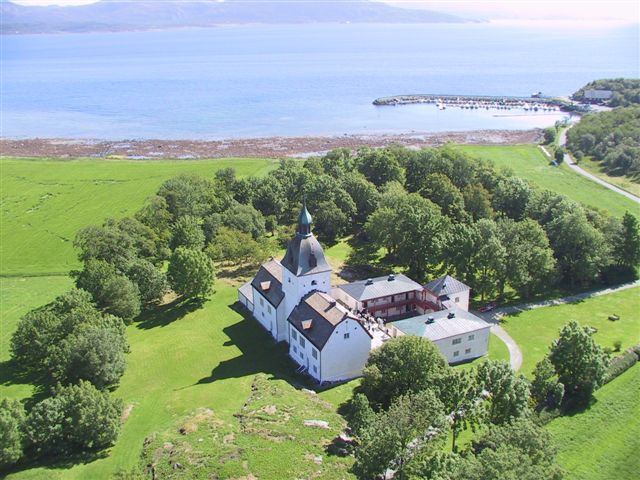
Photo: Original uploader was Orland at no.wikipedia, CC BY 2.5 via Wikimedia Commons
Austrått Manor (Austråttborgen) at Ørland at the mouth of Trondheimsfjorden is known as a residence for prominent persons since the 10th century. The building was destroyed by fire in 1916 and restored. Henrik Ibsen's play Lady Inger of Ostrat is based on a real Lady of Austrått. The building is now owned by the national government and is open to visitors in summer.
Austrått or Austrått Manor is a manor in Ørland Municipality in Trøndelag county, Norway. Since the 10th century, Austrått has been the residence for many noblemen, noblewomen, and officials who played a significant role in Norwegian history. In historical records, Austrått can also be found written as Østråt, Østeraat, Østeraad, Austaat, and Austråt.
© OpenStreetMap contributors
Austrått Fort is a disused coastal artillery at Austrått in Ørland. It was constructed in 1942 by the German Wehrmacht to control the entrance to the Trondheimsfjord during the German occupation of Norway during World War II. The three-gun turret weighs 800 tons and was capable of firing 730-pound shells 38 kilometres (24 mi). It opened as a museum in 1991. Like its sister battery at Sotra near Bergen, a shaft was cut out of the rocks for the huge former Gneisenau battleship gun turret. Along with Fjell fort at Sotra this was one of the largest artilleries along the German "atlantic wall". The fort lis located next to Austrått manor and overlooking the mouth of Trondheimsfjord as well as Ørland Airforce Base.
Orkla mining and industry museum
Copper mining at Løkken began in 1654 and operations ended in 1987 making this one of Norway's oldest businesses. The Orkla Company ran the mining business and still exists as a large conglomerate and Norway's biggest private company. A private electric railway, Thamshavn Line, was constructed between Løkken and Orkanger port at Thamshavn. Thamshavn Line was in 1908 Norway's first electric railway and is now operated by the museum.
Bardalfeltet
400 stone age and bronze age paintings/carvings on a 300 m² area.
Site of the battle in year 1030 where King Olav died.
Trollheimen is a mountainous area shared with Møre og Romsdal. Lodges are owned and operated by Trondheim hiking association. Trollheimshytta (lodge) is the hub. Lodges in this area are known for their solid, traditional log-built style. The terrain offers easy hiking between, and there are notable summits for the skilled mountaineer.
Sylan (swedish: Sylarna, sami: Bealjehkh) is a mountain area east of Røros that is shared with Sweden. The highest summit marks the border and is also the highest point in Jämtland. Trekking associations in Norway and Sweden operate some 30 lodges on both sides of the border. Hikers can comfortably do 2- to 4-day hikes lodge-to-lodge, as well as scrambles to summits. The landscape is relatively gentle with a handful of massifs/summits rising above plateau.