//

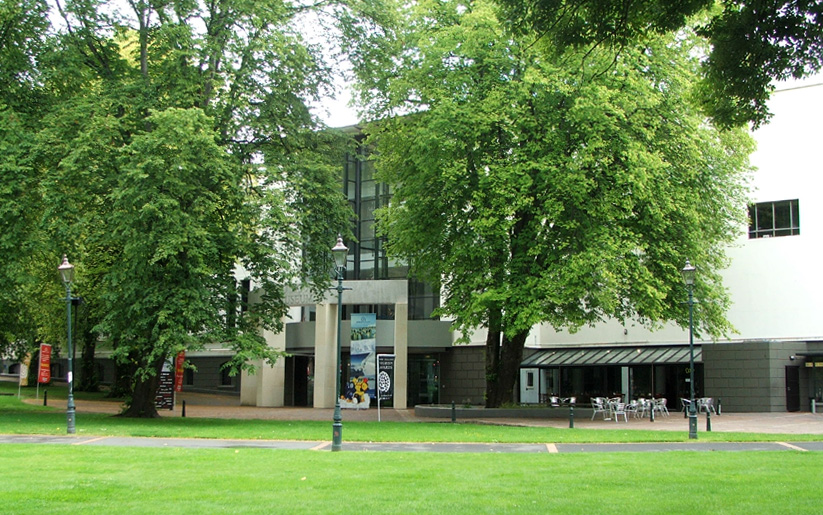
Photo: Grutness at English Wikipedia, CC BY-SA 3.0 via Wikimedia Commons
Was founded in 1868 and has a collection of over two million artefacts and specimens from the fields of natural history and ethnography. There is also a (paid entry) "Discovery World Tropical Forest". This features a variety of flora and fauna from around the globe, as well as many species of butterfly from Asia and South America. There are around 1,000 butterflies flying at any one time, and the Forest also has tarantulas, birds, fish, turtles and geckos.
Tūhura Otago Museum, located near the city centre of Dunedin, New Zealand, adjacent to the University of Otago campus, is one of the country's largest museums and a prominent attraction in the city. The museum's extensive collections encompass natural science specimens and humanities artifacts from the Otago region and around the world, which are featured in its long-term gallery displays. A notable feature of the museum is its interactive science centre, which includes an immersive tropical rainforest butterfly house. In 2022, the museum was officially renamed Tūhura Otago Museum, incorporating the Māori name "Tūhura", meaning "to discover, investigate, and explore."
© OpenStreetMap contributors
Has some great old buildings to wander about and see; when classes are on it's a good place to sit, people-watch and take it all in, some good food/cafes/bars are nearby too.
The largest church in Dunedin, used by a Presbyterian congregation. Built of bluestone and Oamaru stone, with a wooden ceiling between 1872-76 to design by Robert Lawson.
Not your traditional attraction but a stroll through the student accommodation-filled streets around the university can give you a real insight into Dunedin student life. Many of the often run down flats have their own names, and on the right sunny day the area comes to life as couches are dragged out onto the streets so the students can enjoy the sun and a few beverages. Castle St and Hyde St are two of the most famous flatting streets. The area does often get a bit rowdier in the evenings.
This is a small private museum and gallery spread over three rooms of an old central city villa which is the home of Dunedin mural artist and sculptor, Bruce Mahalski. It houses biological curiosities, skulls, bones, ethnological art and unusual cultural artefacts. They include the bones of many different species of animal (including humans), 200 skulls, pinned butterfly collections, vintage books (especially medical texts), etc. The museum also contains a gallery where Mahalski exhibits his bone art and paintings for sale. Please be aware that the museum is part of a private house and entry is strictly at the discretion of the owner.
Olveston homestead provided the Theomin family with the perfect setting to entertain both professional and personal friends. Seven servants were employed to service the 35 rooms of the home and to manicure the acre of beautiful garden. The home is sited in the inner city and is within walking distance from the city centre.
Municipal Chambers
Completed in 1880 and designed by R. A. Lawson in 1878, it is New Zealand's only surviving significant Victorian Town Hall. Of Italianate design and complete with Corinthian columns and an imposing staircase and balustrade, it is built of Oamaru stone on a base of breccia from Port Chalmers.In 1929 a town hall were added behind the Municipal Chambers, and in the 1980s a new administration building, incorporating a new public library, was added to the Octagon.
The town hall is home to a symphonic pipe organ (with 3,500 pipes) affectionally known as 'Norma' that is still operational. The entrance to the town hall is from Moray Place.